
Lawn Care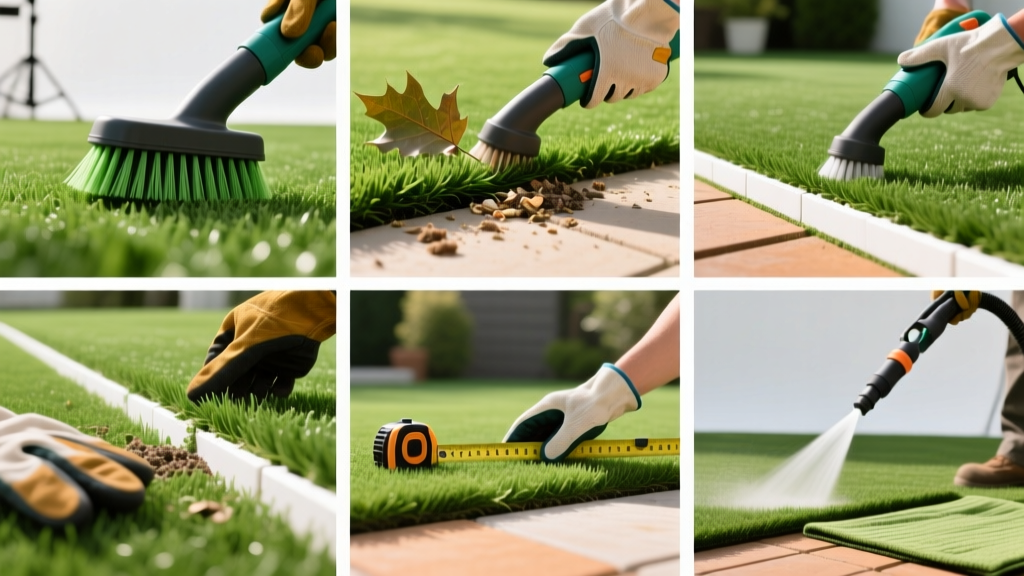
Step-by-Step Maintenance Procedures for an Artificial Grass Lawn
Synthetic turf is frequently marketed as a zero-maintenance alternative to natural sod, but industry professionals recognize it as strictly low-maintenance. Without a structured care protocol, an artificial grass lawn will mat, harbor bacteria, and lose its subsurface drainage capabilities within three to five years. When properly maintained, high-density polyethylene (HDPE) or nylon turf systems can easily achieve their rated 15- to 20-year lifespan. This guide outlines the exact step-by-step maintenance procedures required to protect your investment, preserve blade resilience, and maintain optimal drainage.
The Weekly Routine: Debris Removal and Surface Rinsing
Organic debris like leaves, twigs, and pollen will accumulate on the surface of your artificial grass lawn. If left to decompose, this matter creates a soil-like layer that invites weed seeds and blocks the perforated drainage holes in the turf backing.
- Blowing vs. Raking: Use a backpack blower (such as the Stihl BR 800 X Magnum) on a low-to-medium setting to clear leaves. Avoid high-velocity settings directly on the surface, as this will displace your silica sand or acrylic infill. If you must rake, use a flexible plastic turf rake (like the Grandi Groom); never use metal tines, which will slice the HDPE fibers.
- Surface Rinsing: Hose down the lawn once a week during dry spells. In peak summer, synthetic turf surfaces can reach 140°F to 160°F in direct sunlight. A light, 5-minute rinse cools the surface temperature by up to 30 degrees and washes away dust and pollen that cling to the static-charged blades.
- Solid Pet Waste: Remove solid waste immediately. Use a pooper-scooper or plastic bag. Rinse the localized area with water to push residual matter through the drainage aggregate base.
Monthly Deep-Cleaning and Weed Prevention
Weeds do not grow through the impermeable backing of high-quality synthetic turf; they germinate in the organic dust and wind-blown soil that settles inside the infill layer. Monthly inspections and targeted treatments are critical.
| Cleaning Agent | Use Case | Application Rate / Method | Turf Safety Rating |
|---|---|---|---|
| 20% Horticultural Vinegar | Spot weed treatment | Spray directly on weed foliage; avoid soil drenching | Safe (Non-residual) |
| Enzymatic Cleaner (e.g., Simple Green Outdoor) | Pet urine / Ammonia odor | Attach to hose; apply 3 oz per gallon of water | Highly Recommended |
| Mild Dish Soap (Dawn) | Spills, grease, food stains | 1 tbsp per gallon of warm water; scrub with soft brush | Safe |
| Bleach (Sodium Hypochlorite) | Disinfection / Mold | Avoid if possible; degrades UV coatings and voids warranties | Unsafe / Not Recommended |
For stubborn weeds, a targeted application of a glyphosate-based herbicide is acceptable, provided you follow the Environmental Protection Agency (EPA) guidelines for safe application. Apply only to the weed's foliage and avoid heavy spraying that could pool on the geotextile weed barrier beneath the aggregate base.
Bi-Annual Grooming: Replenishing Infill and Restoring Pile
The infill layer (typically silica sand, Envirofill, or crumb rubber) weighs down the turf, keeps the blades upright, and provides cushioning. Over time, foot traffic and rainfall cause the infill to compact and the turf blades to lean. According to the Synthetic Turf Council, bi-annual mechanical grooming is the single most important factor in preventing permanent matting.
⚠️ Critical Warning: Never use high-pressure power washers exceeding 1,500 PSI on an artificial grass lawn. High pressure will blast the infill out of the turf matrix, tear the primary backing, and separate the tuft-bind, leading to irreversible shedding of the grass blades.
Step-by-Step Power Brooming Procedure
- Clear the Surface: Remove all large debris using a leaf blower.
- Select the Right Tool: Rent or purchase a nylon-bristle power broom (such as the Billy Goat PB18 or a SunJoe SB601 turf attachment). Wire bristles will destroy synthetic fibers.
- Brush Against the Grain: Identify the natural lean of the turf blades. Push the power broom against the grain to force the blades upright and fluff the compacted infill.
- Top-Up Infill: High-traffic areas (like pathways or play zones) lose infill over time. Calculate the square footage of the worn area and add 0.5 to 1 lb of matching infill per square foot. Sweep it evenly into the base of the fibers.
Troubleshooting Common Artificial Grass Lawn Issues
Pet Odor and Ammonia Buildup
Dog urine passes through the turf drainage holes and pools in the crushed granite or decomposed granite base layer. As it dries, it crystallizes into uric acid, which emits a strong ammonia odor when rehydrated by humidity or rain. Standard soap cannot break down uric acid crystals.
- The Fix: Apply a live-enzyme or bacterial turf deodorizer. These products contain microbes that literally consume the uric acid proteins. For chronic issues, consider having a professional extract the top inch of infill and replace it with Zeolite, a natural volcanic mineral that absorbs up to 60% of its weight in moisture and traps ammonia gases in its honeycomb molecular structure.
Drainage Pooling and Puddling
If water pools on the surface for more than 30 minutes after a heavy rain, your subsurface drainage has failed. This is usually caused by a compacted base layer or clogged backing perforations.
- The Fix: Use a deep-tine aerator (modified with blunt tines to avoid piercing the backing) to gently fracture the compacted infill and base. If the issue persists, the aggregate base (usually Class II road base) may have settled unevenly and will require professional lifting, re-grading, and re-compaction.
Annual Cost and Time Comparison Matrix
Understanding the long-term maintenance footprint helps contextualize the upkeep of an artificial grass lawn versus a traditional natural lawn. Below is a 10-year projected comparison for a standard 1,000 sq. ft. residential yard.
| Maintenance Factor | Natural Turf (1,000 sq ft) | Artificial Grass Lawn (1,000 sq ft) |
|---|---|---|
| Annual Water Usage | ~45,000 gallons ($150 - $400/yr) | Rinsing only (~2,000 gallons / $20/yr) |
| Mowing & Edging | 30+ hours/yr (or $1,200/yr pro service) | 0 hours |
| Fertilizers & Herbicides | $150 - $250/yr | $30/yr (spot weed treatment only) |
| Grooming & Infill Top-Up | N/A (Aeration: $100/yr) | 4 hours/yr (or $250/yr pro service) |
| 10-Year Total Est. Cost | $12,000 - $18,000 | $2,500 - $4,000 |
Frequently Asked Questions
Can I use a snow blower or shovel on my synthetic turf?
Yes, but with strict limitations. Use a plastic-blade snow shovel; metal blades will slice the turf fibers and scrape the backing. Leave the bottom 1 inch of snow to melt naturally to avoid catching the shovel on the turf seams. If using a snow blower, ensure the skid shoes are set high and the auger is plastic. Never use rock salt or calcium chloride to melt ice, as the chemical residue will clog the drainage pores and degrade the UV inhibitors in the yarn.
Will the artificial grass lawn fade in direct, southern-exposure sunlight?
Modern synthetic turf is manufactured with UV inhibitors (typically HALS - Hindered Amine Light Stabilizers) built directly into the polymer resin, not just coated on the surface. While fading is minimal, south-facing lawns receiving 10+ hours of direct, unshaded sunlight in high-UV climates (like Arizona or Texas) may experience a 5% to 10% lightening of the green hue after 8 to 10 years. Window reflections from low-E glass can also cause localized melting; apply anti-reflective window film to adjacent south-facing windows to prevent thermal damage.
How often should I professionally service my artificial lawn?
For residential lawns without heavy pet use, a professional deep-clean and power-brooming every 18 to 24 months is sufficient. For homes with multiple large dogs, schedule a professional enzyme treatment and infill agitation every 6 months to prevent permanent ammonia saturation in the base rock.

