
Lawn Care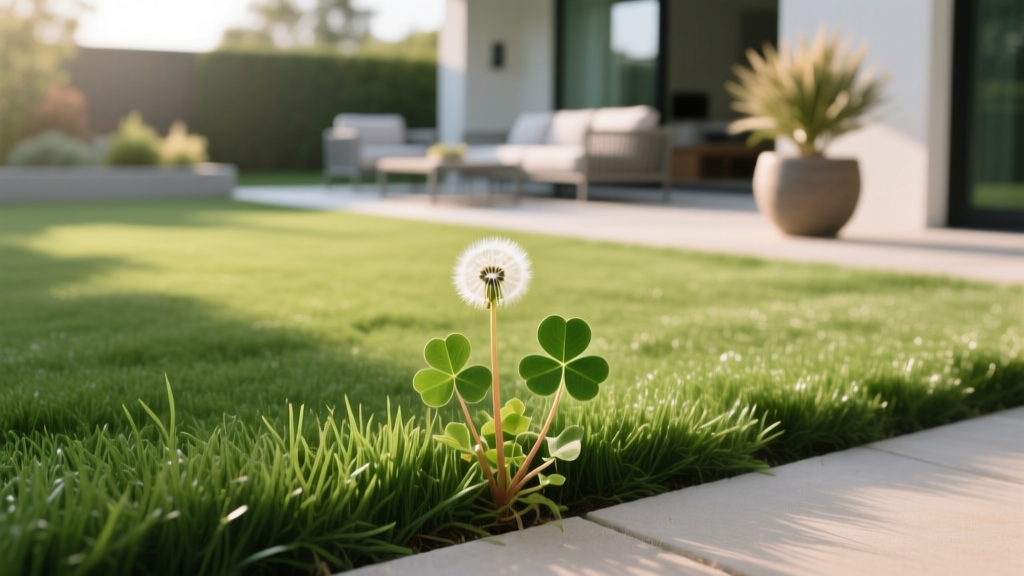
How to Treat Weeds in Artificial Lawn: A Species-Specific Guide
While synthetic turf eliminates the need for mowing and reduces overall yard maintenance by up to 90 percent, it is not entirely immune to botanical invasions. Wind-blown seeds, bird droppings, and organic debris eventually settle into the infill, creating a shallow but viable growing medium. When weeds in artificial lawn environments take root, they require a fundamentally different approach than traditional soil-based weed control. Broadleaf herbicides sprayed indiscriminately can stain polyethylene fibers, and aggressive mechanical pulling can tear the primary backing.
This guide provides a species-specific spot-treatment framework, detailing exact herbicide concentrations, mechanical extraction techniques, and preventative protocols tailored to the unique anatomy of synthetic turf systems.
The Three Zones of Synthetic Weed Growth
To effectively treat weeds in artificial lawn installations, you must first identify which zone of the turf system the weed is exploiting. Synthetic lawns consist of three distinct layers, each vulnerable to different weed species.
Zone 1: The Infill Layer (Surface)
The top 1 to 2 inches of silica sand, crumb rubber, or Zeofill. Weeds here have shallow, fibrous root systems and are easily treated with contact herbicides or manual extraction.
Zone 2: The Base and Drainage Holes (Sub-Surface)
Seeds wash through the turf backing and germinate in the Class II road base or crushed rock layer below. These weeds push up through the 3/8-inch drainage holes and develop deep taproots.
Zone 3: The Perimeter and Seams (Edges)
Weeds exploit the microscopic gaps where turf panels meet or where the turf meets hardscaping. Creeping species thrive here, spreading laterally beneath the backing.
The top 1 to 2 inches of silica sand, crumb rubber, or Zeofill. Weeds here have shallow, fibrous root systems and are easily treated with contact herbicides or manual extraction.
Zone 2: The Base and Drainage Holes (Sub-Surface)
Seeds wash through the turf backing and germinate in the Class II road base or crushed rock layer below. These weeds push up through the 3/8-inch drainage holes and develop deep taproots.
Zone 3: The Perimeter and Seams (Edges)
Weeds exploit the microscopic gaps where turf panels meet or where the turf meets hardscaping. Creeping species thrive here, spreading laterally beneath the backing.
Species-Specific Spot-Treatment Matrix
The following matrix outlines the most common synthetic turf invaders and their corresponding targeted treatments. Costs reflect average 2026 retail pricing for residential quantities.
| Weed Species | Primary Zone | Root Structure | Recommended Spot Treatment | Est. Cost |
|---|---|---|---|---|
| Prostrate Spurge | Zone 1 (Infill) | Shallow, fibrous taproot | 20% Acetic Acid (Horticultural Vinegar) | $25 - $35 |
| Dandelion | Zone 2 (Drainage) | Deep, brittle taproot | Boiling water or 2% Glyphosate precision wand | $15 - $20 |
| Creeping Clover | Zone 3 (Seams) | Lateral stolons | Edge lifting + Dithiopyr pre-emergent | $40 - $60 |
| Moss / Algae | Zone 1 (Shade) | Surface rhizoids | Potassium salts of fatty acids (Insecticidal soap) | $15 - $25 |
Deep-Dive Protocols for Stubborn Species
Prostrate Spurge: The Infill Invader
Spotted and prostrate spurge are the most common weeds found in artificial lawns. They thrive in the warm microclimate created by silica sand infill during mid-summer. Because spurge roots intertwine with the sand and the synthetic grass blades, pulling them often leaves root fragments behind, leading to rapid regrowth.
The Treatment Protocol:
- Timing: Apply treatment between 11:00 AM and 2:00 PM when UV radiation and ambient temperatures are at their peak.
- Product Selection: Use a 20% to 30% concentration horticultural vinegar (acetic acid). Standard 5% household vinegar is ineffective on mature spurge. Products like Doctor Kirchner Natural Weed Killer or Green Gobbler 20% are highly effective.
- Application: Use a shielded spray nozzle or a sponge applicator to apply the acetic acid directly to the spurge leaves. Avoid overspraying onto the turf fibers, as high-acid solutions can temporarily discolor lower-quality polypropylene yarns.
- Follow-up: The weed will desiccate and turn brown within 4 hours. Once brittle, use a stiff-bristled push broom to sweep the dead organic matter out of the infill.
According to the EPA's Minimum Risk Pesticide guidelines, acetic acid products are exempt from standard pesticide registration requirements, making them a safe, non-residual choice for synthetic environments where chemical runoff into the base layer is a concern.
Dandelions: The Base-Breachers
Dandelions in artificial lawns are uniquely problematic. Their seeds wash through the drainage holes and germinate in the decomposed granite or crushed rock base below. The taproot grows upward, pushing through the drainage hole, while the bulk of the root remains trapped beneath the backing.
Critical Warning: Never use a standard mechanical weed puller or pliers to yank a dandelion from synthetic turf. The taproot will snap at the backing line, leaving the lower root intact to regenerate. Furthermore, aggressive pulling can stretch the primary polyurethane backing, causing permanent ripples in your lawn.
The Treatment Protocol:
The most effective, zero-chemical method for dandelions in synthetic turf is the boiling water technique. Polyethylene (PE) and nylon turf fibers have melting points exceeding 240°F (115°C). Boiling water (212°F / 100°C) will instantly cook the plant tissue and travel down the drainage hole to scald the sub-surface taproot without damaging the synthetic blades.
Simply boil a kettle of water and pour it directly and slowly into the center of the dandelion rosette. The weed will collapse within minutes. If you prefer a chemical approach, use a precision gel wand containing 2% glyphosate, applying a single drop directly to the center of the rosette to minimize fiber contact.
Creeping Clover: The Seam Creeper
Clover and bindweed do not typically grow through the infill; they creep under the edges and seams. If your turf was installed with standard 4-inch nail spacing at the perimeter, clover stolons will easily slip beneath the backing.
The Treatment Protocol:
- Use a flat pry bar to gently lift the turf edge where the clover is entering.
- Extract the visible stolons manually.
- Apply a targeted pre-emergent herbicide containing dithiopyr (such as Dimension 2EW) directly to the exposed sub-base soil at the perimeter.
- Re-secure the turf edge using 6-inch galvanized landscape nails spaced every 3 inches to close the gap, then replace the infill.
Herbicide Chemistry and Fiber Safety
When treating weeds in artificial lawn setups, the chemical carrier is just as important as the active ingredient. Many commercial agricultural herbicides use oil-based carriers, such as Methylated Seed Oil (MSO) or crop oil concentrates, to help the chemical penetrate waxy weed leaves.
Fiber Degradation Risk: Oil-based carriers can bind to the polyurethane backing and polyethylene fibers of synthetic turf. Over time, this causes the fibers to become brittle, attract excessive dust, and lose their UV-resistant coating. Always select water-based herbicide formulations or ensure your surfactant is strictly non-ionic and water-soluble (e.g., Dyne-Amic or R-11 non-ionic surfactants).
For post-emergent broadleaf control, glufosinate-ammonium (e.g., Finale) is often preferred over glyphosate for synthetic turf. Glufosinate is a contact herbicide that breaks down rapidly in the environment and does not possess the soil-residual properties that can sometimes lead to unintended staining of light-colored silica sand infill.
Preventative Pre-Emergent Scheduling
Spot-treating weeds is reactive; a proactive pre-emergent schedule is the hallmark of professional synthetic turf maintenance. Pre-emergents create a chemical barrier in the infill and base layer that prevents weed seeds from germinating.
- Early Spring (Soil temps reaching 55°F): Apply Prodiamine 65 WDG. Mix at a rate of 0.5 oz per 1,000 square feet. Water it in immediately with a hose for 5 minutes to wash the granules off the plastic blades and down into the sand infill. If left on the blades, prodiamine can leave a yellowish residue.
- Late Summer (August/September): Apply a second round to target cool-season weeds like annual bluegrass (Poa annua) and chickweed. Dithiopyr-based products are highly effective here.
According to research and maintenance guidelines referenced by the University of California Agriculture and Natural Resources IPM program, combining pre-emergent applications with regular mechanical brushing (using a power broom every 3 to 4 months) disrupts the seed-to-soil contact necessary for germination in the infill layer.
Expert Troubleshooting FAQ
Will weed killer stain my artificial grass?
Most water-based herbicides will not stain PE or nylon fibers. However, iron-based organic herbicides (often marketed as 'lawn-safe' broadleaf killers for natural grass) contain FeHEDTA. If sprayed on synthetic turf, the iron will oxidize and leave permanent rust-colored stains on the plastic blades. Never use iron-based herbicides on artificial lawns.
How do I remove dead weeds from the infill?
Once a treated weed has completely desiccated, use a specialized synthetic turf rake (with flexible nylon tines, never metal) or a motorized power broom. Sweep the area vigorously to lift the dead organic matter to the surface, then use a leaf blower to remove it. Leaving dead organic matter in the infill creates a compost layer that invites future weed seeds and promotes microbial odors.
My turf has moss growing in the shade. How do I treat it?
Moss thrives in shaded, poorly draining areas where organic debris accumulates. Treat moss with potassium salts of fatty acids (insecticidal soap) or a specialized zinc sulfate spray. After the moss turns black and dies, you must address the drainage issue. Use a turf aerator or a stiff spike to poke additional drainage holes through the backing and into the base layer to prevent water from pooling on the surface.

