
Lawn Care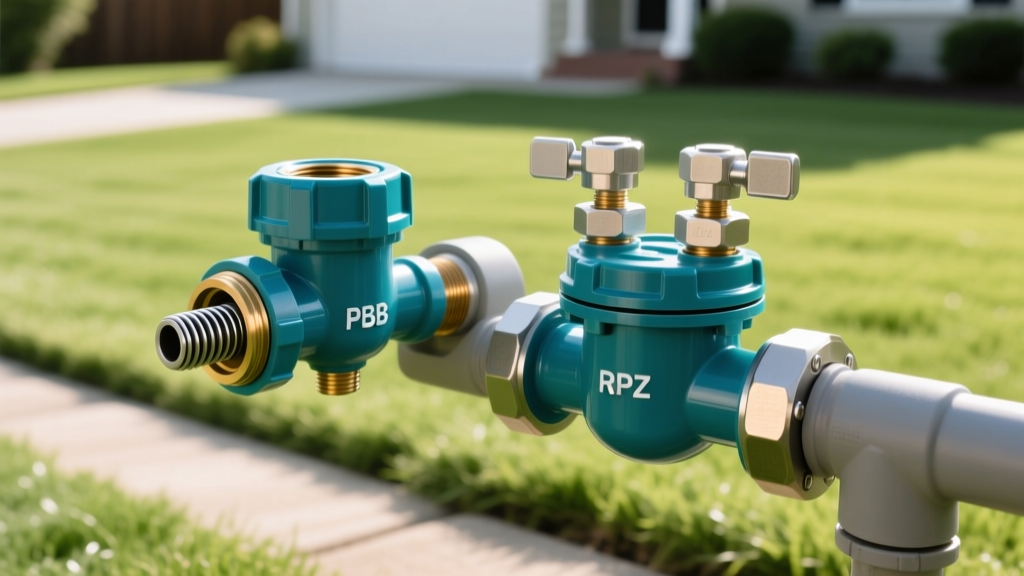
Which Backflow Irrigation Valve Do You Need? PVB vs RPZ Guide
The Hidden Danger of Cross-Connections
Your lawn sprinkler system is a direct physical link between your municipal drinking water supply and the chemicals, fertilizers, and animal waste sitting on your grass. When water pressure in the main supply line drops—due to a water main break, fire hydrant usage, or high neighborhood demand—a vacuum is created. This negative pressure can siphon contaminated water backward through your sprinkler heads and into your home's plumbing, a phenomenon known as backsiphonage. Backpressure can also occur if a booster pump or elevation change forces water backward. According to the University of Minnesota Extension, preventing this cross-connection contamination is a critical public health mandate, which is why local plumbing codes universally require a certified backflow irrigation valve.
⚠️ Code Compliance Warning: In almost all municipalities, installing, modifying, or bypassing a backflow preventer without a licensed professional and subsequent inspection carries heavy fines. Furthermore, most jurisdictions mandate annual testing of RPZ and PVB assemblies by a certified backflow tester to ensure the internal springs and poppet valves have not degraded.
Decoding Backflow Irrigation Valve Types
Selecting the correct assembly depends on your property's topography, the presence of chemical injection systems, and local municipal codes. There are three primary types of backflow preventers used in residential and light commercial irrigation.
1. Pressure Vacuum Breaker (PVB)
The PVB is the most common backflow irrigation valve for residential lawns. It features a spring-loaded check valve and an air inlet valve that opens to the atmosphere when water flow stops, breaking the siphon. PVBs protect against backsiphonage but not backpressure. Because they rely on atmospheric venting, they must be installed at least 12 inches above the highest downstream sprinkler head or drip emitter on the property. If your yard slopes upward away from the water meter, a PVB may need to be mounted on a tall platform or retaining wall to maintain the 12-inch clearance rule.
2. Reduced Pressure Zone (RPZ) Assembly
An RPZ valve is the gold standard for high-hazard cross-connections. As noted by Watts Water Technologies, an RPZ utilizes two independent check valves separated by a monitored pressure differential chamber (the reduced pressure zone). If either check valve fails or backpressure occurs, a relief valve opens and discharges water to the atmosphere, ensuring contaminants never enter the supply line. RPZs protect against both backsiphonage and backpressure and can be installed underground in a vault or at any elevation, making them ideal for sloped properties or systems utilizing fertilizer injection pumps.
3. Atmospheric Vacuum Breaker (AVB)
AVBs are simple, inexpensive devices that rely on gravity to drop a poppet valve and seal the water supply when flow stops. They are typically installed directly on individual zone valves rather than at the main source. The critical limitation of an AVB is that you cannot install any downstream shut-off valves, and they cannot be subjected to continuous backpressure for more than 12 hours. They are rarely used in modern multi-zone automated systems due to these restrictions.
2026 Market Pricing and Top-Tier Models
Brass and bronze bodies remain the industry standard for durability, though some manufacturers now offer engineered polymer tops to prevent freezing cracks. Below is a comparison of the most reliable models specified by irrigation contractors.
| Valve Type | Top Model | Avg. Material Cost | Elevation Rule | Downstream Valves? |
|---|---|---|---|---|
| PVB | Watts 800Q (3/4'') | $140 - $180 | 12'' above highest head | Yes |
| PVB | Febco 765-1 (1'') | $160 - $210 | 12'' above highest head | Yes |
| RPZ | Febco 825Y (1'') | $280 - $360 | Any elevation | Yes |
| RPZ | Watts 009M2 (3/4'') | $260 - $320 | Any elevation | Yes |
| AVB | Conbraco 4A-1 (3/4'') | $45 - $65 | 6'' above highest head | No |
Installation Nuances and Winterization Protocols
Improper installation is the leading cause of backflow valve failure and code violations. When threading brass or bronze valves to PVC or copper adapters, never use standard PTFE (Teflon) tape on plastic male threads. The wedge action of the tape can crack the PVC female adapter when tightened. Instead, use a non-hardening pipe thread sealant paste rated for potable water. Torque the fittings carefully; brass is softer than steel and the casting can fracture if over-tightened with a 24-inch pipe wrench.
Winterization (Blow-Out) Limits
If you live in a hard-freeze climate, the backflow irrigation valve must be winterized annually using compressed air. The internal water must be evacuated to prevent the brass body or internal check valves from cracking due to ice expansion.
- Compressor Sizing: Use a compressor delivering 10-25 CFM (cubic feet per minute). Small pancake compressors do not have the volume to clear the lines effectively.
- Pressure Caps: Never exceed 80 PSI for Schedule 40 PVC piping and 50 PSI for polyethylene (poly) piping during the blow-out process. High pressure can turn sprinkler heads into shrapnel.
- PVB Drainage: For PVBs, shut off the main water supply, open the test cocks to a 45-degree angle, and leave the two main ball valves at a 45-degree angle to prevent water from pooling in the valve seats.
- RPZ Drainage: RPZ assemblies must be drained via the relief valve and test cocks, and if installed in a vault, the vault sump pump must be verified to ensure groundwater does not submerge the valve (which creates an illegal submerged cross-connection).
Troubleshooting Common Valve Failures
Backflow preventers are mechanical devices with springs, rubber diaphragms, and O-rings that degrade over time. Here is how to diagnose common field issues:
💧 Symptom: PVB leaking from the top plastic canopy.
Cause: Debris (sand or grit) is trapped on the rubber poppet valve, preventing a seal, or the poppet rubber is torn.
Fix: Shut off the water, unscrew the top canopy, flush the seat with water, and inspect the poppet. Replace the internal poppet kit (usually a $15-$25 repair kit) if the rubber is scored.
Cause: Debris (sand or grit) is trapped on the rubber poppet valve, preventing a seal, or the poppet rubber is torn.
Fix: Shut off the water, unscrew the top canopy, flush the seat with water, and inspect the poppet. Replace the internal poppet kit (usually a $15-$25 repair kit) if the rubber is scored.
💧 Symptom: RPZ relief valve continuously discharging water.
Cause: The first check valve is fouled with debris, allowing supply pressure to enter the reduced pressure zone, forcing the relief valve open to protect the supply line.
Fix: Flush the valve by cycling the shut-off valves. If it persists, disassemble and clean Check Valve #1. If the rubber disc is warped, install a manufacturer-specific repair kit.
Cause: The first check valve is fouled with debris, allowing supply pressure to enter the reduced pressure zone, forcing the relief valve open to protect the supply line.
Fix: Flush the valve by cycling the shut-off valves. If it persists, disassemble and clean Check Valve #1. If the rubber disc is warped, install a manufacturer-specific repair kit.
Frequently Asked Questions
Can I install a backflow irrigation valve inside my garage or basement?
Generally, no. Most plumbing codes prohibit installing PVBs and RPZs indoors because their failure mode involves discharging large volumes of water to the atmosphere. If an RPZ relief valve opens due to a pressure drop, it can flood your garage or basement. They must be installed outdoors, with RPZs positioned over a gravel pit or drainage area to handle discharge.
Do I need a backflow preventer if I only use well water?
If your irrigation system is connected exclusively to a private well that serves no other drinking water sources, a backflow preventer may not be legally mandated by your municipality. However, if your well supplies your home's drinking water, you still need protection to prevent lawn chemicals from siphoning into your kitchen tap. Always verify with your local health department.
How often do the internal components need replacing?
Rubber components (poppets, diaphragms, O-rings) should be replaced every 3 to 5 years using an OEM repair kit. Springs should be checked for tension during annual testing. Brass bodies typically last 15 to 20 years, though exposure to highly acidic soil or saltwater air can accelerate dezincification and corrosion.

