
Lawn Care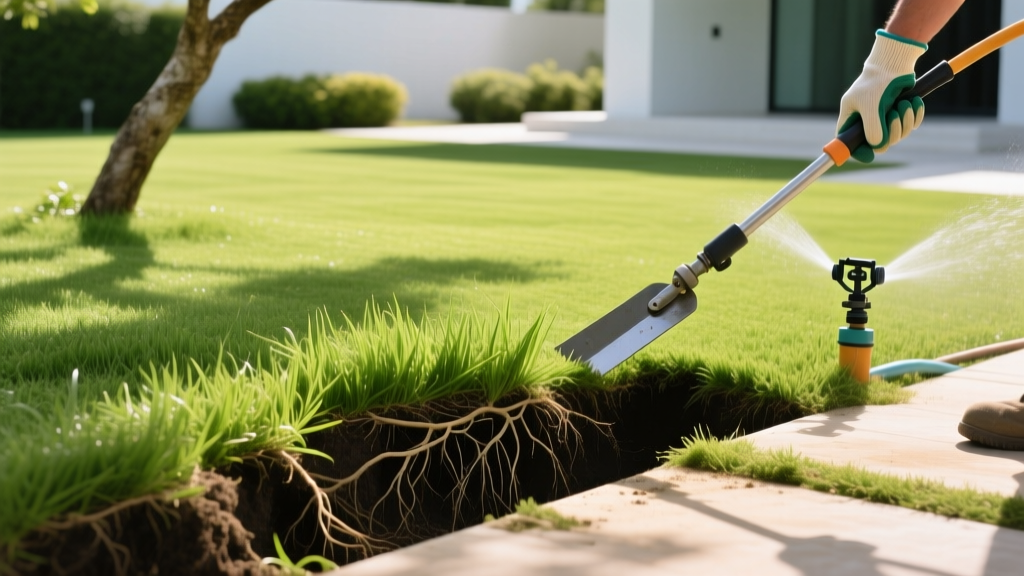
Step-by-Step Bahia Grass Maintenance Guide for Deep-Rooted Lawns
Bahia grass (Paspalum notatum) is the undisputed workhorse of the Southeastern United States. Valued for its exceptional drought tolerance, deep root system (often reaching 7 to 10 feet), and ability to thrive in poor, sandy soils, it requires a distinctly different maintenance approach compared to delicate turfgrasses like St. Augustine or Kentucky Bluegrass. However, its tough, fibrous stems and specific nutrient sensitivities mean that generic lawn care routines will quickly lead to shredded leaf tips, iron chlorosis, and thinning canopies.
This step-by-step maintenance protocol is engineered specifically for the biological needs of Bahia grass. According to the Clemson University HGIC, proper Bahia management hinges on higher mowing heights, precise iron supplementation, and strategic weed control. Below is your comprehensive, season-by-season operational guide.
Phase 1: Spring Green-Up & Soil Preparation (March – May)
Spring maintenance for Bahia grass is less about pushing rapid growth and more about preparing the soil profile and preventing summer weed invasions. Bahia grass breaks dormancy when soil temperatures consistently reach 65°F, usually in mid-to-late March across the Gulf Coast and Florida.
⚠️ Critical Warning: Soil pH and Iron Lockout
Bahia grass is highly susceptible to iron chlorosis (yellowing of leaf tissue while veins remain green) if soil pH rises above 7.0. Before applying any spring fertilizer, conduct a soil test. If your pH is above 7.0, apply elemental sulfur at a rate of 1 to 2 pounds per 1,000 square feet to lower the pH and unlock native soil iron.
Bahia grass is highly susceptible to iron chlorosis (yellowing of leaf tissue while veins remain green) if soil pH rises above 7.0. Before applying any spring fertilizer, conduct a soil test. If your pH is above 7.0, apply elemental sulfur at a rate of 1 to 2 pounds per 1,000 square feet to lower the pH and unlock native soil iron.
Step 1: Pre-Emergent Weed Control
Do not rely on calendar dates; rely on soil thermometers. When soil temperatures at a 2-inch depth hit 55°F for three consecutive days, apply a pre-emergent herbicide. The most effective active ingredient for Bahia grass is Prodiamine 65 WDG (commonly sold as Barricade). Apply at a rate of 0.83 ounces per 1,000 square feet. This provides a 4-month barrier against crabgrass and goosegrass without stunting Bahia root development.
Step 2: Initial Spring Fertilization
Wait until the grass is 100% green and has been mowed twice before applying nitrogen. Use a 16-4-8 or 15-0-15 slow-release fertilizer. As of 2026, premium turf-grade fertilizers with polymer-coated urea average $48 to $55 per 50-pound bag. Apply 1 pound of actual nitrogen per 1,000 square feet (e.g., 6.25 pounds of 16-4-8 product per 1,000 sq ft).
Phase 2: Summer Peak Growth & Mowing Mechanics (June – August)
Summer is when Bahia grass demonstrates its superior heat tolerance, but it is also when improper mowing causes the most aesthetic damage. Bahia stems are heavily lignified (woody). Dull mower blades will tear and shred the tips, leaving a grayish-white, frayed appearance that invites fungal pathogens like dollar spot.
Step 3: Precision Mowing Protocol
Maintain a cutting height between 3.0 and 4.0 inches. Never scalp Bahia grass; removing more than one-third of the leaf blade at a single cutting shocks the deep root system. Sharpen your mower blades every 8 to 10 hours of operation. For heavy, mature Bahia lawns, commercial-grade mulching mowers with high-lift blades (such as the Exmark Lazer Z or Toro TimeCutter) outperform standard residential decks by generating the vacuum necessary to stand the fibrous stems upright before cutting.
Cultivar-Specific Mowing & Care Matrix
| Cultivar | Optimal Height | Leaf Texture | Maintenance Note |
|---|---|---|---|
| Argentine | 3.0 - 4.0 inches | Broad, dark green | Best for home lawns; forms dense mat. |
| Pensacola | 3.0 - 4.0 inches | Narrow, light green | Deeper roots; better for roadsides/poor soil. |
| TifQuik | 2.5 - 3.5 inches | Medium, fine | Fast establishment; slightly more cold tolerant. |
Step 4: Summer Iron Supplementation
Even with correct pH, high summer temperatures can induce temporary iron deficiency. If you notice interveinal chlorosis (yellow leaves with green veins), apply a liquid chelated iron (Fe-EDDHA or Fe-DTPA) spray at 0.1 to 0.2 ounces per 1,000 square feet. Avoid granular iron sulfate in high-pH soils, as it will quickly oxidize and become unavailable to the roots. The University of Florida IFAS Extension specifically recommends foliar liquid iron applications for rapid greening without stimulating excessive, water-hungry top growth.
Phase 3: Fall Wind-Down & Winter Dormancy (September – November)
As day lengths shorten and nighttime temperatures drop below 60°F, Bahia grass begins to slow its vertical growth and shift energy to its massive rhizome network.
Step 5: Potassium Boost for Winter Hardiness
In early September, apply a fertilizer high in potassium (the third number on the NPK ratio), such as a 5-10-15 or 0-0-60 (Muriate of Potash) blend. Potassium acts as a cellular antifreeze, thickening cell walls and improving the grass's ability to survive freezing temperatures and winter desiccation. Apply 1 pound of potassium per 1,000 square feet.
Step 6: Overseeding Decisions (Pros & Cons)
Many homeowners overseed dormant Bahia with annual ryegrass to maintain a green lawn through winter. This requires careful consideration.
Pros of Winter Overseeding
- Provides aesthetic green color from December to March.
- Prevents soil erosion in bare or thinning patches.
- Suppresses winter annual weeds like annual bluegrass (Poa annua).
Cons of Winter Overseeding
- Requires frequent watering for seed germination, increasing utility bills.
- Spring competition: Ryegrass can shade and stunt Bahia green-up in April.
- Requires lowering the Bahia mowing height to 2 inches before seeding, causing temporary stress.
Troubleshooting Decision Tree: Common Bahia Grass Failures
When your lawn deviates from the expected health baseline, use this diagnostic framework to identify and correct the underlying failure mode.
- Symptom: Lawn is turning pale yellow uniformly, starting at the tips.
Cause: Iron Chlorosis or Nitrogen Deficiency.
Fix: Check soil pH. If pH is > 7.0, apply liquid chelated iron immediately and plan to lower pH with sulfur. If pH is normal, apply a fast-release nitrogen source like ammonium sulfate (21-0-0) at 0.5 lbs N per 1,000 sq ft. - Symptom: Leaf tips are white, frayed, and shredded; lawn looks dusty.
Cause: Dull mower blades tearing the fibrous Bahia stems.
Fix: Remove the mower blade and sharpen it with a metal file or bench grinder to a 45-degree angle. Balance the blade before reinstalling. Do not mow wet Bahia grass, as it exacerbates tearing. - Symptom: Grass is thinning out in specific patches, revealing bare soil.
Cause: Insufficient sunlight or Mole Cricket damage.
Fix: Bahia requires a minimum of 6 hours of direct sunlight. If shaded by tree canopies, prune lower branches. If sunlight is adequate, dig a 1-inch section of soil; if mole crickets are present, apply a systemic insecticide containing Imidacloprid in early June when nymphs are active. - Symptom: Broadleaf weeds (like spurge or clover) are invading.
Cause: Thin canopy allowing weed seed germination.
Fix: Apply a post-emergent herbicide containing a 3-way mix of 2,4-D, Dicamba, and Mecoprop (e.g., Trimec Southern). Crucial: Ensure the product is explicitly labeled safe for Bahia grass, as some formulations containing MSMA or high doses of quinclorac can cause severe phytotoxicity and stunting in Paspalum notatum.
Watering Protocols for Deep-Rooted Turf
Because Bahia grass roots can penetrate up to 10 feet deep in sandy loam soils, it is exceptionally drought-tolerant. Overwatering is a far more common mistake than underwatering. During the peak of summer, apply 0.5 to 0.75 inches of water per irrigation event, no more than once or twice a week. This encourages roots to chase moisture downward. If the grass blades fold in half lengthwise and take on a bluish-gray tint, it is exhibiting mild drought stress and requires immediate irrigation. However, allowing the lawn to experience brief, mild drought stress between waterings actually hardens the plant and promotes deeper root expansion.
By adhering to these exact measurements, cultivar-specific mowing heights, and seasonal chemical timings, you will transform a patchy, weed-prone Bahia lawn into a dense, resilient, and deeply rooted turf that thrives in the harshest Southern heat.

