
Lawn Care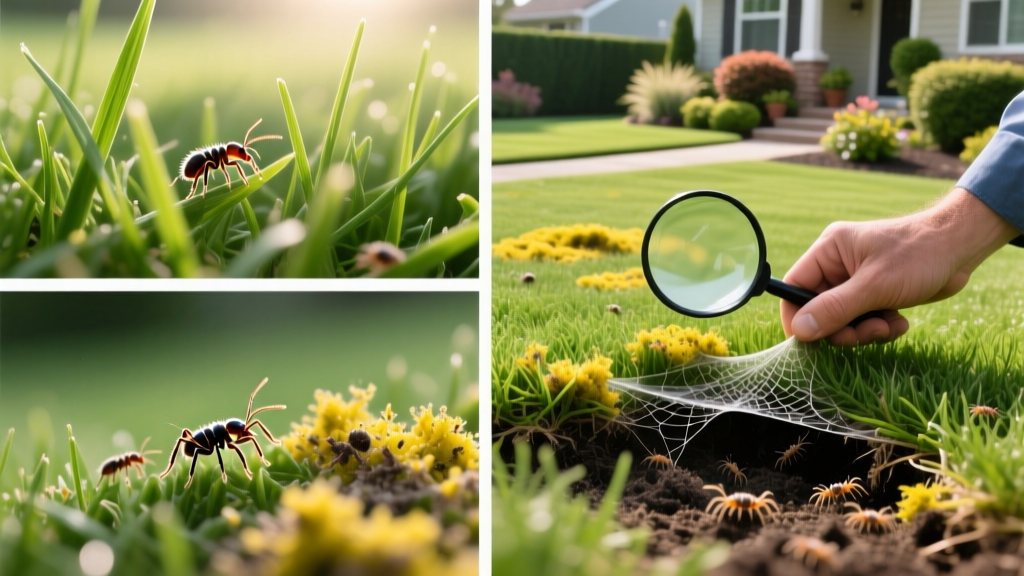
Step-by-Step Guide to Identifying and Eliminating Lawn Mites
When your turfgrass develops a bronze, stippled, or drought-stressed appearance despite adequate irrigation, you are likely dealing with an arachnid infestation, not a watering issue. Lawn mites—specifically Banks grass mites, brown wheat mites, and clover mites—are microscopic pests that pierce grass blades and suck out the chlorophyll. Because they are arachnids and not insects, standard broad-spectrum insecticides often fail to eradicate them, leaving homeowners frustrated as their lawn continues to decline.
According to Colorado State University Extension, Banks grass mites are particularly destructive to cool-season grasses like Kentucky bluegrass and tall fescue, especially on dry, south- and west-facing slopes. This step-by-step procedural guide will walk you through accurate identification, microclimate modification, and precise chemical intervention to eliminate lawn mites and restore your turf.
Lawn Mite Species and Damage Profile Matrix
Before initiating treatment, you must identify which mite species is attacking your turf. Different species peak in different seasons and require slightly different cultural interventions.
| Species | Peak Activity | Visual Damage Signs | High-Risk Turf Zones |
|---|---|---|---|
| Banks Grass Mite | Late Summer & Winter | Yellow stippling, fine webbing at the crown, bronze cast | South/West slopes, edges of pavement, under evergreen trees |
| Brown Wheat Mite | Early Spring (April-May) | Overall yellowing, turf fails to green up after winter | Open, sunny areas, fine fescues, bentgrass |
| Clover Mite | Spring & Fall | Silvering of blades, massive clustering near foundations | Clover patches, retaining walls, house foundations |
Step 1: Execute the White Paper Diagnostic Test
Lawn mites are nearly invisible to the naked eye, measuring less than 1/50th of an inch. To confirm their presence, you must perform a physical extraction test.
- Prepare a diagnostic surface: Place a standard 8.5x11 sheet of white printer paper at the edge of the damaged turf and the healthy turf.
- Agitate the canopy: Vigorously shake the grass blades over the paper for 10 to 15 seconds. Alternatively, use a soft-bristled brush to sweep the grass crowns.
- Observe the specks: Look closely at the paper. If you see tiny, moving specks of dust (red, green, or brown depending on the species), you have a mite infestation.
- Magnify for certainty: Use a 10x jeweler's loupe or a smartphone macro lens to confirm the specks have eight legs and an oval body, distinguishing them from soil particles or aphids.
Step 2: Modify the Microclimate and Irrigation Protocol
Mites thrive in hot, dry microclimates and despise high humidity and physical moisture. Cultural control is your first line of defense and your primary preventative measure.
Expert Maintenance Rule: The most common failure mode in mite prevention is ignoring winter irrigation. Banks grass mites remain active on warm, sunny winter days. You must water south-facing slopes once a month during winter when air temperatures are above 40°F to drown overwintering populations and disrupt their breeding cycle.
If your soil moisture meter reads below 15% in the top three inches of the root zone on a south-facing slope, implement a deep-soaking schedule. Apply 0.5 to 0.75 inches of water every 5 to 7 days during peak summer heat. The physical impact of the water droplets will knock mites off the blades and wash them into the soil profile where they cannot survive.
Step 3: Select the Correct Miticide (Do Not Use Standard Insecticides)
Because mites are arachnids, common lawn insecticides containing Carbaryl (Sevin) or standard Imidacloprid formulations will not provide adequate control. You must select a product containing an active ingredient classified as an acaricide/miticide or a high-concentration pyrethroid specifically labeled for mite suppression.
Recommended Active Ingredients & Product Models
- Bifenthrin 25.1% (e.g., Bifen XTS): The gold standard for DIY and professional lawn mite control. It provides rapid knockdown and up to 30 days of residual control. Cost: ~$55 per 32oz bottle (covers up to 2 acres).
- Abamectin 0.15% (e.g., Avid 0.15 EC): A professional-grade translaminar miticide. It absorbs into the leaf tissue, killing mites as they feed. Highly effective against resistant populations. Cost: ~$110 per 8oz bottle.
- Lambda-cyhalothrin (e.g., Demand CS): A micro-encapsulated pyrethroid that provides excellent longevity on the leaf surface, resisting UV degradation and irrigation wash-off.
Step 4: Precision Application Protocol
Applying the chemical is only half the battle; how you mix and deliver it dictates your success rate. Banks grass mites spin fine, water-repellent webbing over the turf crown. If you spray plain water mixed with miticide, it will bead up and roll off the webbing.
- Mix the Surfactant First: Fill your backpack or pump sprayer halfway with water. Add a Non-Ionic Surfactant (NIS) such as Hi-Yield Spreader Sticker or Dyne-Amic at a rate of 1 to 2 teaspoons per gallon of water. Agitate thoroughly. The surfactant breaks the surface tension and dissolves the mite webbing.
- Add the Miticide: For Bifen XTS, the precise application rate for mites is 1/3 fluid ounce (approx. 6.5 ml) per 1,000 square feet. Add this to the tank and fill the rest with water.
- Target the Crown: Do not just mist the top of the grass blades. Mites live and breed in the thatch layer and at the base of the crown. Use a flat-fan nozzle to spray directly down into the turf canopy until the grass is thoroughly wet and the liquid begins to puddle slightly at the soil line.
- Timing: Apply in the late evening (after 6:00 PM) to prevent rapid evaporation and to protect foraging honeybees, as the product will dry safely overnight.
⚠️ WARNING: Clover Mite Home Invasions
If you are treating clover mites near your home's foundation, be aware that these pests often migrate indoors during sudden temperature drops. Never crush a clover mite on your walls or baseboards. Their hemolymph (blood) contains a potent red pigment that will permanently stain paint and drywall. Always remove indoor clover mites using a vacuum cleaner with a HEPA filter, and seal foundation cracks with silicone caulk after your exterior perimeter spray has dried.
If you are treating clover mites near your home's foundation, be aware that these pests often migrate indoors during sudden temperature drops. Never crush a clover mite on your walls or baseboards. Their hemolymph (blood) contains a potent red pigment that will permanently stain paint and drywall. Always remove indoor clover mites using a vacuum cleaner with a HEPA filter, and seal foundation cracks with silicone caulk after your exterior perimeter spray has dried.
Step 5: Post-Treatment Turf Recovery
Once the mite population is eradicated, the stippled and bronzed grass blades will not magically turn green again—the cellular damage is permanent. Your maintenance procedure must now shift to recovery.
Apply a fast-acting, water-soluble nitrogen fertilizer (such as a 24-0-6 formulation with 50% slow-release nitrogen) at a rate of 0.5 lbs of nitrogen per 1,000 square feet. This will force the turf to push new, undamaged blades from the crown. For severe infestations that resulted in crown death and bare patches, perform a targeted aeration and overseed with a mite-resistant turf blend, such as a mix of 80% tall fescue and 20% Kentucky bluegrass, which tolerates mite pressure far better than pure bluegrass stands.