
Lawn Care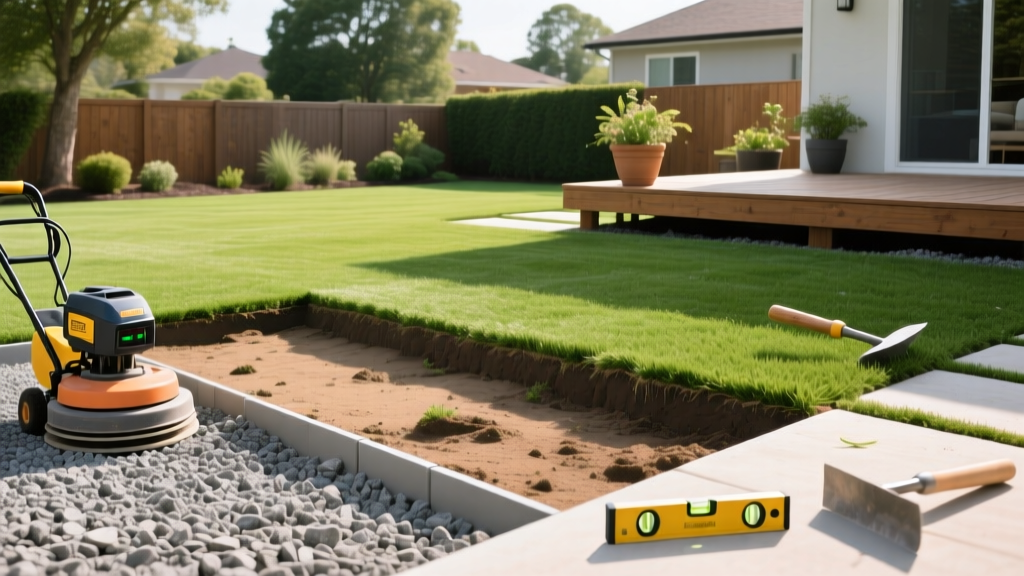
The Ultimate Base Prep Guide for Installing Artificial Grass
The 80/20 Rule of Synthetic Turf: Industry data from the Synthetic Turf Council indicates that over 80% of artificial grass warranty claims and premature failures are caused by improper base preparation, not manufacturing defects in the turf itself. Subgrade subsidence, poor drainage, and weed intrusion all stem from cutting corners before the grass is ever unrolled.
When installing artificial grass, the visible turf is only as good as the foundation beneath it. A meticulously engineered base ensures proper drainage, prevents undulating "sinkholes" underfoot, and extends the lifespan of your investment from a mere 5 years to 20+ years. This guide details the exact materials, measurements, and compaction protocols required to build a commercial-grade subgrade for residential synthetic lawns.
The Material Matrix: What Goes Under Synthetic Turf?
Never use organic topsoil, mulch, or uncompacted dirt as a base. Organic matter decomposes, causing the ground to settle and the turf to ripple. You must use inert, angular aggregates that lock together when compacted. Below is a comparison of the three most effective base materials.
| Material | Particle Size | Drainage Rate | Avg. Cost (Per Ton) | Best Application |
|---|---|---|---|---|
| Class II Road Base | 3/4" minus | Moderate | $35 - $50 | Primary structural layer (bottom 2-3 inches) |
| Decomposed Granite (DG) | 1/4" minus | High | $50 - $75 | Top leveling layer (final 1 inch) |
| Crushed Basalt / Granite | 3/8" minus | Very High | $60 - $85 | Pet areas (prevents ammonia trapping) |
Step-by-Step Excavation and Grading Protocol
Proper installation requires removing the existing biological layer and engineering a slope that moves water away from structures. According to EPA green infrastructure guidelines on permeable surfaces, ensuring a minimum 1% slope is critical for preventing subsurface water pooling.
- Calculate Excavation Depth: For standard soils, excavate 3 to 4 inches below your desired final grade. If you have heavy clay soil (which retains water and expands), excavate 5 inches and consider adding a French drain system at the subgrade level.
- Subgrade Compaction: Before adding any gravel, compact the exposed native dirt using a vibratory plate compactor. This prevents the native soil from shifting under the weight of the new base.
- Lay the Geotextile Weed Barrier: Roll out a 3-ounce to 4-ounce non-woven geotextile fabric directly over the compacted subgrade. Do not use cheap woven plastic weed barriers; they trap water and tear during compaction. Overlap seams by 6 inches and secure with 6-inch landscape staples.
- Spread the Base Material: Dump your Class II Road Base or crushed granite. Spread it evenly to a depth of 2 to 3 inches. Crucial Rule: Never compact more than 2 inches of material at a time. If you need a 4-inch base, spread and compact in two separate 2-inch "lifts."
- Moisture Calibration: Aggregates require moisture to lock together. Lightly mist the base material with a hose. Perform the "snowball test": grab a handful of the gravel and squeeze it. It should hold its shape briefly without dripping water. If it crumbles instantly, it is too dry; if water squeezes out, it is too wet.
- Final Compaction and Laser Grading: Run the plate compactor over the area in overlapping passes. Use a transit level or laser level to verify a 1% to 2% slope (a drop of 1/8 inch per foot) away from your home's foundation.
⚠️ Edge Case Warning: Tree Roots
If installing artificial grass near mature trees, do not sever roots larger than 2 inches in diameter to achieve a flat grade. Instead, build the base up and over the root flares, or install a flexible root barrier wall 24 inches deep to prevent future root heaving from cracking your compacted base.
If installing artificial grass near mature trees, do not sever roots larger than 2 inches in diameter to achieve a flat grade. Instead, build the base up and over the root flares, or install a flexible root barrier wall 24 inches deep to prevent future root heaving from cracking your compacted base.
Pet-Specific Base Modifications
Standard base materials can create severe odor problems if you have dogs. Decomposed Granite (DG) and limestone-based road bases contain high levels of calcium carbonate. When dog urine (which is high in urea and ammonia) interacts with calcium carbonate, it creates a chemical bond that traps ammonia gases in the base layer, leading to permanent, un-washable odors.
The Pet-Friendly Base Stack
- Sub-base: Use washed, crushed basalt or pure granite (zero limestone content).
- Drainage Layer: Install a 1/2-inch drainage composite mat (shock pad with flow channels) directly on top of the compacted base and beneath the turf backing.
- Infill Strategy: Plan for 1.5 to 2 lbs of antimicrobial zeolite infill per square foot during the turf installation phase to neutralize ammonia on contact.
Equipment and Cost Expectations
Attempting to compact a base by hand or with a manual lawn roller will result in guaranteed failure. You must rent professional-grade equipment. Below is a realistic breakdown of base preparation costs for a standard 500-square-foot residential project.
| Item / Service | Estimated Cost | Notes |
|---|---|---|
| Excavation & Haul Away | $1.50 - $2.50 / sq ft | Varies heavily by local dump fees and access. |
| Base Materials (3-4") | $0.75 - $1.25 / sq ft | Requires approx. 1 ton per 80 sq ft. |
| Vibratory Plate Compactor Rental | $90 - $130 / day | Must generate min. 5,000 lbs centrifugal force. |
| Geotextile Fabric & Staples | $0.30 - $0.50 / sq ft | Use 3oz+ non-woven polypropylene. |
Verifying Base Readiness Before Turf Rollout
Before you unroll your artificial grass, perform the "Golf Ball Test." Drop a standard golf ball from waist height onto the compacted base. The ball should bounce slightly and roll smoothly without catching on divots or pebbles. If the ball hits a protruding rock and stops, or if you can visibly see the tread marks from the compactor, you must add a thin layer of fine DG, mist it, and re-compact. The surface should feel as hard and smooth as a concrete driveway, yet remain fully permeable to water. Taking the time to perfect this subgrade guarantees that your synthetic turf will remain flat, drain instantly during heavy storms, and provide a perfectly even surface for decades.

