
Lawn Care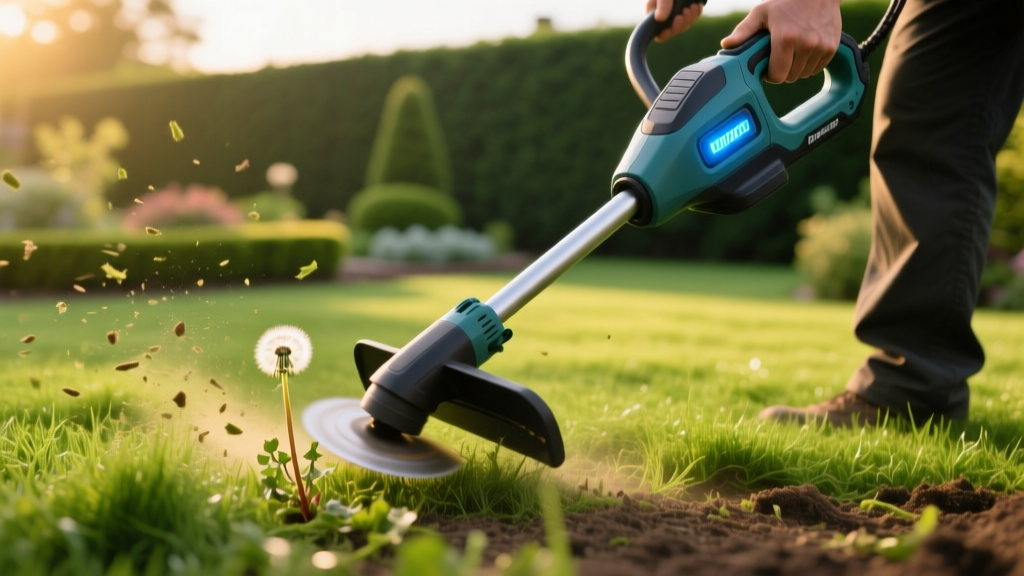
Using a Battery Operated Weed Wacker for Targeted Weed Control
The Mechanics of Precision Weed Eradication
Most homeowners view a string trimmer solely as an edging tool, but in professional turf management, a battery operated weed wacker is a critical mechanical spot-treatment device. When dealing with aggressive, deep-rooted, or stoloniferous weeds, applying liquid herbicides directly to mature foliage often fails due to thick waxy cuticles and poor translocation. By utilizing the high-torque, instant-throttle response of modern brushless battery trimmers, you can mechanically scalp, sever, and defoliate specific weed species, forcing vulnerable regrowth that is highly susceptible to targeted systemic herbicides.
Unlike gas-powered models that require high RPMs to maintain torque and risk severe turf damage through accidental over-revving, 2026 brushless electric motors deliver maximum torque at zero RPM. This allows for micro-adjustments in string height, enabling you to shave the crown off a dallisgrass clump without slicing into the surrounding Kentucky Bluegrass or Bermuda stolons.
Matching Trimmer Specs to Weed Morphology
Not all weeds respond to the same mechanical stress. Selecting the correct string gauge and voltage platform is the first step in a successful spot-treatment protocol. Thin strings whip and tear broadleaf weeds, leaving jagged edges that heal over and block herbicide uptake. Thick strings act as blunt blades, cleanly severing stems and crowns.
| Weed Species | Growth Habit | Ideal String Gauge | Trimmer RPM Setting | Mechanical Goal |
|---|---|---|---|---|
| Dallisgrass | Deep-rooted perennial clump | 0.095" - 0.105" | High (6000+ RPM) | Scalp crown to force susceptible regrowth |
| Creeping Charlie | Stoloniferous broadleaf | 0.065" - 0.080" | Low (3500 RPM) | Sever surface stolons without tearing turf |
| Crabgrass | Shallow-rooted annual | 0.080" | Medium (4500 RPM) | Remove seed heads and lower canopy |
| Yellow Nutsedge | Perennial with subterranean tubers | 0.095" | High (6000+ RPM) | Repeated defoliation to starve tubers |
Precision Spot-Treatment Techniques by Species
Dallisgrass and Clumping Perennials: The Scalp-and-Extract Method
Dallisgrass (Paspalum dilatatum) forms thick, fibrous crowns that repel contact herbicides. To spot-treat this weed, equip your trimmer with a 0.095-inch twisted line. Tilt the trimmer head slightly downward and engage the variable speed trigger to roughly 75% power. Drop the spinning string exactly two inches into the center of the dallisgrass clump. The goal is to obliterate the central crown and remove the mature, waxy foliage. According to turfgrass researchers at Penn State Extension, removing the mature canopy forces the weed to push new, bright green shoots from the remaining root mass. These new shoots lack a protective cuticle, making them the perfect target for a follow-up spot application of MSMA or fluazifop three to five days later.
Creeping Charlie: The Canopy Disruption Technique
Ground ivy (Creeping Charlie) spreads via surface stolons that root at the nodes. Using a thick string at high RPM will simply tangle and tear the surrounding desirable turf. Instead, spool a 0.065-inch round line. Hold the trimmer perfectly level, hovering the string guard exactly one-half inch above the soil surface. Use a sweeping, pendulum motion at a low RPM. This 'feathering' technique severs the fragile stolons connecting the nodes. Once the stolons are severed, the individual nodes dry out rapidly in the sun, significantly reducing the total biomass before you apply a targeted Triclopyr-based spot spray.
Yellow Nutsedge: The Starvation Cycle
Nutsedge is notoriously difficult to kill because it stores energy in subterranean nutlets. Mechanical spot-treatment with a battery operated weed wacker requires a commitment to a repeated defoliation schedule. Set your trimmer to a high RPM and cut the nutsedge flush with the surrounding turf canopy every time it emerges above the grass line—typically every 7 to 10 days during peak summer heat. As noted by the University of Minnesota Extension, repeatedly removing the photosynthetic tissue before the plant can produce three or four new leaves forces the subterranean tubers to expend their stored carbohydrates, eventually starving the weed system without the need for harsh soil-residual chemicals.
Top 2026 Battery Models for Spot Treatment
Spot-treating requires a machine with immediate throttle response, low vibration, and a precise guard design. Here are the top-performing models for this specific application:
EGO Power+ 15-Inch String Trimmer (ST15100T)
Price: ~$249 (Tool + 5.0Ah Battery) | Voltage: 56V
Why it works: The Powerload head allows you to spool 0.095-inch line in seconds without jamming. The 56V brushless motor provides the sustained high-RPM torque required to scalp thick dallisgrass crowns without bogging down. The straight carbon-fiber shaft offers superior balance for hovering over delicate stolon networks.
Ryobi 40V HP Brushless String Trimmer (RY402040)
Price: ~$199 (Tool + 4.0Ah Battery) | Voltage: 40V
Why it works: Features a highly responsive variable-speed trigger that excels at the low-RPM 'feathering' technique needed for Creeping Charlie. The adjustable handle and lightweight profile reduce fatigue during meticulous, slow-paced spot-treatment sessions across large properties.
Critical Spot-Treatment Mistakes to Avoid
- Scalloping the Soil: Dropping the string below the soil line exposes the roots of desirable turf to fungal pathogens and creates bare spots where new weed seeds will germinate. Always ride the plastic guard on the turf canopy.
- Using Degraded Line: UV exposure and friction round off the sharp edges of nylon string over time. A rounded string tears weeds rather than slicing them, triggering a stress-response that makes the weed more resistant to subsequent herbicide applications. Replace line when it turns smooth and white.
- Over-Revving Near Tree Trunks: When spot-treating weeds around tree bases, high-RPM string strikes can girdle the cambium layer of young trees. Drop to the lowest RPM setting and use a physical barrier shield when trimming within 12 inches of bark.
Integrating Mechanical Trimming with Chemical Spot Sprays
To achieve total eradication of stubborn perennial weeds, mechanical defoliation must be paired with chemical spot-treatment in a precise timeline:
- Day 1 (Mechanical Scalp): Use the battery operated weed wacker to remove 80% of the mature weed foliage and sever the central crown or stolons. Do not bag the clippings immediately; allow them to dry and blow away to expose the remaining weed stubble.
- Day 2 (Hydration): Water the lawn lightly (0.1 inches). This encourages the shocked weed root system to push new, vulnerable shoots upward.
- Day 4 (Chemical Application): Once 1 to 2 inches of bright green regrowth appears, apply your targeted systemic herbicide (e.g., Quinclorac for grassy weeds, Triclopyr for broadleaves) directly to the new tissue using a shielded spot-sprayer.
- Day 14 (Evaluation): Inspect the spot. If the weed shows yellowing and collapse, the translocation was successful. If green tissue remains, repeat the mechanical scalp and chemical cycle.
By treating your battery operated weed wacker as a surgical prep tool rather than just a cleanup device, you drastically reduce the volume of herbicides needed and eliminate the frustrating cycle of recurring perennial weeds in your lawn.

