
Lawn Care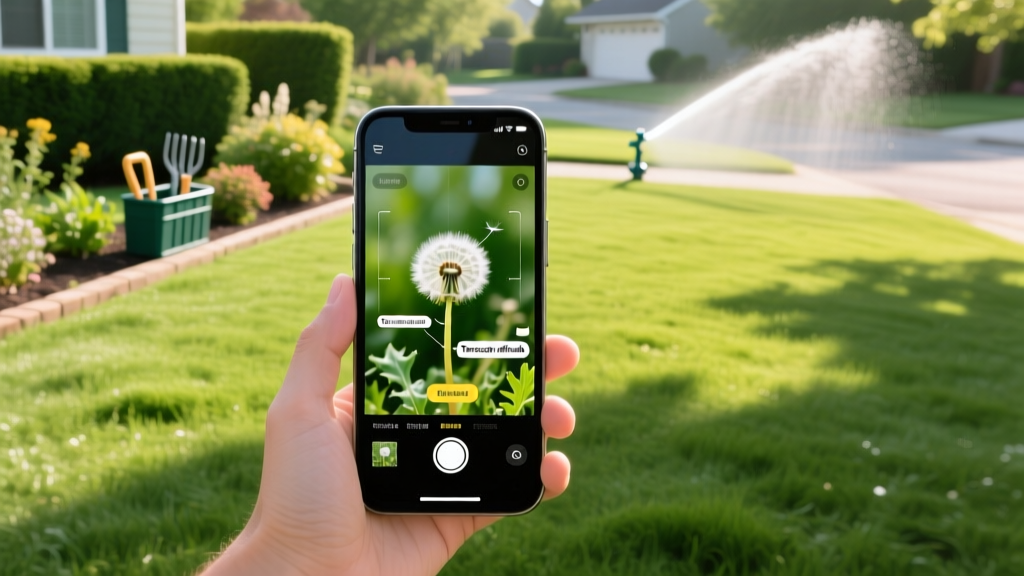
Best App to Identify Weeds in Lawns: 2026 Comparison
Misidentifying a lawn weed is the most expensive mistake a homeowner can make. Applying a broadleaf herbicide like 2,4-D to a grassy weed like crabgrass (Digitaria sanguinalis) will not kill the weed, but it may stress your desirable turfgrass and waste $30 in chemicals. In 2026, AI-powered plant identification apps have largely replaced bulky field guides, but not all algorithms are trained on turfgrass pathology. Some excel at identifying forest flora but fail completely when analyzing vegetative lawn weeds.
This guide cuts through the app store noise to evaluate the top tools for turf weed identification, comparing their AI accuracy, subscription costs, and integration with actionable herbicide protocols.
2026 Matrix: Top Apps to Identify Weeds Compared
Before downloading, review how the leading applications stack up regarding turf-specific accuracy and treatment guidance. Note that "Vegetative Accuracy" refers to the app's ability to identify weeds before they produce flowers or seed heads—the exact window when pre-emergent and early post-emergent treatments are most effective.
| App Name | Annual Cost | Broadleaf Accuracy | Grassy Weed Accuracy | Treatment Advice |
|---|---|---|---|---|
| PictureThis | $39.99 | 98% | 65% | Excellent (AI-generated) |
| ID Weeds (Univ. of MO) | Free | 95% | 85% (Manual assist) | Good (Extension links) |
| Seek by iNaturalist | Free | 92% | 40% | None (Ecological focus) |
| Pl@ntNet | Free | 88% | 50% | None |
Deep Dive: The Big Three Weed ID Apps
PictureThis: The Premium Powerhouse
PictureThis utilizes a highly advanced convolutional neural network trained on billions of images. For common broadleaf lawn invaders like dandelion (Taraxacum officinale), white clover (Trifolium repens), and broadleaf plantain (Plantago major), its accuracy is virtually flawless.
The Advantage: The app doesn't just name the weed; it provides a customized "Plant Doctor" treatment plan. If it identifies creeping charlie (Glechoma hederacea), it will correctly advise you that standard 2,4-D is insufficient and recommend a triclopyr-based herbicide.
The Catch: The aggressive $39.99/year paywall. While a limited free version exists, it restricts high-resolution analysis and treatment guides. Furthermore, the app frequently misidentifies vegetative grassy weeds, often confusing annual bluegrass (Poa annua) with desirable tall fescue.
ID Weeds: The Academic Standard
Developed by turfgrass specialists at the University of Missouri Extension, ID Weeds is built specifically for North American turf managers and homeowners. Rather than relying purely on a "snap-and-guess" AI model, it allows you to filter by weed type (broadleaf vs. grassy), growth habit (rosette vs. creeping), and specific botanical features like ligules and auricles.
The Advantage: It is 100% free and links directly to university extension protocols for eradication. It is vastly superior for identifying sedges (like yellow nutsedge) and grassy weeds that commercial AI apps misclassify.
The Catch: The user interface feels dated, and it requires the user to know basic botanical terminology to use the manual filter features effectively when the camera AI struggles.
Seek by iNaturalist: The Ecological Choice
Backed by the California Academy of Sciences and the National Geographic Society, Seek by iNaturalist is a phenomenal tool for general nature identification. It excels at identifying invasive ecological threats like Japanese stiltgrass or garlic mustard encroaching on property lines.
The Advantage: Completely free, no account required, and highly respectful of user privacy (no location data harvesting).
The Catch: Seek is not a lawn care app. It will tell you that you have Stellaria media (common chickweed), but it will not tell you that you need to apply a pre-emergent like prodiamine in early September to stop its winter life cycle.
⚠️ The Grassy Weed Blindspot
No AI app on the market reliably identifies grassy weeds in their early vegetative stages. Before a weed like crabgrass produces its distinctive seed head, its leaf blade is visually indistinguishable from desirable turfgrass to a camera lens. To identify grassy weeds via an app, you must photograph the ligule (the membrane where the leaf blade meets the sheath) and the auricles (claw-like appendages). If your app guesses "Tall Fescue" but the patch is growing faster and lighter green than the rest of the lawn in July, assume it is crabgrass or dallisgrass and consult a local extension office.
How to Capture the Perfect Diagnostic Photo
The accuracy of any weed identification app is entirely dependent on your photographic technique. Snapping a photo from three feet away while standing will yield useless results. Follow this three-shot protocol to guarantee a correct ID:
- The Rosette/Canopy Shot: Shoot directly top-down (90-degree angle) to capture the overall growth habit. Is it a circular rosette (indicates dandelion or plantain) or a creeping stolon network (indicates bermudagrass or creeping bentgrass)?
- The Macro Stem Shot: Get within two inches of the base of the plant. Focus on the stem color, the presence of hairs (trichomes), and the node structure. This is critical for distinguishing between similar species like prostrate spurge and spotted spurge.
- The Scale Reference: Place a standard US Quarter coin next to the leaf or flower head. This helps you verify the plant's actual size later and prevents the AI from confusing a juvenile weed with a mature, larger species.
Translating App Results into Lawn Action
Once your app successfully identifies the weed, you must cross-reference the result with the University of California IPM Weed Gallery or your local university extension to verify the life cycle (annual, biennial, or perennial). The life cycle dictates the chemical strategy.
- Winter Annuals (e.g., Henbit, Chickweed): If the app identifies these in early spring, post-emergent herbicides are largely a waste of money; the plant is already dying naturally. Focus on fall pre-emergent applications instead.
- Perennial Broadleaf (e.g., Dandelion, Clover): Require systemic herbicides that translocate down to the taproot. Look for active ingredients like dicamba or triclopyr on the herbicide label.
- Grassy Weeds (e.g., Crabgrass, Goosegrass): Post-emergent control requires specific chemicals like quinclorac. Standard "weed and feed" products will not harm these weeds. Always refer to the EPA Herbicide Guidelines for safe application rates and environmental precautions.
Expert Verdict: Which App Should You Download?
Your choice depends on your lawn care philosophy and budget. If you are a homeowner dealing primarily with common broadleaf weeds and want immediate, easy-to-read treatment advice, the $39.99 annual subscription to PictureThis pays for itself by preventing misapplied chemical purchases.
However, if you are managing a complex lawn with a mix of broadleaf weeds, sedges, and grassy invaders, skip the premium apps. Download the free ID Weeds app by the University of Missouri, pair it with a cheap macro lens clip-on for your smartphone, and use the manual botanical filters to achieve professional-grade turf diagnostics without spending a dime.

