
Lawn Care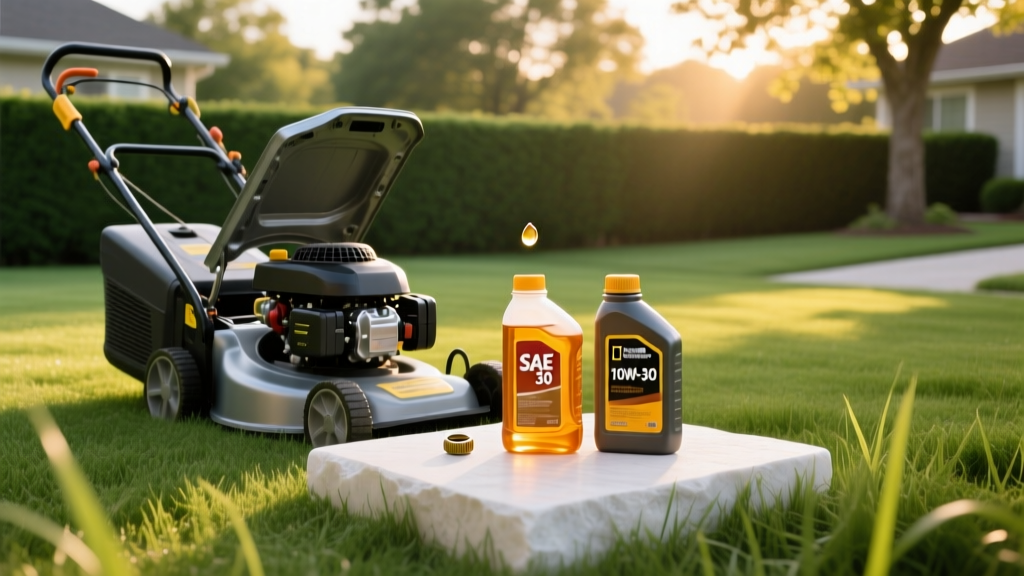
Choosing the Right Oil for Lawn Mower Engines: SAE 30 vs 10W-30
The Thermal Reality of Air-Cooled Small Engines
Selecting the correct oil for lawn mower engines requires understanding a fundamental mechanical difference: air-cooled small engines operate at significantly higher temperatures than liquid-cooled automotive engines. While a car’s cooling system maintains oil temperatures around 200°F to 220°F, the cylinder head of an air-cooled mower engine (like those from Briggs & Stratton, Honda, or Kawasaki) routinely exceeds 300°F under heavy summer loads. This extreme thermal stress breaks down standard automotive oils, leading to sludge, stuck piston rings, and catastrophic scoring.
Furthermore, modern automotive oils (API SP classification) have reduced levels of ZDDP (Zinc Dialkyldithiophosphate) to protect catalytic converters. Small engines lack catalytic converters and rely on high ZDDP levels to protect flat-tappet camshafts and gear-driven components. Using the wrong oil accelerates cam lobe wear and reduces engine lifespan by up to 40%.
Viscosity Breakdown: SAE 30 vs. 10W-30 vs. 5W-30
Viscosity dictates how well the oil flows at startup and how well it protects at operating temperature. The manufacturer’s recommendation usually depends on your ambient operating temperature. Below is a decision matrix to help you choose the right grade for your specific climate and usage pattern.
| Oil Grade | Optimal Temp Range | Best Use Case | Startup Protection | High-Heat Shear Stability |
|---|---|---|---|---|
| SAE 30 (Conventional) | 40°F to 100°F+ | Standard summer mowing, flat terrain, push mowers | Poor (thick when cold) | Excellent |
| 10W-30 (Conventional/Synthetic) | 0°F to 100°F+ | Year-round use, varying climates, riding mowers | Good | Very Good |
| 5W-30 (Full Synthetic) | -20°F to 100°F+ | Early spring/late fall mowing, extreme heat, commercial use | Excellent | Superior |
According to Briggs & Stratton’s official maintenance guidelines, SAE 30 is the standard recommendation for temperatures above 40°F. However, if you frequently start your mower in the chilly early morning or operate in highly variable spring weather, 10W-30 provides the necessary multi-grade flexibility to prevent dry starts.
Synthetic vs. Conventional: Is the Premium Justified?
The price gap between conventional and synthetic small engine oil has narrowed, but the chemical advantages of synthetics remain distinct. Synthetic oils utilize uniformly sized hydrocarbon chains that resist thermal breakdown and oxidation.
Cost & Performance Comparison
- Conventional SAE 30 (e.g., STP, standard Briggs): $5.00 - $7.00 per quart. Requires strict 50-hour or seasonal change intervals. Prone to carbon coking on the piston crown.
- Full Synthetic 5W-30 (e.g., Amsoil Small Engine, Mobil 1): $9.00 - $12.00 per quart. Extends drain intervals to 100+ hours. Maintains viscosity in 95°F+ ambient heat without thinning out.
Expert Verdict: For a standard 21-inch push mower used 30 hours a year, conventional oil changed annually is perfectly adequate. For a zero-turn riding mower or a commercial walk-behind running 200+ hours in high heat, full synthetic is a mandatory investment to prevent engine seizure.
Precision Oil Change Procedure: Step-by-Step
Changing the oil in a small engine is not as simple as draining and dumping. Improper filling is the leading cause of blown seals and hydro-lock. Follow these exact specifications for a standard 140cc-190cc push mower engine.
- Prep and Warm-Up: Run the engine for 3 minutes to warm the oil, suspending carbon particles. Turn off the engine and disconnect the spark plug wire to prevent accidental ignition.
- Drain: Place a low-profile drain pan beneath the deck. Remove the drain plug (typically a 3/8-inch square drive or 14mm hex bolt). If your mower lacks a drain plug, use a siphon pump or carefully tilt the mower. Warning: Always tilt the mower with the carburetor and air filter facing UP. Tilting it the wrong way will flood the carburetor and soak the paper air filter, requiring a $15-$25 replacement.
- Capacity Check: Most push mowers hold exactly 15 to 18 oz (0.47 to 0.53 quarts). Riding mowers (500cc-700cc) hold 48 to 64 oz. Never assume a 1-quart bottle is the exact fill volume.
- Fill and Measure: Pour in 12 oz of your chosen oil. Wait 60 seconds for it to settle in the crankcase.
- The Dipstick Rule: Insert the dipstick to check the level. Do not thread the dipstick in when checking the oil level on most modern Briggs & Stratton engines; simply rest it on the threads. Threading it in will give a falsely low reading, leading to dangerous overfilling.
- Top Off: Add oil in 1 oz increments until the level reaches the top hash mark. Reinstall the drain plug and torque to 10-15 ft-lbs to avoid stripping the aluminum crankcase threads.
Common Maintenance Mistakes That Destroy Engines
Avoid these frequent errors that bypass standard maintenance logic:
- Using Automotive Oil with Friction Modifiers: Oils labeled 'Energy Conserving' or 'Resource Conserving' contain molybdenum and boron friction modifiers. In small engines with wet clutches (like some commercial mowers), these modifiers cause clutch slippage and premature transmission failure.
- Overfilling the Crankcase: Adding a full quart to a 15-oz crankcase causes the crankshaft counterweights to whip the oil into a froth (aeration). Aerated oil cannot lubricate the connecting rod bearing, resulting in a thrown rod within hours.
- Ignoring the Breather Tube: If oil is blowing out of the muffler or air filter, the crankcase breather tube is likely clogged with carbon, creating positive pressure. Clean the breather assembly before blaming the oil viscosity.
Frequently Asked Questions
Can I use standard 10W-30 car oil in my lawn mower?
You can in an emergency, but it is not recommended for long-term use. Standard car oil lacks the high ZDDP (zinc and phosphorus) anti-wear additives required for the high-RPM, air-cooled environment of a mower engine. Over 100+ hours, automotive oil will shear down, losing its protective film strength. Always opt for oil specifically formulated for small engines or heavy-duty diesel oil (like Rotella T4 10W-30), which retains high ZDDP levels.
What does the API service classification mean for mowers?
The American Petroleum Institute (API) classifies oils by performance standards. While modern car oils are API SP, small engine manuals often specify API SJ, SL, or later. You can safely use any oil rated SJ or newer, but avoid 'Energy Conserving' variants. Small engine specific oils are formulated to meet these older, high-zinc requirements without damaging emissions equipment.
How do I dispose of used mower oil?
Never dump oil in the trash, down a drain, or into the soil. Pour the used oil into the empty new oil bottle, cap it tightly, and take it to any local auto parts store (AutoZone, Advance Auto Parts, O'Reilly) or municipal hazardous waste facility. Most retailers accept up to 5 gallons of used oil per day for free recycling.

