
Lawn Care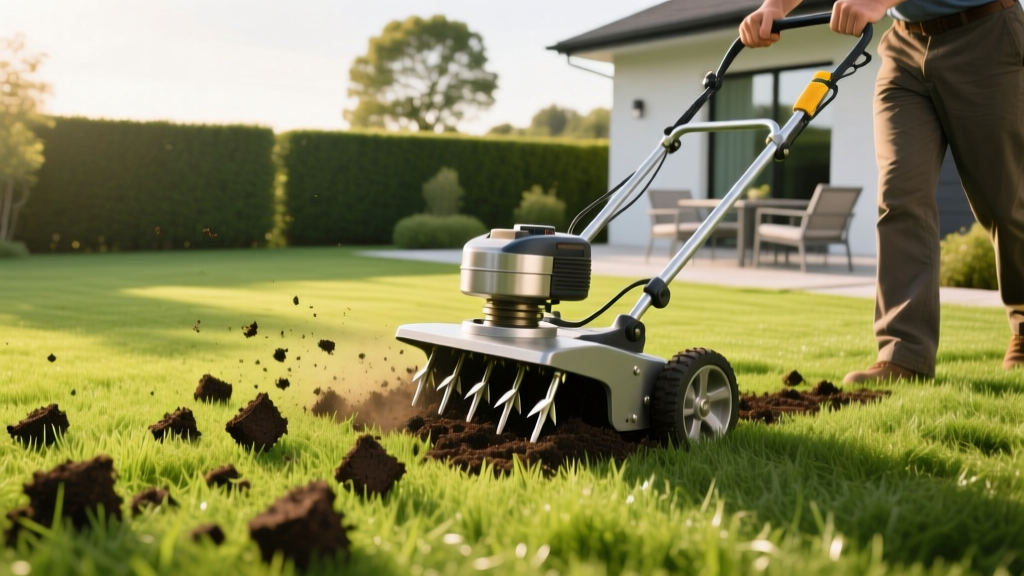
Finding the Best Time to Aerate Your Yard: Cost & Timing Guide
The Biological Window: Matching Grass Type to Soil Temperature
Determining the best time to aerate your yard is not about the calendar month; it is about soil temperature and the grass's active root growth phase. Core aeration inflicts deliberate mechanical stress on the turf. If performed during dormancy or peak summer heat, the lawn cannot recover, leading to severe moisture loss and weed invasion. According to University of Minnesota Extension turfgrass specialists, aeration must align with the grass's peak carbohydrate storage phase to ensure rapid hole colonization by new roots.
For cool-season grasses (Kentucky Bluegrass, Tall Fescue, Perennial Ryegrass), the optimal window is late summer to early fall, specifically when daytime air temperatures drop to 70°F–75°F and soil temperatures at a 2-inch depth sit between 60°F and 70°F. For warm-season grasses (Bermuda, Zoysia, Centipede), the window shifts to late spring and early summer, just as the turf transitions from spring green-up into aggressive lateral growth.
| Grass Category | Common Varieties | Optimal Calendar Window | Target Soil Temp (2" Depth) | Expected Recovery Time |
|---|---|---|---|---|
| Cool-Season | Tall Fescue, Kentucky Bluegrass | Aug 15 – Sept 30 | 60°F – 70°F | 14 – 21 Days |
| Cool-Season | Perennial Ryegrass, Fine Fescue | Aug 20 – Sept 15 | 60°F – 68°F | 10 – 14 Days |
| Warm-Season | Bermudagrass, Zoysia | May 15 – June 30 | 70°F – 80°F | 10 – 14 Days |
| Warm-Season | Centipede, St. Augustine | May 20 – June 15 | 70°F – 75°F | 14 – 21 Days |
Coverage Dosage: Calculating Hole Density and Plug Depth
A common failure mode in DIY aeration is under-dosage. Simply rolling a manual spike aerator or doing a single pass with a lightweight rental machine does not provide the coverage required to alleviate deep soil compaction. Penn State Extension recommends a target density of 20 to 40 holes per square foot for effective compaction relief.
The Mathematics of Aeration Passes
Standard walk-behind core aerators (such as the Billy Goat AET48 or Classen CA-18) pull plugs spaced approximately 3 to 4 inches apart on a single pass. This yields roughly 15 to 20 holes per square foot. To achieve the 40-hole density required for heavy clay soils, you must execute a double-pass crisscross pattern.
- Single Pass (15-20 holes/sq ft): Adequate for sandy loam soils or annual maintenance on healthy lawns with minimal foot traffic.
- Double Pass (30-40 holes/sq ft): Mandatory for heavy clay soils, newly constructed homes with builder-grade compacted topsoil, and high-traffic zones.
- Plug Depth Requirement: Tines must penetrate 2.5 to 3 inches deep. If your machine is pulling 1-inch plugs, the soil is too dry, or the tines are worn down and require replacement (typically a $45–$60 parts cost).
2026 Cost Analysis: DIY Rental vs. Professional Service
When budgeting for lawn renovation, understanding the true cost of aeration requires looking beyond the base rental rate. The table below breaks down the actual financial outlay for a standard 5,000 square foot lawn in 2026.
| Cost Factor | DIY Rental Route | Professional Service |
|---|---|---|
| Base Equipment / Labor | $95 – $130 (4-hour rental) | $85 – $125 (Avg $0.02/sq ft) |
| Fuel / Transport | $20 (Gas + Truck ramp fee) | $0 (Included in service) |
| Hidden Physical Costs | High (Machines weigh 250+ lbs) | None |
| Minimum Call-Out Fees | N/A | $75 – $100 minimum applies |
| Total Estimated Cost | $115 – $150 | $85 – $125 |
⚠️ The Minimum Fee Trap: Most professional landscaping companies enforce a $75 to $100 minimum trip charge. If you have a small urban yard (e.g., 2,000 sq ft), hiring a pro solo will result in a severely inflated per-square-foot cost. Pro Tip: Coordinate with three neighbors to schedule aeration on the same day. This waives the minimum fee for everyone and drops the per-square-foot cost to the bulk rate of $0.015 to $0.018.
The Soil Moisture Failure Mode
The most frequent reason aeration fails to produce viable soil plugs is improper soil moisture. Core aerators rely on soil cohesion to push the previous plug out of the hollow tine. If the soil is too dry, the tines will bounce off the surface, bend, or pull shallow, crumbling dust. If the soil is saturated, the machine will pull long, muddy cores that smear the sides of the hole, effectively creating a compacted clay chimney that blocks water infiltration.
The 1-Inch Pre-Soak Rule: Apply exactly 1 inch of water to the lawn 24 to 48 hours before aeration. Mathematically, 1 inch of water equals 0.62 gallons per square foot. For a 5,000 sq ft lawn, you need to apply 3,100 gallons. Set your irrigation system to run until your catch-cans measure 1 inch, then stop. The soil should be moist enough that a 6-inch screwdriver pushes into the ground with moderate hand pressure, but dry enough that you do not leave deep footprints when walking on it.
Pre-Aeration Protocol: Maximizing Your Investment
To protect your infrastructure and ensure the machine operates at peak efficiency, execute this mandatory prep checklist 48 hours before the aerator touches the grass.
- Flag All Shallow Infrastructure: Irrigation heads, valve boxes, and invisible dog fence wires are routinely destroyed by 250-lb aerators. Purchase a 100-pack of neon wire flags ($6 at hardware stores) and mark every sprinkler head and shallow utility line.
- Mow to 1.5 Inches: Cut the grass shorter than your normal maintenance height. Shorter grass allows the tines to penetrate the soil at a perpendicular angle without bending the grass blades into the hole, and it ensures the pulled cores make direct contact with the soil surface to break down faster.
- Clear Debris: Remove all sticks, pinecones, and surface stones. A single 1-inch stone caught in a hollow tine can bend the tine shaft, rendering that aeration station useless for the remainder of the job.
Post-Aeration Overseeding Dosage
Aeration is rarely a standalone treatment; it is the mechanical precursor to overseeding. The holes created by the aerator serve as protected micro-environments for seed-to-soil contact. For Tall Fescue overseeding immediately following fall aeration, apply seed at a dosage of 4 to 5 lbs per 1,000 square feet. For Kentucky Bluegrass, reduce the dosage to 1.5 to 2 lbs per 1,000 square feet due to its smaller seed size and creeping rhizome growth habit. Drag a heavy steel mat or a piece of chain-link fence over the lawn after seeding to push the seed into the aeration holes and break up the pulled soil cores, distributing the topsoil evenly over the existing turf canopy.

