
Lawn Care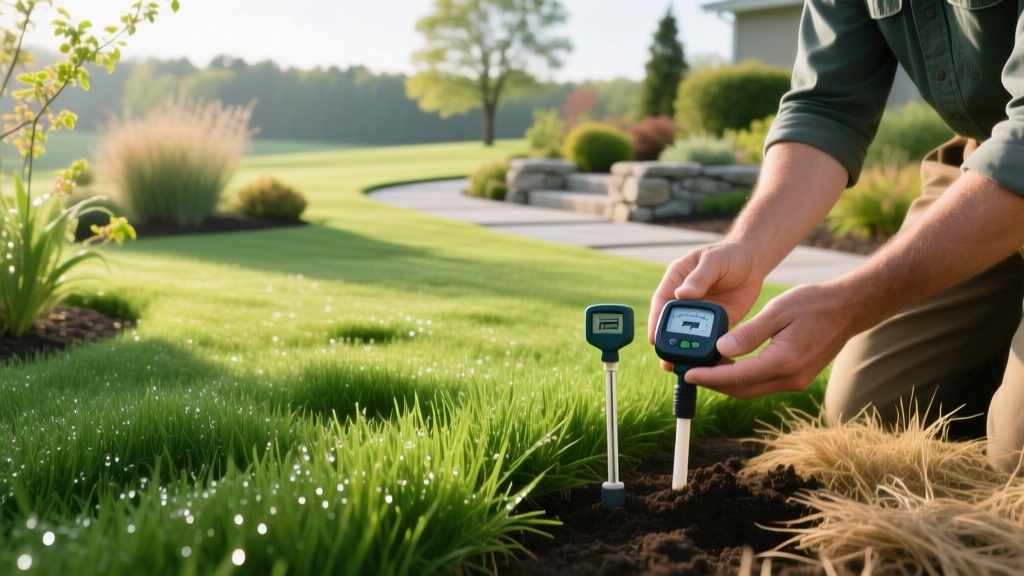
Best Times to Water Grass: Seasonal & Regional Guide
The Daily Clock: Why 4 AM to 8 AM is the Golden Window
When determining the best times to water grass, the time of day dictates your water efficiency and disease risk. Watering between 4:00 AM and 8:00 AM capitalizes on specific meteorological conditions that minimize waste and maximize root absorption.
- Evaporation Rates: According to the USGS Water Science School, evaporation peaks when solar radiation and temperatures are highest. Watering at 2:00 PM can result in up to 50% water loss to evaporation before it reaches the root zone. Dawn watering reduces this loss to less than 5%.
- Wind Speeds: Early morning typically features wind speeds below 5 mph. Higher winds in the afternoon disrupt sprinkler head distribution uniformity (DU), creating dry spots and causing water to drift onto hardscapes.
- Fungal Disease Mitigation: Grass blades need to dry before nightfall. Watering in the evening extends leaf wetness periods beyond 14 hours, creating an ideal incubation environment for pathogens like Rhizoctonia solani (Brown Patch) and Pythium blight.
Smart Controller Advantage: If your schedule prevents early morning manual watering, upgrade to an EPA WaterSense labeled smart controller like the Rachio 3 or Hunter Hydrawise Pro-HC. These devices automatically adjust start times based on local sunrise data and freeze-skip features, ensuring you always hit the optimal dawn window.
Seasonal Watering Calendars: Adjusting to the Thermometer
The best times to water grass shift not just hourly, but seasonally. A static irrigation schedule will drown your lawn in spring and scorch it in late summer. Most turfgrasses require 1 to 1.5 inches of water per week, but how you distribute that volume changes with the season.
Spring (Soil Moisture Recharging)
As soil temperatures cross 55°F, cool-season grasses (Kentucky Bluegrass, Tall Fescue) enter peak growth. Water deeply but infrequently—about 0.75 inches twice a week. This forces roots to chase moisture downward before the summer heat arrives. Delay heavy watering as long as possible in early spring to encourage deep root development.
Summer (Survival and Evapotranspiration)
Evapotranspiration (ET) rates peak in July and August. Warm-season grasses (Bermuda, Zoysia) thrive here, requiring 1.5 inches weekly. Cool-season grasses may enter dormancy; if you choose to keep them green, increase frequency to three times a week at 0.5 inches per session to compensate for rapid surface evaporation.
Fall (Root Building for Winter)
Do not stop watering when the air cools. Fall is when cool-season grasses rebuild root mass. Maintain 1 inch per week until the ground freezes. For warm-season grasses, taper off watering as soil temperatures drop below 65°F to prevent spring fungal issues like Large Patch.
Regional Climate Zone Matrix
Regional humidity, soil composition, and grass type dictate your exact watering calendar. The Texas A&M Turfgrass extension emphasizes that local microclimates require localized schedules. Use the matrix below to benchmark your regional strategy.
| Region | Primary Grass Type | Summer Schedule | Winter Strategy |
|---|---|---|---|
| Northeast / Midwest | Kentucky Bluegrass, Fescue | 1.5"/week. Deep soak 2x weekly at 5 AM. | Stop watering after first hard freeze. Winterize irrigation lines by Nov 1. |
| Southeast | Bermuda, Zoysia, Centipede | 1" to 1.5"/week. Watch for high humidity fungal pressure; water strictly at 4 AM. | Dormant grass needs no water. Water overseeded ryegrass 0.5" twice weekly. |
| Southwest / Arid | Bermuda (Summer), Rye (Winter) | Up to 2"/week due to extreme ET. Use cycle-soak to prevent clay runoff. | Water winter ryegrass 1"/week. Reduce frequency in Jan/Feb. |
| Pacific Northwest | Perennial Ryegrass, Fine Fescue | 1"/week. Rely on natural morning fog; supplement only during dry August spells. | Shut down systems in October. Heavy winter rains provide sufficient moisture. |
Mastering Cycle and Soak for Heavy Clay Soils
The best times to water grass are useless if the water runs off into the street. If you have heavy clay soil (common in the Southeast and Midwest), the infiltration rate is often less than 0.25 inches per hour. Applying 0.75 inches in a single 30-minute session will result in 50% runoff.
The Fix: Cycle and Soak. Divide your total watering time into three shorter cycles, spaced 45 minutes apart. For example, instead of running a zone for 21 minutes straight, run it for 7 minutes at 4:00 AM, 7 minutes at 4:45 AM, and 7 minutes at 5:30 AM. This allows the clay's capillary action to pull water down to the 6-inch root zone without pooling on the surface.
Warning: Never use cycle-and-soak during the heat of the day. If your second or third cycle pushes past 9:00 AM, you will lose the evaporative advantage. Adjust your first cycle to start as early as 2:30 AM if your controller and local noise ordinances permit.
Measuring Moisture: Ditch the Calendar, Use the Probe
According to EPA WaterSense, homeowners overwater by up to 50% when relying on fixed timers. To find the true best times to water grass in your specific yard, you must measure soil moisture directly.
- The 6-Inch Screwdriver Test: Push a standard 6-inch flathead screwdriver into the soil. If it slides in with minimal resistance to the handle, your soil has adequate moisture. If it stops at 3 inches, it is time to water.
- Professional Soil Probes: For precise measurement, invest in a 36-inch soil probe (like the AM Leonard Stainless Steel Soil Probe, approx. $45). Extract a core sample to visually inspect the moisture line. You want the top 6 to 8 inches of the profile to be dark and moist.
- Wireless Soil Sensors: Devices like the Hunter Soil-Clik or Rachio Wireless Flow Meter bypass the timer entirely, interrupting the irrigation signal when the soil reaches field capacity.
Troubleshooting Common Watering Mistakes
Use this diagnostic framework to correct visible lawn stress signals.
- Symptom: Footprints remain visible on the grass for several minutes after walking.
Diagnosis: Turgor pressure loss. The grass is dehydrated.
Action: Water immediately, regardless of the time of day, to prevent permanent wilt damage. Resume normal dawn scheduling the next day. - Symptom: Grass turns bluish-gray in localized patches during the afternoon.
Diagnosis: Uneven sprinkler head distribution or clogged nozzles.
Action: Perform a catch-can test using identical tuna cans placed across the zone. Adjust or replace heads that output less than 0.5 inches per hour. - Symptom: Mushrooms, algae, or a slimy dark green film on the soil surface.
Diagnosis: Overwatering, poor drainage, or watering too late in the evening.
Action: Cut watering frequency by 30%. Aerate the lawn with a core aerator to relieve soil compaction and improve subsurface drainage.

