
Lawn Care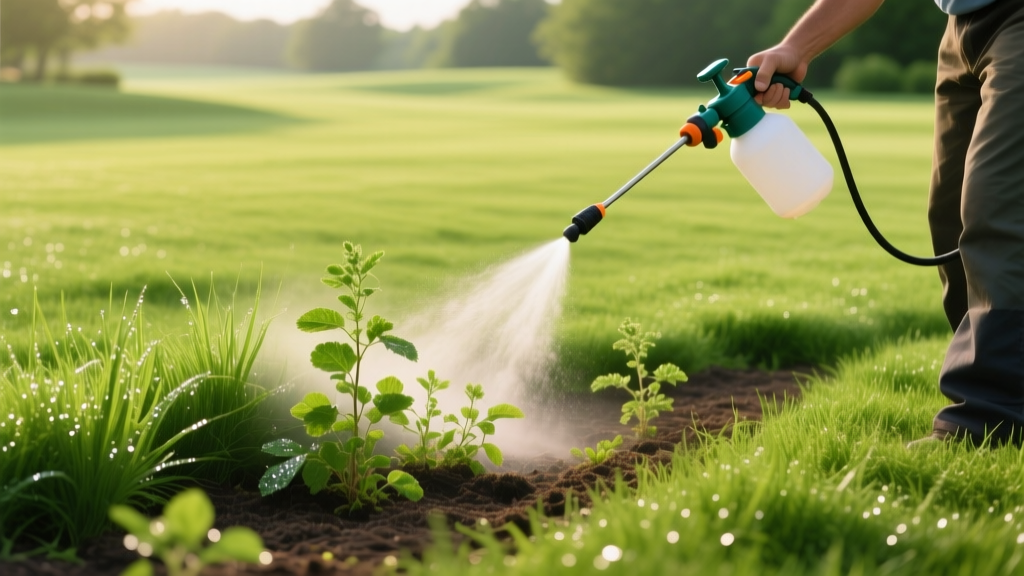
Best Way to Remove Weeds From Large Area Lawns: Targeted Spraying Guide
Managing weed infestations across expansive properties—ranging from quarter-acre suburban lots to multi-acre rural estates—presents a unique logistical challenge. Traditional single-plant spot treatment is too labor-intensive, while blanket broadcasting wastes expensive chemicals, harms the environment, and unnecessarily stresses desirable turf. The best way to remove weeds from large area lawns is a hybrid methodology known in professional turf management as targeted macro-spraying. This approach combines the chemical precision of spot-treatment with the efficiency of broadcast application, utilizing calibrated equipment and species-specific chemistry to eliminate weeds only where they cluster.
The Weed Density Decision Matrix
Before mixing any chemicals, you must quantify the infestation. Turfgrass scientists recommend altering your application strategy based on the percentage of the total canopy covered by weeds. Use the following framework to determine your approach:
| Weed Canopy Coverage | Recommended Strategy | Equipment Required | Chemical Cost Profile |
|---|---|---|---|
| Less than 15% | Targeted Macro-Spraying | Backpack sprayer with flat-fan nozzle | Low ($0.50 - $1.50 per 1,000 sq ft) |
| 15% to 30% | Zonal Broadcast Application | Tow-behind boom sprayer or motorized backpack | Moderate ($1.50 - $3.00 per 1,000 sq ft) |
| Greater than 30% | Full Blanket Application + Renovation | Tractor-mounted boom or professional service | High ($3.00+ per 1,000 sq ft plus seed) |
For properties falling into the 15% to 30% range, attempting to spot-treat individual plants will result in severe operator fatigue and missed patches. Instead, map the lawn and identify 'hot zones' (e.g., the shaded north side of the property where Poa annua thrives, or the compacted driveway edges where spurge grows). Treat these specific zones as if they were the entire lawn.
Equipment Calibration for Large-Scale Targeted Spraying
The most common failure mode in large-area weed control is improper spray volume, leading to chemical burn or ineffective kill rates. According to NC State TurfFiles, achieving uniform droplet distribution requires strict adherence to nozzle selection and pressure regulation.
The 1.5 GPA Standard
Most post-emergent turf herbicides require a carrier volume of 1.0 to 1.5 gallons per 1,000 square feet (GPA). To achieve exactly 1.5 GPA while walking at a standard pace of 3 MPH with a 20-inch spray swath, your sprayer must output 0.3 gallons per minute (GPM).
Pro Calibration Setup: Equip your backpack sprayer (such as the Solo 452 or Chapin ProSeries) with a TeeJet XR11003 (yellow) extended-range flat-fan nozzle. Set your pressure gauge to exactly 40 PSI. This specific combination delivers the required 0.3 GPM, ensuring you apply the correct herbicide dose without relying on guesswork.
Herbicide Selection by Weed Species
When treating large areas, you cannot rely on a single 'kill-all' product without risking damage to your desirable turf. You must select chemistry based on the dominant weed species in your hot zones. Below are the professional-grade standards for 2026 turf management.
Broadleaf Weeds (Dandelion, Clover, Thistle, Plantain)
For large-scale broadleaf control, ester-based formulations provide superior cuticle penetration compared to amine-based products, especially in cooler spring or fall temperatures.
- Product: SpeedZone (Active ingredients: 2,4-D, MCPP, dicamba, carfentrazone-ethyl)
- Application Rate: 1.4 to 1.5 fl oz per 1,000 sq ft.
- Cost: Approximately $120 per gallon, equating to $1.35 per 1,000 sq ft.
- Insight: The addition of carfentrazone provides a rapid 'burn' effect, causing visible wilting within 24 hours, which helps you track your walking grid on large properties so you do not accidentally double-spray.
Grassy Weeds (Crabgrass, Dallisgrass, Goosegrass)
Grassy weeds require highly selective graminicides or specific HPPD inhibitors that will not stunt the growth of surrounding cool- or warm-season turf.
- Product for Crabgrass: Quinclorac (Drive XLR8). Apply at 0.367 fl oz per 1,000 sq ft. Warning: Do not use on St. Augustine or Centipede grass.
- Product for Goosegrass: Fenoxaprop-p-ethyl (Acclaim Extra). Apply at 0.46 fl oz per 1,000 sq ft.
- Insight: Grassy weed herbicides often require a methylated seed oil (MSO) or non-ionic surfactant (NIS) to adhere to the waxy leaf blades. Always add 0.5% v/v surfactant to your tank mix.
Sedges (Yellow Nutsedge, Purple Nutsedge, Kyllinga)
Sedges thrive in poorly drained, compacted areas of large properties and are immune to standard broadleaf and grassy weed killers.
- Product: SedgeHammer (Halosulfuron-methyl).
- Application Rate: 0.66 oz (one standard packet) per 1,000 sq ft.
- Insight: Halosulfuron is a systemic herbicide that translocates to the nutlets underground. It takes 14 to 21 days to see complete necrosis. Do not reapply prematurely.
Temperature Restriction Warning: When spot-treating large areas with products containing 2,4-D or dicamba, do not apply if ambient temperatures exceed 85°F (29°C). At higher temperatures, these chemicals volatilize into a gas and drift onto non-target ornamental trees and shrubs, causing severe epinasty (leaf cupping and twisting).
Execution Strategy: The Grid-Walking Technique
Covering a half-acre lawn with a backpack sprayer requires a systematic approach to prevent operator fatigue and application gaps. Penn State Extension emphasizes the importance of overlapping patterns in turf applications.
- Flag the Perimeter: Place high-visibility survey flags at the corners of your target treatment zone.
- Establish the Swath: The TeeJet XR11003 nozzle at 18 inches above the turf canopy produces a 20-inch effective swath. Walk in straight lines, keeping your nozzle exactly 18 inches from the ground.
- Overlap by 10%: On your return pass, overlap the previous spray edge by 2 inches. This accounts for wind drift and minor deviations in your walking path.
- Use the 'Wet-Edge' Marker: If using a fast-acting product like SpeedZone, the slight color change in the wet foliage will show you exactly where your last pass ended. For slower-acting chemicals, add a temporary turf dye (like Blue Indicator Dye) to your tank mix at 0.5 oz per gallon to visually track your grid.
Cost Analysis: Targeted Macro-Spraying vs. Blanket Application
Transitioning from blanket spraying to targeted macro-spraying yields significant financial and ecological benefits over a single season. The table below illustrates the cost differential for a 10,000 sq ft lawn with 20% weed coverage (2,000 sq ft of actual weed hot zones).
| Metric | Blanket Broadcast (10,000 sq ft) | Targeted Macro-Spraying (2,000 sq ft) |
|---|---|---|
| SpeedZone Herbicide Cost | $13.50 (15 oz total) | $2.70 (3 oz total) |
| Surfactant Cost | $1.50 | $0.30 |
| Water Usage (Carrier) | 15 Gallons | 3 Gallons |
| Environmental Load | High (Chemicals applied to healthy turf) | Low (Chemicals restricted to weed zones) |
| Application Time | 45 minutes | 25 minutes (includes mapping time) |
Post-Treatment Lawn Recovery
Removing weeds from large areas often leaves behind significant bare soil patches, particularly when eradicating mature broadleaf weeds or dense crabgrass clusters. Leaving these patches exposed invites new weed seeds to germinate.
Within 7 to 10 days post-application, once the weeds have collapsed, use a heavy push broom or a dethatching rake to physically remove the dead organic matter down to the soil surface. Immediately follow this with a targeted overseeding application. For cool-season lawns, apply a turf-type tall fescue blend at a rate of 3 to 4 lbs per 1,000 sq ft in the bare zones. For warm-season lawns, plug the areas with matching cultivar stolons or apply a fine-textured topdressing sand to encourage lateral spread from the surrounding healthy turf. Maintaining a mowing height of 3.0 to 3.5 inches for the surrounding grass will naturally shade out any surviving weed seedlings attempting to reclaim the treated zones.

