
Lawn Care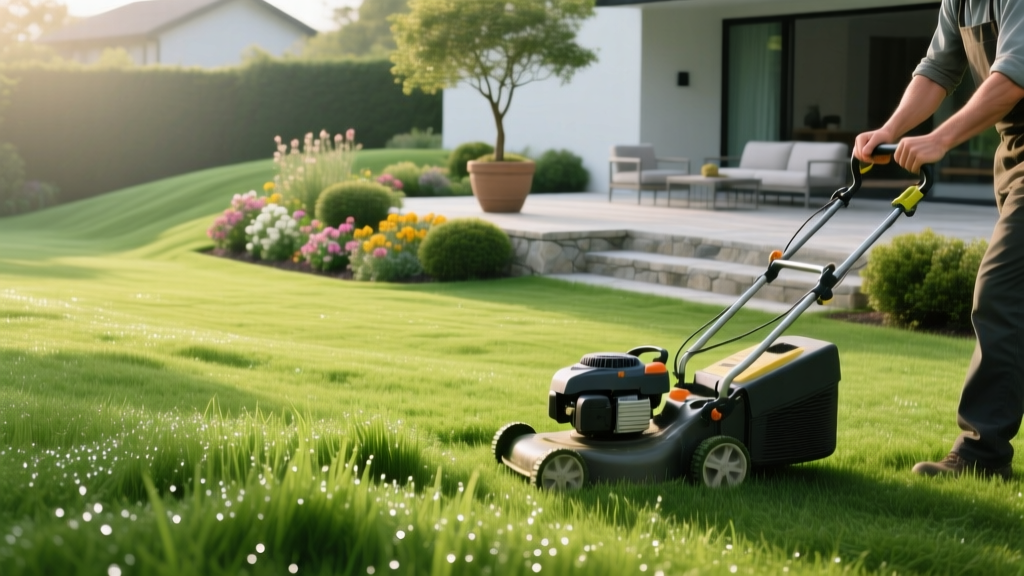
How to Maintain Broadleaf Grass: Step-by-Step Lawn Care Guide
The Botanical Reality of 'Broadleaf Grass'
In turfgrass science, the term 'broadleaf' typically refers to dicot weeds like dandelions and clover. However, in the landscaping industry and among homeowners, 'broadleaf grass' is the accepted colloquialism for warm-season turfgrasses with exceptionally wide leaf blades. The primary species in this category are St. Augustinegrass (Stenotaphrum secundatum), Centipedegrass (Eremochloa ophiuroides), and Carpetgrass (Axonopus).
Unlike narrow-bladed grasses such as Bermuda or fine fescues, these wide-bladed varieties possess unique physiological traits. Their broad leaf surface area makes them highly susceptible to chemical burn from standard herbicides, prone to severe thatch buildup, and uniquely sensitive to soil pH fluctuations. Maintaining them requires a specialized, step-by-step protocol that deviates significantly from standard lawn care advice.
Step 1: Precision Mowing Protocols for Wide-Bladed Turf
The most common point of failure for broadleaf grass varieties is improper mowing height. Because these grasses spread via above-ground stolons rather than deep rhizomes, cutting them too short severs their primary vascular pathways, leading to rapid turf death and weed invasion.
| Grass Variety | Ideal Mowing Height | Leaf Blade Width | Recommended Mower Type | Clipping Management |
|---|---|---|---|---|
| St. Augustinegrass | 2.5 to 4.0 inches | 5mm to 10mm | Rotary (sharp blade required) | Leave on lawn (unless thatch > 0.5 in) |
| Centipedegrass | 1.5 to 2.0 inches | 3mm to 5mm | Rotary or Reel | Remove if clumping heavily |
| Carpetgrass | 1.5 to 2.0 inches | 3mm to 6mm | Rotary | Leave on lawn |
⚠️ Critical Mowing Warning: Never mow Centipedegrass above 2.0 inches. Allowing it to grow to 3 or 4 inches causes the stolons to lift off the soil surface, resulting in a spongy, thatch-bound lawn that will eventually experience 'Centipede Decline' and die out in patches.
Step 2: Targeted Fertilization and Preventing Decline
Broadleaf grasses have drastically different nutritional requirements. Applying a standard 10-10-10 or high-phosphorus fertilizer to a Centipedegrass lawn is a guaranteed way to induce iron chlorosis and kill the turf.
St. Augustinegrass Fertilization Schedule
St. Augustine is a heavy feeder requiring 2.0 to 4.0 pounds of nitrogen per 1,000 square feet annually. Apply a balanced slow-release fertilizer (such as a 16-4-8 or 15-5-10 NPK ratio) in early spring after the last frost, followed by applications every 6 to 8 weeks through early fall. According to the University of Florida IFAS Extension, potassium (the 'K' in NPK) is vital for St. Augustine's cold tolerance and disease resistance; ensure your fall application has a high potassium ratio, like 15-0-15.
Centipedegrass Fertilization Schedule
Centipedegrass thrives on neglect regarding nitrogen. It requires only 1.0 to 2.0 pounds of nitrogen per 1,000 square feet per year. More critically, Centipedegrass is highly sensitive to phosphorus. High phosphorus levels bind with iron in the soil, causing severe yellowing. Use a zero-phosphorus fertilizer like 15-0-15 or 18-0-18. The NC State TurfFiles program explicitly recommends soil testing before any application to ensure soil pH remains between 5.0 and 6.0, as alkaline soils lock out essential micronutrients.
Step 3: Irrigation and Soil Moisture Management
Wide leaf blades lose moisture through transpiration faster than narrow blades during high-heat periods. However, broadleaf grasses are highly susceptible to fungal pathogens like Brown Patch (Rhizoctonia solani) and Gray Leaf Spot if the canopy remains wet overnight.
- Measure Output: Place three empty tuna cans across the lawn zone. Run your sprinklers until the cans collect exactly 0.5 inches of water.
- Set Frequency: Water deeply twice a week (totaling 1.0 to 1.25 inches weekly) rather than light daily sprinklings. Deep watering forces roots to grow downward, improving drought resilience.
- Time of Day: Program your irrigation controller to run between 4:00 AM and 6:00 AM. This allows the broad leaf blades to dry completely before nightfall, disrupting the fungal reproduction cycle.
- The Footprint Test: Walk across the lawn. If your footprints remain visible for more than 30 seconds and the grass blades appear folded or bluish-gray, the turf is experiencing moisture stress and requires immediate irrigation.
Step 4: Herbicide Selection (Avoiding Chemical Scalping)
This is where most homeowners destroy their broadleaf grass. Standard 'broadleaf weed killers' found at big-box stores rely heavily on 2,4-D and MSMA. St. Augustinegrass is notoriously sensitive to 2,4-D, which will cause severe leaf curling, stunting, and potential death. MSMA is largely restricted for residential use due to environmental toxicity.
Safe Herbicide Matrix for Broadleaf Grasses
- Atrazine: The gold standard for St. Augustine and Centipede. It acts as both a pre-emergent and post-emergent for broadleaf weeds (like chickweed and spurge) and is safe for wide-bladed turf when applied in temperatures below 85°F.
- Penoxsulam: Found in premium formulations (e.g., Southern Ag Lawn Weed Killer), this is highly effective against dollarweed and clover without stunting St. Augustine stolons.
- Celosulfuron-methyl: Excellent for controlling sedges and difficult broadleaf weeds in Centipedegrass without causing the phytotoxicity associated with older chemicals.
💡 Pro-Tip for Spot Treatment: When treating isolated weeds in St. Augustine, use a sponge applicator or a small paintbrush to apply glyphosate directly to the weed leaves. This prevents herbicide drift from damaging the surrounding sensitive broadleaf grass canopy.
Step 5: Thatch Management and Aeration
Because St. Augustine and Centipedegrass spread via thick above-ground stolons, they produce thatch (a layer of dead and living organic matter) rapidly. A thatch layer exceeding 0.5 inches prevents water penetration and harbors chinch bugs.
Core Aeration vs. Dethatching
For St. Augustinegrass, core aeration in late spring (May) is preferred. Pulling 2-to-3-inch soil plugs relieves compaction and introduces soil microbes that naturally break down thatch. According to Clemson University HGIC, aggressive mechanical dethatching (power raking) can rip St. Augustine stolons directly out of the soil, causing massive turf damage.
For Centipedegrass, if thatch exceeds 0.75 inches, a gentle verticutting (vertical mowing) in early June is acceptable, but the blade spacing must be set wide (at least 2 inches apart) to avoid severing the shallow root system. Always follow aeration or verticutting with a light application of nitrogen (0.5 lbs per 1,000 sq ft) to stimulate rapid stolon recovery.
Troubleshooting Common Broadleaf Grass Failures
Q: My St. Augustine is turning yellow in irregular patches during summer.
A: This is likely Gray Leaf Spot or Chinch Bug damage, not a nutrient deficiency. Part the grass at the soil line. If you see tiny black-and-white insects scurrying, treat immediately with a bifenthrin-based insecticide. If the grass blades have diamond-shaped gray/brown lesions, apply a systemic fungicide like Azoxystrobin and reduce evening watering.
Q: My Centipedegrass was dark green, but now it's pale yellow after I fertilized.
A: You likely applied a fertilizer containing phosphorus, triggering iron chlorosis (Centipede Decline). Immediately apply a liquid chelated iron supplement (Fe-EDDHA form, which works in high-pH soils) at a rate of 2 ounces per 1,000 square feet. The turf should green up within 48 to 72 hours without stimulating excessive, thatch-producing growth.

