
Lawn Care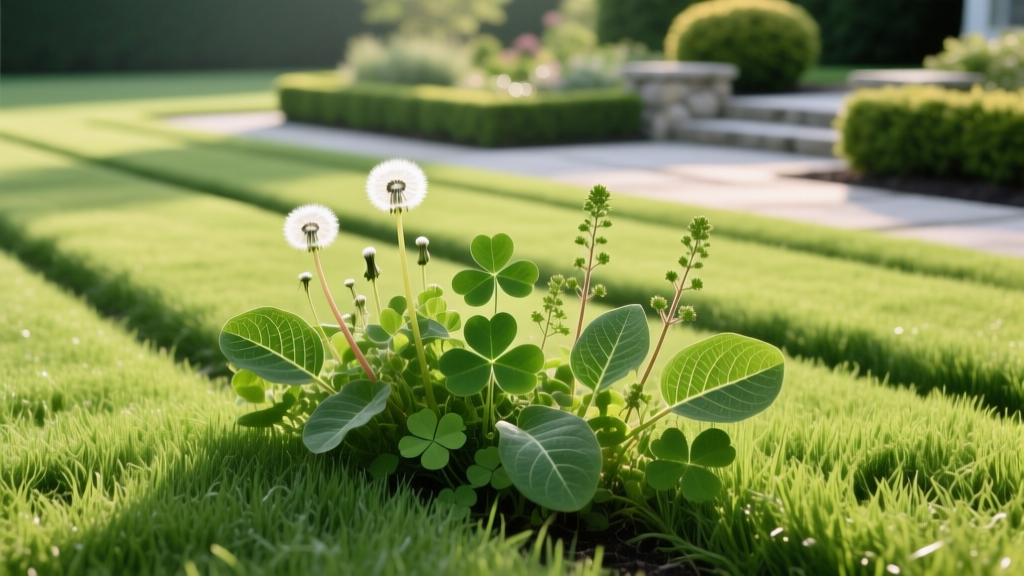
Broadleaf Weeds Pictures & Spot-Treatment Guide for Lawns
The Visual Identification Matrix: Why Pictures Matter Before You Spray
Applying a blanket herbicide without confirming the exact species is the most expensive mistake in lawn care. Broadleaf weeds belong to diverse botanical families, each with unique cuticle thicknesses, root structures, and hormonal vulnerabilities. When browsing broadleaf weeds pictures to confirm your diagnosis, you must look past the flower and focus on leaf venation, margin structure, and growth habit. Misidentifying a waxy-leaved plantain as a soft-leaved dandelion will result in herbicide runoff and wasted chemicals.
According to the University of Minnesota Extension, accurate visual identification dictates whether you need a systemic auxin mimic (Group 4 herbicide) or a specialized formulation with a penetrating surfactant. Below is a targeted spot-treatment protocol for the five most persistent broadleaf invaders found in North American turfgrass.
Top 5 Common Broadleaf Weeds: Visual Cues & Spot-Treatment Protocols
1. Dandelion (Taraxacum officinale)
- Visual ID: Deeply lobed, toothed leaves forming a basal rosette. Leaves point backward toward the center. Hollow, milky-sap-filled stems.
- Root System: Thick, brittle taproot extending 10-18 inches deep.
- Spot-Treatment Herbicide: 2,4-D + Dicamba + MCPP (e.g., Trimec Classic or Ortho WeedClear).
- Application Rate: 2.0 fl oz per gallon of water for spot spraying.
- Pro Tip: Dandelions are highly susceptible to synthetic auxins. A single application in early fall (when carbohydrates are moving down to the taproot) yields a 95%+ kill rate.
2. Broadleaf Plantain (Plantago major)
- Visual ID: Wide, oval leaves with distinct parallel veins (rare for broadleaves). Leaves are heavily ribbed and feel thick or waxy.
- Root System: Shallow, fibrous, and highly compacted soil-tolerant.
- Spot-Treatment Herbicide: 2,4-D + Triclopyr.
- Application Rate: 2.5 fl oz per gallon of water, plus a non-ionic surfactant (NIS).
- Pro Tip: The waxy cuticle on plantain leaves repels water-based sprays. Adding 0.5% v/v NIS (approx. 1 teaspoon per gallon) breaks the surface tension, allowing the herbicide to penetrate the leaf tissue.
3. Ground Ivy / Creeping Charlie (Glechoma hederacea)
- Visual ID: Scalloped, coin-shaped leaves attached to square, creeping stems that root at the nodes. Emits a distinct minty odor when crushed.
- Root System: Aggressive stoloniferous network with shallow nodal roots.
- Spot-Treatment Herbicide: Triclopyr + 2,4-D + Dicamba (e.g., SpeedZone Broadleaf Herbicide).
- Application Rate: 3.0 fl oz per gallon of water.
- Pro Tip: Creeping Charlie is notoriously difficult to eradicate in spring. Wait until late autumn after the first light frost; the plant aggressively pulls nutrients (and herbicide) into its root system to prepare for winter.
4. White Clover (Trifolium repens)
- Visual ID: Trifoliate leaves (three leaflets) often featuring a white, V-shaped watermark. Low-growing, creeping stolons.
- Root System: Fibrous, shallow roots that thrive in nitrogen-deficient soils.
- Spot-Treatment Herbicide: Quinclorac + Dicamba or Triclopyr-based blends.
- Application Rate: 2.0 fl oz per gallon of water.
- Pro Tip: Clover indicates low soil nitrogen. While spot-treating with herbicide eliminates the current weeds, applying a high-nitrogen fertilizer (e.g., 24-0-6) will thicken the turf canopy and choke out future clover germination.
5. Wild Violet (Viola sororia)
- Visual ID: Heart-shaped leaves with finely toothed margins. Low-growing rosette with deep purple or white flowers.
- Root System: Rhizomatous and fleshy, allowing it to survive drought and close mowing.
- Spot-Treatment Herbicide: Triclopyr + Dicamba (requires multiple applications).
- Application Rate: 3.0 fl oz per gallon of water + NIS surfactant.
- Pro Tip: Violets are among the toughest broadleaves to kill due to their thick cuticle and rhizomes. Expect to spot-treat twice, 21 days apart, for complete necrosis.
Spot-Treatment Application Framework
To maximize herbicide efficacy and prevent turf damage, follow this precise application sequence:
- Calibrate Your Sprayer: Use a 1-gallon or 2-gallon pump sprayer with an adjustable fan-tip nozzle. A fan tip ensures even coverage without the excessive runoff caused by cone nozzles.
- Mix the Surfactant First: Fill the tank halfway with water, add the non-ionic surfactant, and agitate. This prevents the herbicide from foaming excessively when added.
- Add Herbicide: Measure the exact fluid ounces using a dedicated syringe or measuring cup. Never guess the dosage.
- Spray to Wetness, Not Runoff: Apply a fine mist until the leaves are uniformly coated and glistening. If liquid drips onto the soil, you have applied too much, wasting product and increasing soil residual risks.
⚠️ Temperature & Volatilization Warning: Never apply ester-based 2,4-D formulations when ambient temperatures exceed 85°F. The chemical will vaporize (volatilize) and drift onto nearby ornamental shrubs, causing severe leaf cupping and epinasty. If you must spray in warm weather, switch to an amine formulation, which has a much lower vapor pressure.
Active Ingredient Comparison & Turfgrass Safety
Not all broadleaf herbicides are safe for all grass types. Cool-season grasses (Fescue, Kentucky Bluegrass, Ryegrass) are highly tolerant of Group 4 herbicides. Warm-season grasses require careful selection. The Michigan State University Extension emphasizes that misapplication on sensitive warm-season turfs can cause months of stunting.
| Active Ingredient | Target Weeds | Cool-Season Grass Safety | Warm-Season Grass Safety |
|---|---|---|---|
| 2,4-D (Amine) | Dandelion, Plantain, Clover | Excellent | Poor (St. Augustine/Centipede) |
| Triclopyr | Creeping Charlie, Wild Violet | Excellent | Moderate (Bermuda/Zoysia only) |
| Dicamba | Chickweed, Knotweed, Clover | Excellent | Moderate (Use reduced rates) |
| Atrazine | Broad spectrum broadleaves | Lethal (Do NOT use) | Excellent (St. Augustine/Centipede) |
Post-Treatment Lawn Recovery
Once the broadleaf weeds undergo epinasty (twisting and curling) and begin to brown—typically 7 to 14 days post-application—do not rake them out immediately. Allow the roots to fully necrose. After 21 days, rake the dead weed debris, expose the bare soil spots, and overseed with a matching turfgrass cultivar. Apply a starter fertilizer (e.g., 18-24-12) to the bare spots to ensure rapid canopy closure, which is the ultimate biological defense against future weed seed germination.

