
Lawn Care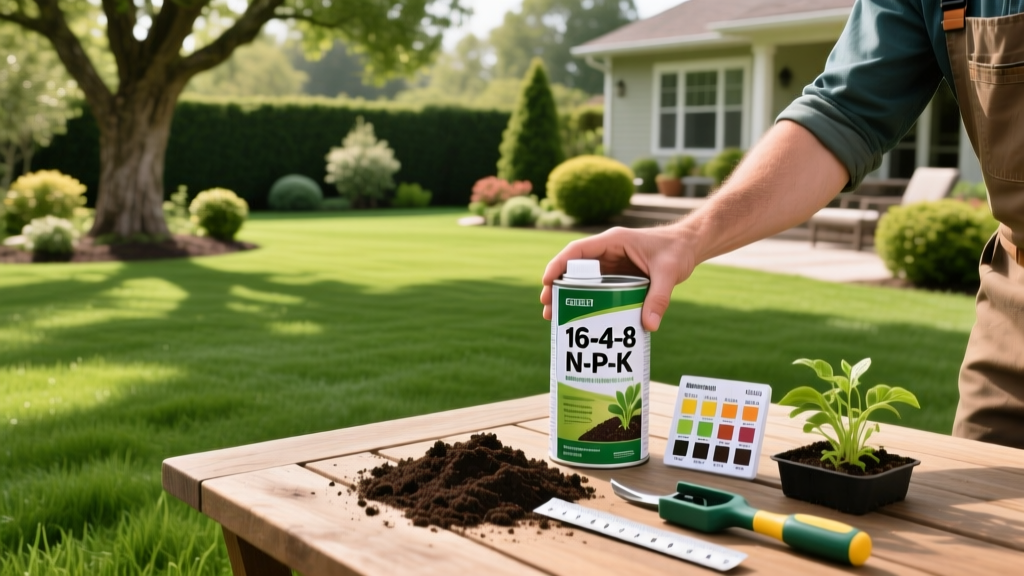
Mastering Fertilizer Ratios: How to Choose the Right N-P-K Blend
The Anatomy of Fertilizer Ratios (N-P-K Explained)
Every bag of lawn fertilizer displays a three-number sequence, such as 16-4-8 or 32-0-4. These numbers represent the fertilizer ratios of the three primary macronutrients: Nitrogen (N), Phosphorus (P), and Potassium (K), expressed as a percentage of the total bag weight. Understanding how to manipulate these ratios is the difference between a thin, weed-prone yard and a dense, drought-tolerant turf.
Nitrogen (N): The Growth Engine
Nitrogen drives vegetative growth, chlorophyll production, and the deep green color homeowners desire. However, not all nitrogen is created equal. Fast-release sources like urea (46-0-0) and ammonium sulfate (21-0-0) provide an immediate flush of growth but carry a high risk of fertilizer burn and rapid leaching. Professional-grade fertilizers utilize slow-release technologies:
- Methylene Urea (MU): Relies on soil microbial activity to break down. Works best when soil temperatures are above 55°F.
- Polymer-Coated Urea (PCU): Encapsulated in a sulfur or polymer resin (e.g., Polyon or Osmocote). Releases nutrients based strictly on soil temperature and moisture, independent of microbial life, providing a steady 8-to-12-week feed.
Phosphorus (P): The Root Builder
Phosphorus is critical for seedling establishment, root development, and energy transfer within the plant. However, established lawns rarely require additional phosphorus. Excess P binds to soil particles and eventually runs off into waterways, causing eutrophication. Due to environmental concerns, many states now legally restrict phosphorus in lawn fertilizers unless a soil test proves a deficiency or you are seeding a new lawn.
Potassium (K): The Stress Defender
Potassium regulates water uptake, enzyme activation, and cellular wall thickness. It is your turf's primary defense against drought, frost, and fungal pathogens. When selecting a potassium source, avoid Muriate of Potash (MOP / 0-0-60) for lawns, as its high chloride content can damage soil structure and harm sensitive grasses like St. Augustine. Instead, look for Sulfate of Potash (SOP / 0-0-50), which provides essential sulfur without the chloride toxicity.
Matching Fertilizer Ratios to Turfgrass Species
Cool-season and warm-season grasses have fundamentally different metabolic cycles, dictating their ideal fertilizer ratios and annual nitrogen requirements. Applying a high-nitrogen summer blend to a cool-season fescue lawn will force stressful top-growth during peak heat, making it highly susceptible to brown patch fungus.
| Grass Type | Annual N Requirement (lbs/1,000 sq ft) | Ideal N-P-K Ratio Profile | Primary Application Season |
|---|---|---|---|
| Kentucky Bluegrass | 2.0 - 4.0 lbs | 3-1-2 or 4-1-2 | Early Fall & Late Spring |
| Tall Fescue | 2.0 - 3.0 lbs | 3-1-2 or 16-4-8 | Early Fall |
| Bermudagrass | 3.0 - 5.0 lbs | 4-1-2 or 3-1-1 | Late Spring through Summer |
| Zoysiagrass | 2.0 - 4.0 lbs | 3-1-2 or 15-0-15 | Late Spring & Early Fall |
| St. Augustine | 2.0 - 4.0 lbs | 3-1-2 (Low Chloride) | Spring through Early Fall |
According to the University of Minnesota Extension, the 3-1-2 ratio (e.g., 15-5-10 or 24-8-16) is generally considered the safest baseline for most established turfgrasses when a soil test is unavailable, as it mimics the natural nutrient removal rates of mowing.
The Prerequisite: Soil Testing and pH Lockout
Guessing your fertilizer ratios based on generic seasonal advice is a costly mistake. Before purchasing any fertilizer, invest $30 to $40 in a lab-grade soil test from services like SoilKit or MySoil. These tests measure your baseline P and K levels, organic matter percentage, and cation exchange capacity (CEC).
Critical Insight: The pH Lockout Effect
Your fertilizer ratios are irrelevant if your soil pH is incorrect. If your soil pH drops below 5.5 or spikes above 7.5, essential nutrients like phosphorus, iron, and manganese become chemically locked in the soil and unavailable to the grass roots. If your test reveals a pH of 5.2, applying more 16-4-8 fertilizer will not fix the yellowing turf; you must first apply pelletized lime to raise the pH into the optimal 6.0–7.0 range.
Your fertilizer ratios are irrelevant if your soil pH is incorrect. If your soil pH drops below 5.5 or spikes above 7.5, essential nutrients like phosphorus, iron, and manganese become chemically locked in the soil and unavailable to the grass roots. If your test reveals a pH of 5.2, applying more 16-4-8 fertilizer will not fix the yellowing turf; you must first apply pelletized lime to raise the pH into the optimal 6.0–7.0 range.
Calculating Exact Application Rates (The Math)
The most common error homeowners make is applying fertilizer by 'filling the spreader' rather than calculating the exact weight needed per square footage. Agronomists measure applications in pounds of actual Nitrogen per 1,000 square feet. The standard target for a single application is 0.5 to 1.0 lb of N per 1,000 sq ft.
The Application Formula
To determine how many pounds of a specific product you need to apply to deliver exactly 1 lb of Nitrogen per 1,000 sq ft, use this formula:
100 ÷ [First Number on Bag] = Pounds of product per 1,000 sq ft
Example Calculation:
You purchase a 50 lb bag of 20-5-10 fertilizer. The first number is 20.
100 ÷ 20 = 5 lbs of product per 1,000 sq ft.
If your lawn is 6,000 sq ft, you will need exactly 30 lbs of product (5 lbs x 6) for that application. Set your spreader dial according to the manufacturer's chart to distribute that exact weight over your measured area.
For precise turf management, the Texas A&M AgriLife Extension recommends splitting your annual nitrogen requirements into multiple smaller applications (e.g., four applications of 0.75 lbs N) rather than one massive dose, which reduces leaching and prevents explosive, disease-prone growth flushes.
Seasonal Ratio Shifts and Winterization
Fertilizer ratios must shift with the seasons to align with the plant's biological priorities.
Spring and Summer: Nitrogen-Dominant
During peak growing seasons, the focus is on canopy recovery and density. Ratios like 24-0-11 or 32-0-4 are common. In 2026, professional-grade 50 lb bags of these blends typically range from $55 to $75 at landscape supply stores. They often include 2% to 3% chelated iron, which provides a deep blue-green color without forcing excessive top-growth that requires constant mowing.
Fall: The Potassium Shift
As temperatures drop, cool-season grasses shift energy from leaf production to root and crown storage. Late fall 'winterizer' fertilizers should feature a reduced nitrogen ratio and a significantly elevated potassium ratio, such as 10-0-20 or 8-2-16. The high potassium concentration acts as a cellular antifreeze, increasing the turf's cold hardiness and reducing the risk of winter desiccation and snow mold.
Warning: Phosphorus Runoff Regulations
Applying high-phosphorus fertilizers (e.g., 10-20-10 starter fertilizers) to established lawns is not only agronomically wasteful but illegal in many jurisdictions. States like New York, Florida, and Washington have strict bans on phosphorus applications unless you are actively seeding or sodding a new lawn, or possess a soil test dated within the last 24 months proving a phosphorus deficiency. Always verify local municipal codes before purchasing starter fertilizers.
Applying high-phosphorus fertilizers (e.g., 10-20-10 starter fertilizers) to established lawns is not only agronomically wasteful but illegal in many jurisdictions. States like New York, Florida, and Washington have strict bans on phosphorus applications unless you are actively seeding or sodding a new lawn, or possess a soil test dated within the last 24 months proving a phosphorus deficiency. Always verify local municipal codes before purchasing starter fertilizers.
Mastering fertilizer ratios requires moving beyond the marketing claims on the front of the bag. By testing your soil, calculating exact nitrogen delivery rates, and matching the N-P-K profile to your specific grass species and seasonal needs, you transition from basic lawn maintenance to professional-grade turf management.

