
Lawn Care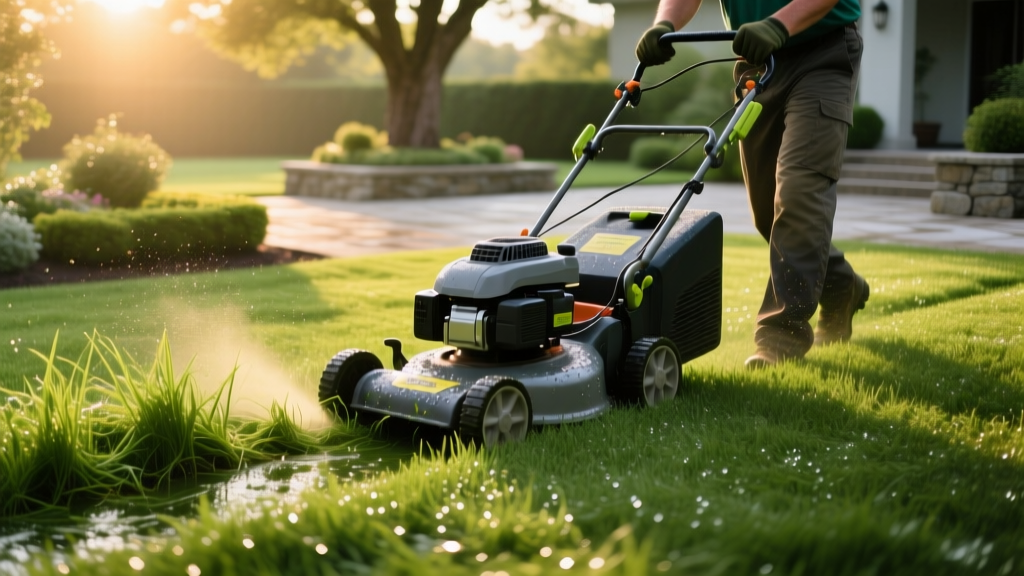
Can You Cut Wet Lawn Grass? Risks and Mower Settings
The Short Answer: Dew vs. Saturation
When homeowners ask, 'can you cut wet lawn grass,' the answer depends entirely on the moisture source and soil saturation levels. Mowing grass covered in light morning dew is generally acceptable for gas-powered rotary mowers, provided the soil beneath is firm. However, mowing a lawn immediately after a rainstorm or when the soil is at field capacity is a critical mistake that damages both the turf and your equipment.
Wet grass blades are heavy and pliable. Instead of standing upright to be cleanly sheared by the mower blade, they bend. This results in a tearing action rather than a clean cut, leaving ragged leaf tips that rapidly lose moisture and turn brown within 48 hours. Furthermore, saturated soil cannot support the weight of a 70-to-90-pound walk-behind mower, leading to severe soil compaction and wheel ruts that disrupt the root zone.
The Moisture Assessment Framework
Before engaging your mower, perform these two diagnostic tests to determine if the lawn is safe to cut.
1. The Footprint Test (Soil Saturation)
Walk across your lawn in flat-soled shoes. If your footprints sink deeper than a quarter-inch and the soil feels spongy or water seeps up around your shoes, the soil is saturated. Mowing in this state will cause the mower wheels to rut the lawn, destroying the soil structure and suffocating grassroots by eliminating oxygen pockets. Wait until the soil drains to field capacity.
2. The Swipe Test (Canopy Moisture)
Drag a white paper towel or light cloth across the top of the grass canopy. If the towel is soaked, the grass is too wet to mulch effectively. If it is merely damp, you can proceed with caution, provided you adjust your mower deck settings.
⚠️ Critical Safety Warning: Electric Mowers
If you operate a corded electric mower or a battery-powered lithium-ion mower (such as 56V EGO or 80V Greenworks models), never mow wet grass. While modern battery mowers feature IPX4 water resistance to handle light splashes, pushing a high-voltage electrical system through a continuous sheet of wet foliage drastically increases the risk of short-circuiting the motor housing or experiencing a severe electrical shock, particularly if you are wearing damp footwear.
Mechanical and Pathological Risks
Understanding the agronomic and mechanical consequences of mowing wet turf is essential for long-term lawn health. According to The Royal Horticultural Society, wet mowing is a primary vector for the rapid spread of turfgrass diseases.
| Turfgrass Disease | Pathogen | How Wet Mowing Spreads It |
|---|---|---|
| Brown Patch | Rhizoctonia solani | Wet clippings clump and create anaerobic, humid microclimates on the soil surface, triggering fungal blooms. |
| Dollar Spot | Clarireedia jacksonii | Mower wheels physically drag fungal mycelium from infected patches to healthy turf across the wet canopy. |
| Pythium Blight | Pythium aphanidermatum | Torn, ragged leaf tips from dull blades on wet grass provide direct entry points for water-mold spores. |
The Aerodynamics of a Clogged Deck
Rotary mowers rely on the aerodynamic lift generated by the blade's fins to create a vacuum that stands the grass upright before cutting. Wet grass is significantly heavier than dry grass. The blade's airflow cannot overcome the weight of the waterlogged leaf blades, causing them to mat down. The blade then acts as a weed whacker, violently tearing the grass. This also causes wet clippings to stick to the underside of the mower deck, disrupting the airflow entirely and forcing you to stop and scrape the deck.
The Emergency Mowing Protocol
Sometimes, you have no choice. If a multi-day storm front is approaching and your cool-season fescue or Kentucky bluegrass has grown past 4.5 inches, you must cut it to prevent the grass from flopping over and smothering itself. If you must mow damp grass, follow this strict protocol to minimize damage.
- Raise the Deck Height: Increase your cutting height to a minimum of 3.5 to 4.0 inches. Removing more than 1/3 of the leaf blade in a single wet pass will shock the plant and expose the thatch layer to excessive moisture.
- Switch to Side Discharge: Remove the mulching plug and the bagger attachment. Mulching wet grass guarantees deck clogging and the deposition of heavy, anaerobic clumps of clippings that will kill the grass beneath them. Side discharging throws the heavy clippings out of the deck before they can accumulate.
- Install a High-Lift Blade: If possible, swap your standard or mulching blade for a high-lift blade. The aggressive fins on a high-lift blade generate maximum suction, which helps pull heavy, damp grass upright for a cleaner cut.
- Reduce Overlap and Speed: Cut the grass at half your normal walking speed. Overlap your passes by only 10% instead of the usual 20% to prevent the mower tires from running over and matting down the wet grass you just cut.
- Post-Mowing Cleanup: Immediately hose out the underside of your mower deck. Wet grass clippings are highly acidic and will rapidly corrode the steel deck and promote rust on the blade spindle bearings if left to dry.
For more advanced turf management strategies, Penn State University's Turfgrass Science program provides extensive data on how mowing heights and moisture levels interact with regional turf pathogens.
Reel Mowers vs. Rotary Mowers on Wet Grass
It is vital to distinguish between mower types when dealing with moisture. Reel mowers (cylinder mowers) operate on a scissor-action cutting mechanism. If the grass is wet, the water acts as a lubricant between the reel blades and the bedknife. Instead of shearing the grass, the wet blades will simply fold and slide between the metal components, resulting in a complete failure to cut. Never attempt to use a manual or powered reel mower on damp turf.
Frequently Asked Questions
Will mowing wet grass dull my mower blade?
Yes. Wet grass clumps together, creating a dense, fibrous mass that requires significantly more torque to cut. This increased friction and resistance accelerates the wear on the cutting edge, meaning you will need to sharpen or replace your blade more frequently if you habitually mow damp turf.
Is it safe to mow wet grass on a slope?
Under no circumstances should you mow wet grass on an incline. Wet turf drastically reduces the traction coefficient of your mower tires. On a walk-behind mower, this can lead to slipping and severe foot injuries from the deck. On a zero-turn or riding mower, wet slopes are a primary cause of lateral rollovers.
How long should I wait to mow after it rains?
As a general rule, wait 24 to 48 hours after a moderate rainstorm (0.5 to 1 inch of precipitation) for the soil to drain and the canopy to dry. In high-humidity climates or shaded areas, this window may extend to 72 hours. Always rely on the Footprint Test rather than a strict time-based schedule.