
Lawn Care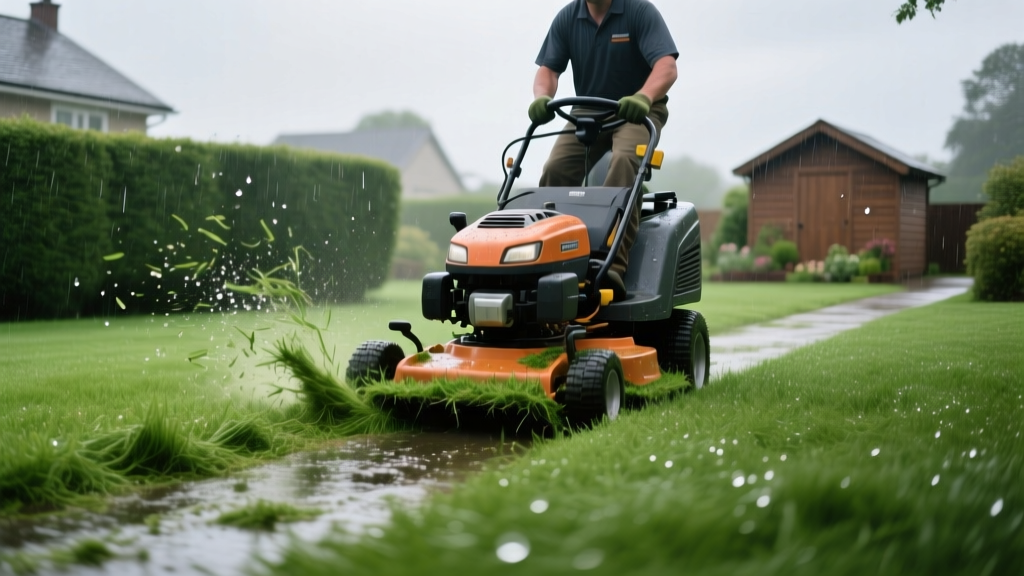
Can You Mow Grass in the Rain? Turf Pathology and Mower Risks
The Physics of Wet Turf: Why Water Changes the Cut
The question of whether you can mow grass in the rain is fundamentally a question of fluid dynamics and plant biology. When a standard 21-inch rotary mower blade spins at 2,800 RPM, it generates a tip speed of roughly 19,000 feet per minute. When this blade strikes a dry leaf of Kentucky Bluegrass or Tall Fescue, the sheer kinetic force snaps the cellular structure cleanly.
However, when the grass is wet, surface tension and increased turgor pressure cause the blade to bend rather than stand rigid. The mower blade slides over the water-coated surface, resulting in a ragged tear instead of a clean cut. According to Penn State Extension, this fraying exposes the xylem and phloem tissues, causing the turf to lose 30% to 40% more moisture in the days following the cut and turning the lawn a dull, grayish-white as the torn tips desiccate.
⚠️ CRITICAL SAFETY WARNING: Never operate an electric, battery-powered, or corded mower in the rain or on heavily dew-soaked grass. Water ingress into the motor housing or battery terminals can cause fatal electrocution or catastrophic lithium-ion thermal runaway. While gas mowers eliminate the shock hazard, they introduce severe slipping risks on wet slopes.
Turf Pathology: The Fungal Highway
Mowing wet grass is one of the most efficient ways to inoculate an entire lawn with fungal pathogens. Fungi such as Rhizoctonia solani (Brown Patch) and Pyricularia grisea (Gray Leaf Spot) thrive in high-moisture environments. When you mow a wet lawn, the mower deck acts as a biological dispersal mechanism, whipping water-borne spores into the air and depositing them directly into the open, frayed wounds of the freshly torn grass blades.
Furthermore, wet clippings clump together and fall out of the mower deck in dense mats. These mats block sunlight and trap humidity against the soil surface, creating the exact microclimate required for rapid fungal sporulation.
Infection Risk Matrix: Dry vs. Wet Mowing
| Pathogen | Dry Mowing Spread Risk | Wet Mowing Spread Risk | Primary Entry Point |
|---|---|---|---|
| Rhizoctonia solani (Brown Patch) | Low | Extreme | Frayed leaf tips |
| Pyricularia grisea (Gray Leaf Spot) | Moderate | Severe | Wet tissue abrasion |
| Sclerotinia homoeocarpa (Dollar Spot) | Low | High | Clipped leaf margins |
As documented by the University of Maryland Extension, Brown Patch can decimate a Tall Fescue lawn in under 48 hours when temperatures exceed 80°F and humidity remains above 90%—conditions exacerbated by the micro-climates created by wet mowing clumps.
Mechanical Toll: Deck Dynamics and Soil Shear Strength
Beyond plant pathology, mowing in the rain inflicts mechanical damage on both your equipment and your soil structure.
The Loss of Deck Vacuum
Modern mulching mowers rely on a carefully engineered aerodynamic vortex beneath the deck to keep clippings suspended until they are cut into fine particles. Water adds mass and destroys this vortex. The result is a clogged deck that drops 3-to-4-inch wet clumps of grass. If these clumps are not manually raked within 24 hours, they will smother the turf beneath them, causing localized chlorosis (yellowing) and inviting secondary rot.
Soil Compaction and Rutting
When soil pores become saturated with water, the soil loses its internal friction angle and shear strength. A standard 500 lb residential zero-turn mower exerts roughly 8 to 10 PSI (pounds per square inch) on the ground.
- Dry Loam Bearing Capacity: >20 PSI (Tires roll cleanly).
- Saturated Clay Bearing Capacity: <5 PSI (Tires sink and shear).
According to University of Minnesota Turfgrass Science, driving heavy equipment over saturated soil causes deep compaction, crushing the macropores required for oxygen exchange. For warm-season grasses like Bermuda and Zoysia, the shearing action of spinning tires on wet soil will physically sever the shallow rhizomes and stolons, leaving visible ruts that can take an entire growing season to recover.
The "Emergency Mow" Decision Matrix
If a severe multi-day storm is approaching and your cool-season grass has exceeded 5.5 inches in height, an emergency mow may be necessary to prevent the turf from matting down and rotting. If you must mow damp grass, follow this strict mitigation protocol:
- Ditch the Mulcher: Remove the mulching plug and switch to side-discharge. Mulching baffles will instantly clog with wet biomass.
- Raise the Deck: Increase your cutting height by at least 0.5 inches. Cutting less than 1/3rd of the wet blade reduces the total volume of water-logged clippings the deck must process.
- Reduce Ground Speed: Cut your normal driving speed in half. This gives the blade more time to generate lift and evacuate the heavy, wet clippings from the deck chamber.
- Overlap Passes by 30%: Wet grass bends away from the blade. A wider overlap ensures you catch the rebounding blades on the second pass.
- Clean the Underside Immediately: Use a putty knife to scrape the deck clean the moment you finish. Wet grass clippings are highly acidic and will accelerate corrosion on stamped steel decks within hours if left to dry.
Post-Rain Recovery: When is the Lawn Actually Ready?
Do not rely on the surface appearance of the grass to determine if it is safe to mow. The surface may look dry while the root zone remains saturated. Instead, use the Footprint Test.
Walk across the lawn in flat-soled shoes. If your footprints remain visible and the grass blades do not spring back upright within two minutes, the soil's Cation Exchange Capacity (CEC) and pore spaces are still fully saturated. The turgor pressure inside the grass cells is too low to support a clean cut. Wait until the footprints disappear immediately upon stepping away before engaging your mower. For heavy clay soils, this may require 24 to 48 hours of direct sunlight and wind exposure after the rain has stopped.

