
Lawn Care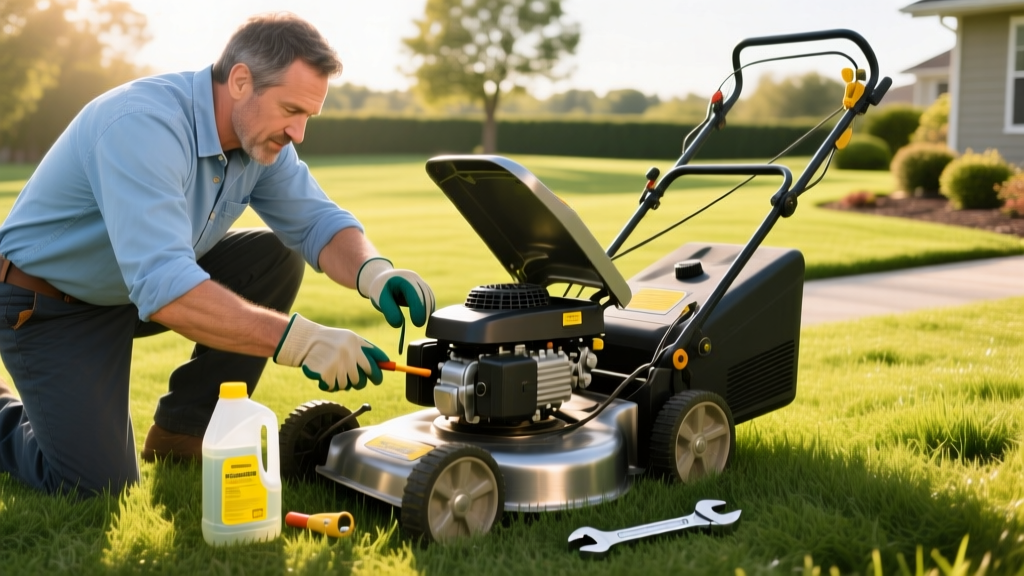
How to Change Oil in a Lawn Mower: Step-by-Step Engine Care Guide
Why Timely Oil Changes Dictate Engine Lifespan
Small air-cooled engines operate at significantly higher temperatures and RPMs than liquid-cooled automotive engines. A standard walk-behind mower engine runs between 3,000 and 3,600 RPM, generating immense friction and heat. Over time, thermal breakdown degrades the oil's viscosity, while carbon blow-by and metallic wear particles turn the lubricant into an abrasive slurry. Learning how to change oil in a lawn mower is the single most effective maintenance task to prevent seized pistons, scored cylinder walls, and premature connecting rod failure.
Diagnosing When Your Mower Needs an Oil Change
Do not rely solely on the calendar. Engine hours and operating conditions dictate oil life. For walk-behind mowers, change the oil after the first 5 hours of use (the break-in period), and then every 50 hours or at the start of each mowing season. Riding mowers and zero-turns typically require changes every 100 hours. If you mow in dusty conditions, hilly terrain, or extreme heat (above 90°F), reduce these intervals by 25%.
Always check the dipstick before every use. Healthy oil is translucent and amber. If the oil is opaque, black, or feels gritty when rubbed between your fingers, immediate replacement is required regardless of the hour count.
Selecting the Correct Oil Viscosity and Type
Using automotive oil with friction modifiers can damage small engine wet clutches. Always select oil specifically formulated for small engines or verify that the API service rating matches your manufacturer's specification (usually API SJ or later). Here is a breakdown of viscosity requirements based on operating temperatures:
| Oil Viscosity | Optimal Temperature Range | Best Application |
|---|---|---|
| SAE 30 | 40°F to 100°F (4°C to 38°C) | Standard push mowers, warm climates |
| 10W-30 | 0°F to 100°F (-18°C to 38°C) | Variable climates, riding mowers |
| Synthetic 5W-30 | -20°F to 120°F (-29°C to 49°C) | Zero-turn mowers, commercial use, extreme heat |
Conventional vs. Synthetic: Is the Upgrade Worth the Cost?
Conventional SAE 30 costs roughly $5 to $7 per quart, while small-engine synthetic blends range from $9 to $14 per quart. Synthetic oils resist thermal breakdown far better than conventional oils. In a zero-turn mower operating at 110°F ambient temperature, conventional oil will begin to vaporize and lose its protective film strength, whereas synthetic maintains its molecular structure. For commercial operators or homeowners in the Deep South, the $10 premium per year is negligible compared to the $800+ cost of a replacement engine block.
Essential Tools and Workspace Preparation
Before starting, gather the following equipment to ensure a clean, efficient process:
- Oil Extractor Pump or Drain Pan: A 2-gallon minimum capacity pan for tilt-draining, or a manual siphon pump (highly recommended for walk-behinds).
- Socket Set: 3/8-inch or 1/2-inch drive ratchet with standard and metric sockets for riding mower drain plugs.
- Flexible Funnel: To prevent spills on the engine block, which can cause smoking or fires.
- Shop Towels and Nitrile Gloves: Used motor oil contains carcinogens; protect your skin.
- Spark Plug Wrench: To safely disconnect the ignition source.
⚠️ Safety Warning: Always disconnect the spark plug wire and secure it away from the plug before tilting the mower or removing the dipstick. This prevents accidental engine cranking while your hands are near the blade or engine internals.
Step-by-Step: How to Change Oil in a Lawn Mower
Step 1: Warm the Engine and Secure the Mower
Run the engine for 3 to 5 minutes. Warm oil flows faster and keeps carbon deposits suspended, ensuring more contaminated fluid exits the crankcase. Turn off the engine, engage the parking brake (on riders), and disconnect the spark plug wire. Wipe the area around the oil fill cap with a microfiber cloth to prevent lawn clippings from falling into the crankcase.
Step 2: Extract the Old Oil
Most modern walk-behind mowers lack a dedicated drain plug to prevent leaks from vibration. You have two extraction methods:
- The Siphon Method (Recommended): Insert a manual or pneumatic oil extractor tube down the dipstick hole. Pump the extractor to draw the oil out into a catch basin. This keeps the mower level and prevents oil from contaminating the air filter or carburetor.
- The Tilt Method: Place a drain pan beneath the fill hole. Tilt the mower backward (never forward or to the side, which floods the carburetor and air filter) until the oil drains completely.
For riding mowers and zero-turns, locate the drain plug beneath the engine block. Use your ratchet to remove the plug, allowing the oil to drain into a low-profile pan. Wipe the plug clean and inspect the crush washer; replace it if flattened or cracked.
💡 Pro Tip: If using the tilt method on a push mower, always tilt it so the carburetor and air filter face upward. Tilting it the wrong way will flood the airbox with oil, requiring a complete air filter replacement and carburetor cleaning.
Step 3: Replace the Oil Filter (Riding Mowers Only)
Walk-behinds do not use oil filters. However, riding mowers with engines like the Kohler 7000 Series or Kawasaki FX require filter changes. Apply a thin film of clean oil to the rubber gasket of the new filter (e.g., Kohler 52 050 02-S). Thread it on by hand until the gasket contacts the base, then tighten an additional 3/4 turn. Never use a wrench to tighten an oil filter, as this will crush the gasket and cause a massive leak.
Step 4: Refill to the Exact Specification
Reinstall the drain plug (torque to 10-15 ft-lbs on riders). Using your flexible funnel, pour in the new oil slowly. Walk-behinds typically require 15 to 18 ounces (0.44 to 0.53 liters), while riding mowers take 48 to 64 ounces. Stop pouring before you think it is full. Insert the dipstick, wipe it, and check the level. Add oil in 2-ounce increments until it reaches the top hash mark. Do not overfill.
Troubleshooting Common Oil Change Mistakes
Even experienced homeowners make critical errors during this process. Here is how to identify and fix them:
Overfilling the Crankcase
Small engines have tight tolerances. Overfilling by even 2 ounces causes the crankshaft to whip the oil into a foam. Aerated oil cannot lubricate or cool effectively, leading to rapid engine seizure and blown crankcase seals. If you overfill, use the siphon extractor to remove the excess until the dipstick reads exactly at the top mark.
Cross-Threading the Drain Plug
On riding mowers, the oil pan is often made of soft cast aluminum. Forcing a steel drain plug at an angle will strip the threads, resulting in a costly crankcase replacement. Always thread the plug by hand for the first three rotations before applying a ratchet.
White or Milky Oil on the Dipstick
If the oil looks like a milkshake, water has entered the crankcase. This happens when mowers are pressure-washed directly at the engine seals or stored in damp, unventilated sheds where condensation builds up. You must drain this immediately, flush the crankcase with a dedicated engine flush or cheap SAE 30, and refill with fresh synthetic oil.
Environmentally Safe Oil Disposal
Used mower oil contains heavy metals and polycyclic aromatic hydrocarbons (PAHs). Never dump it in the trash, pour it down a storm drain, or use it as a DIY weed killer. According to the Environmental Protection Agency (EPA), one gallon of used oil can contaminate one million gallons of fresh water. Transfer the drained oil into a sealable, leak-proof container (the original oil bottle works perfectly). Most municipal hazardous waste facilities, auto parts stores, and small engine repair shops accept used oil for re-refining free of charge.
For comprehensive seasonal maintenance schedules, including air filter and spark plug intervals, consult resources like the University of Minnesota Extension, which provides excellent regional guidelines for small engine care and winterization protocols.

