
Lawn Care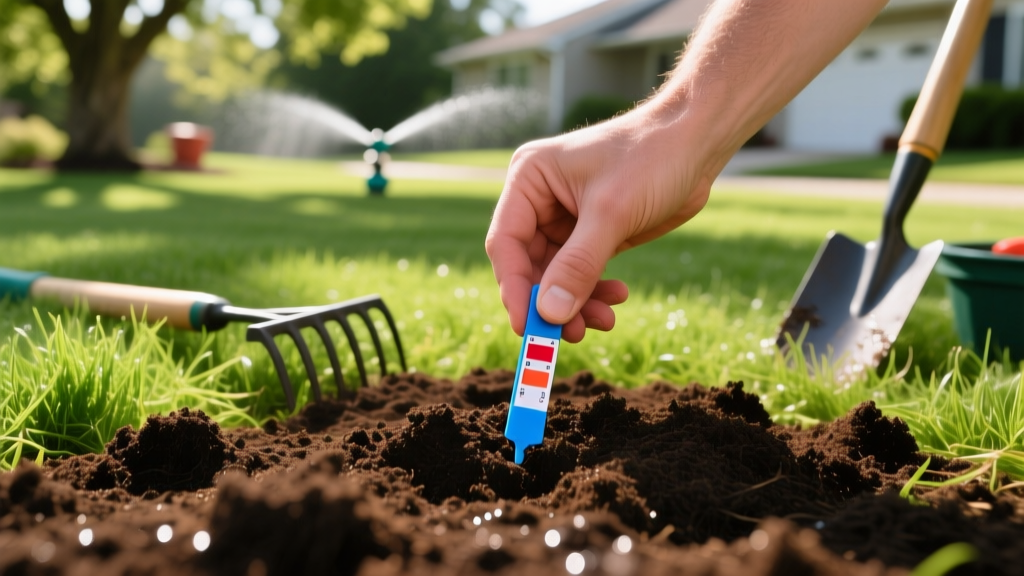
How to Check pH of Soil at Home Before Applying Lawn Amendments
Applying expensive lawn fertilizers, compost, or specialized mulches without understanding your soil's baseline chemistry is a costly mistake. Soil pH dictates the cation exchange capacity (CEC) of your lawn, meaning it controls whether nutrients are available to grass roots or locked up in the soil matrix. If you are planning a soil amendment regimen or selecting a new mulch layer, you must first answer a critical question: how to check pH of soil at home accurately.
This guide breaks down the exact methodologies for testing soil pH, ranging from professional-grade digital probes to rapid chemical dye kits, and explains how to interpret those readings specifically for mulch selection and soil amendment strategies in 2026.
The Science of Soil pH and Amendment Efficacy
Soil pH is measured on a logarithmic scale from 0 to 14, with 7.0 being neutral. Most turfgrasses thrive in a slightly acidic range of 6.0 to 7.0. According to the University of Minnesota Extension, when soil pH drops below 5.5, essential macronutrients like nitrogen, phosphorus, and potassium become chemically bound and unavailable to the plant. Conversely, highly alkaline soils (pH above 7.5) cause severe micronutrient deficiencies, notably iron chlorosis, which manifests as yellowing grass with green veins.
When you apply soil amendments—such as pelletized lime to raise pH or elemental sulfur to lower it—the chemical reactions require precise dosing. Guessing your starting pH leads to over-application, which can permanently damage soil structure and microbial life.
3 Proven Methods: How to Check pH of Soil at Home
Home testing has evolved significantly. While sending samples to a lab like the UMass Amherst Soil and Plant Nutrient Testing Laboratory provides comprehensive macro and micronutrient data, home kits are highly effective for quick pH baselines before applying mulch or basic amendments.
Method 1: Digital Soil pH Meters (The 2026 Standard)
Modern digital probes utilize solid-state glass electrodes or ion-sensitive field-effect transistors (ISFET) for rapid readings. Entry-level models like the Sonkir Soil pH Meter ($12-$15) feature dual-prong metal probes that measure moisture and pH simultaneously. For advanced turf managers, the Bluelab pH Pen ($110) offers laboratory-grade accuracy (±0.01 pH) but requires calibration with pH 4.0 and 7.0 buffer solutions before each use.
Pro Tip for Digital Meters: Never insert a dry probe directly into dry soil. The friction can scratch the sensor. Always create a 1:1 slurry of soil and distilled water, let it sit for 15 minutes, and insert the probe into the muddy suspension for an accurate reading.
Method 2: Chemical Dye Test Kits
Chemical kits, such as the Luster Leaf Rapitest Soil Test Kit ($18-$22), use barium sulfate powder and color-coded indicator drops. You mix a soil sample with the powder, add the reagent liquid, shake, and compare the resulting color against a printed chart. This method is highly reliable for general lawn care and is unaffected by the electrical conductivity issues that sometimes plague cheap digital meters.
Method 3: The Pantry DIY Fizz Test
While lacking numerical precision, the pantry test identifies extreme pH imbalances for free.
- Test for Alkalinity: Place 2 tablespoons of dry soil in a cup. Add 1/2 cup of white vinegar (acetic acid). If it fizzes aggressively, your soil is highly alkaline (pH > 7.5).
- Test for Acidity: Place 2 tablespoons of dry soil in a cup. Add enough distilled water to make mud. Pour 1/2 cup of baking soda over the mud. If it fizzes, your soil is highly acidic (pH < 5.5).
Method Comparison Matrix
| Method | Estimated Cost | Accuracy | Best Application |
|---|---|---|---|
| Digital Probe (Entry-Level) | $12 - $15 | ± 0.2 pH | Quick spot-checks across large lawns |
| Chemical Dye Kit (Rapitest) | $18 - $22 | ± 0.1 pH | Pre-amendment baselines and annual tracking |
| Digital Pen (Bluelab) | $110+ | ± 0.01 pH | Professional turf managers and hydroponics |
| DIY Pantry Fizz Test | $0 | Low (Binary) | Identifying extreme pH anomalies |
Sampling Strategy: Getting a Representative Reading
A single scoop of dirt from beneath a tree will not represent your entire lawn. To understand how to check pH of soil at home correctly, you must use a grid sampling strategy:
- Depth: Use a soil probe or trowel to extract cores exactly 4 inches deep, which is the primary root zone for most turfgrasses.
- Pattern: Walk your lawn in a zig-zag or 'W' pattern, taking 5 to 10 subsamples.
- Mixing: Combine all subsamples in a clean plastic bucket. Remove stones, roots, and debris. Allow the mixed soil to air-dry on a newspaper for 24 hours before testing.
- Avoid Contaminants: Do not sample immediately after applying fertilizer, near fresh concrete foundations (which leach lime), or directly under dense mulch beds without clearing the organic layer first.
Interpreting Results for Mulch and Soil Amendments
Once you have your pH reading, you must align your amendment and mulch choices to correct or maintain the baseline.
The Mulch pH Factor: Mulches actively alter the soil pH beneath them as they decompose. Pine bark and pine needle mulches are highly acidic (pH 3.5 to 4.5). If your underlying soil is already acidic (pH 5.8), applying pine mulch will drive the pH down further, causing nutrient lockout. Conversely, hardwood mulches and composted leaf mold buffer the soil and maintain a neutral pH.
Amendment Action Plan
| Current Soil pH | Required Action | Recommended Amendment & Rate | Compatible Mulch Types |
|---|---|---|---|
| Below 5.5 (Highly Acidic) | Raise pH | Pelletized Dolomitic Lime (Apply 25-50 lbs per 1,000 sq ft) | Hardwood bark, composted manure, neutral straw |
| 5.5 - 6.0 (Slightly Acidic) | Monitor / Mild Raise | Wood ash (Apply lightly, max 10 lbs per 1,000 sq ft) | Mixed hardwoods, leaf mold |
| 6.0 - 7.0 (Optimal) | Maintain | No pH amendment needed; focus on organic compost top-dressing | Any organic mulch; monitor pine bark accumulation |
| Above 7.5 (Alkaline) | Lower pH | Elemental Sulfur (Apply 10-15 lbs per 1,000 sq ft; takes 6+ months) | Pine needles, pine bark, peat moss, acidic composts |
Common Testing Mistakes to Avoid
Even with the best equipment, user error can skew your data. Avoid these frequent pitfalls:
- Using Tap Water for Slurries: Municipal tap water is often treated with alkaline buffers to protect copper pipes. Always use distilled water (pH 7.0) when mixing soil for digital or chemical tests.
- Testing Wet Soil: Heavy rainfall dilutes the soil's chemical concentration and temporarily alters pH readings. Wait at least 48 hours after a heavy rain event before pulling samples.
- Ignoring the Thatch Layer: If your lawn has more than 1/2 inch of thatch, your pH probe might be reading the decaying organic matter (which is highly acidic) rather than the mineral soil where the roots actually live. Core aerate or dethatch before deep soil sampling.
Frequently Asked Questions
How often should I check my soil pH at home?
Test your soil pH once a year, ideally in early spring or late fall before applying major seasonal amendments or laying down fresh mulch beds. If you are actively correcting a severe pH imbalance, test every 6 months to track the progression of the lime or sulfur applications.
Can I use a pool pH testing kit for soil?
No. Pool testing kits are calibrated for liquid chlorine and bromine environments and utilize reagents designed for water, not soil suspensions. The chemical indicators will not react correctly to the organic acids and cations present in a soil slurry, yielding completely invalid results.
Does leaving grass clippings on the lawn make the soil acidic?
While fresh grass clippings have a slightly acidic pH (around 6.0), they decompose rapidly and act as a mild, balanced organic amendment. They do not possess the buffering capacity or lignin content to significantly alter the long-term pH of your mineral soil, unlike heavy wood-based mulches.

