
Lawn Care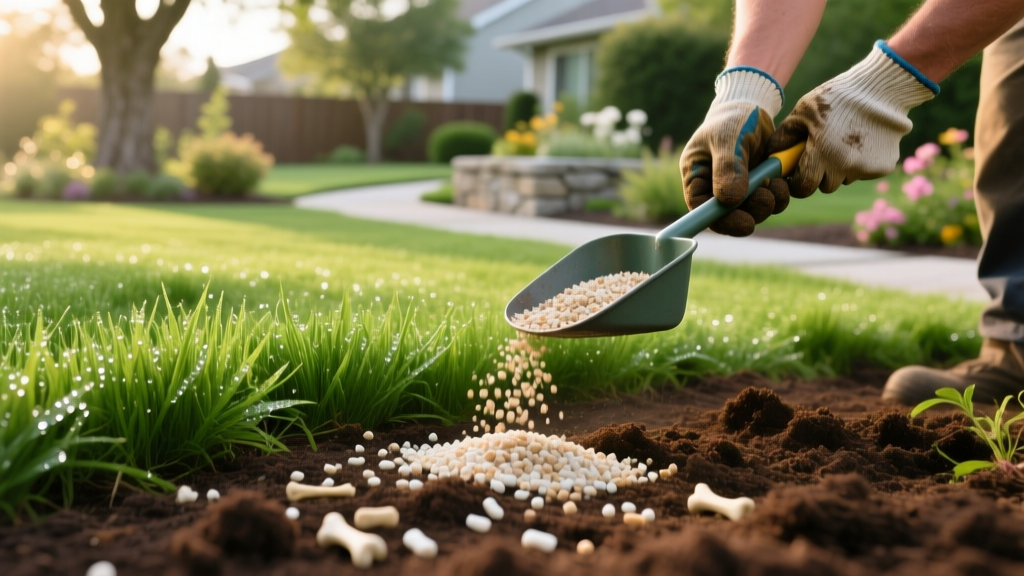
How to Choose Natural and Organic Fertilizers for a Healthier Lawn
The Paradigm Shift: Feeding the Soil, Not Just the Grass
Transitioning to natural and organic fertilizers requires a fundamental shift in lawn care philosophy. Synthetic fertilizers deliver highly soluble, salt-based nutrients directly to grass roots, forcing rapid top growth at the expense of root development and soil biology. Organic fertilizers, conversely, rely on soil microorganisms to break down complex organic molecules into plant-available ions—a process known as mineralization. According to Penn State Extension, this biological approach builds long-term soil structure, increases water retention, and establishes a resilient turfgrass ecosystem that naturally resists drought and disease.
Expert Insight: The effectiveness of natural and organic fertilizers is directly tied to your soil's Cation Exchange Capacity (CEC). Soils with higher clay or organic matter content hold onto organic nutrients better, preventing leaching and providing a steady, slow-release nutrient stream throughout the growing season.
Decoding Organic NPK: Why the Numbers Look Different
Homeowners accustomed to synthetic blends like 32-0-10 often panic when they see organic NPK ratios like 6-4-0 or 10-0-1. These lower numbers do not indicate inferior quality; they reflect the physical limits of packaging carbon-based nutrients. More importantly, organic nitrogen is largely water-insoluble (WIN). While a synthetic 30-0-5 fertilizer might lose 40% of its nitrogen to volatilization and leaching within weeks, a 6-4-0 organic blend releases nutrients gradually over 8 to 12 weeks as soil temperatures and microbial activity dictate.
Calculating Actual Nitrogen Application Rates
To achieve the recommended 0.5 to 1.0 pounds of actual nitrogen per 1,000 square feet per application using an organic 6-4-0 fertilizer, you must apply roughly 12 to 16 pounds of product per 1,000 square feet. This higher volume is beneficial: it simultaneously delivers vital organic matter to the soil profile, feeding the mycorrhizal fungi networks essential for deep root expansion.
Primary Organic Ingredients and Their Agronomic Roles
Not all organic fertilizers are created equal. The base ingredients dictate the release curve, secondary micronutrient profile, and microbial impact. Below is a breakdown of the most common components found in premium natural and organic fertilizers.
| Ingredient | Typical N-P-K | Primary Benefit | Release Timeframe | Cost per 1,000 sq ft |
|---|---|---|---|---|
| Feather Meal | 12-0-0 | High nitrogen for aggressive vegetative growth | 4-6 months | $4.50 - $6.00 |
| Blood Meal | 12-0-0 | Rapid nitrogen release; natural animal deterrent | 2-6 weeks | $7.00 - $9.00 |
| Bone Meal | 3-15-0 | Phosphorus for robust root and seedling development | 1-4 months | $5.50 - $7.50 |
| Kelp Meal | 1-0.5-2.5 | Cytokinins and trace minerals for stress tolerance | 1-3 months | $8.00 - $11.00 |
| Biosolids (e.g., Milorganite) | 6-4-0 | Iron for deep greening without growth flushes | 8-10 weeks | $6.00 - $8.00 |
Step-by-Step: Transitioning from Synthetic to Organic
Abruptly stopping synthetic fertilizers can cause a temporary "withdrawal" phase where the lawn appears pale and sluggish while the soil microbiome rebuilds. Follow this structured transition plan to maintain turf density.
Step 1: Baseline Soil Correction (Weeks 1-4)
Before applying organic nitrogen, pull 10-15 core samples from your lawn and send them to a university extension lab. Organic mineralization requires a soil pH between 6.2 and 6.8. If your pH is below 6.0, apply pelletized calcitic lime at a rate of 25 lbs per 1,000 sq ft. If your soil test indicates low organic matter (below 3%), incorporate a 1/4-inch layer of finely screened compost via topdressing before your first fertilizer application.
Step 2: Microbial Inoculation (Weeks 4-6)
Organic fertilizers are essentially "food" for soil bacteria. If your soil lacks the microbial population to digest this food, the nutrients remain locked up. Apply a liquid humic acid and kelp extract blend (such as N-EXT Humic12 or Simple Lawn Solutions Liquid Humic Acid) at 3 oz per 1,000 sq ft. Humic acid acts as a chelating agent, binding to organic nutrients and making them more accessible to grass roots while stimulating microbial reproduction.
Step 3: The First Organic Application (Weeks 6-8)
Apply a blended organic granular fertilizer when soil temperatures consistently reach 55°F to 60°F (typically mid-spring). Use a rotary spreader with the hopper open one setting wider than synthetic recommendations to accommodate the larger, irregularly shaped organic granules. Water the lawn with 1/4 inch of irrigation immediately after application to activate the soil microbes and begin the breakdown process.
Real-World Product Comparison: Top Organic Blends
Selecting the right commercial product depends on your specific turfgrass type, budget, and regional availability. Here is a direct comparison of three industry-leading natural and organic fertilizers.
Milorganite (6-4-0)
Best For: Cool-season grasses requiring iron without excessive growth.
- Pros: Non-burning, contains 2.5% chelated iron, widely available, deters deer.
- Cons: Distinct odor during application, lower nitrogen content requires heavier application rates.
- Price: ~$22 per 32 lb bag.
Espoma Organic Lawn Food (15-0-5)
Best For: High-nitrogen demands in warm-season grasses like Bermuda and Zoysia.
- Pros: Higher NPK via feather meal, includes Bio-Tone microbes, no biosolids.
- Cons: Feather meal can attract digging animals (raccoons, dogs) if not watered in deeply.
- Price: ~$38 per 30 lb bag.
Jonathan Green Organic (10-0-1)
Best For: Balanced feeding with an emphasis on soil conditioning.
- Pros: Contains wheat flour and molasses to feed microbes, pelletized for easy spreading.
- Cons: Premium pricing, potassium levels are relatively low for stress-prone lawns.
- Price: ~$45 per 30 lb bag.
Troubleshooting Common Organic Fertilization Failures
Even with the best intentions, organic lawn care can falter if environmental variables are ignored. Here is how to diagnose and correct the most frequent issues.
Symptom: Lawn Remains Yellow After Application
The Cause: Cold soil temperatures. Microbes responsible for mineralizing organic nitrogen go dormant when soil temperatures drop below 50°F. Applying organic fertilizer in early spring when the ground is still cold results in nutrient lockout.
The Fix: Wait until soil temperatures stabilize above 55°F. If immediate greening is required, apply a fast-acting liquid chelated iron (Fe-EDDHA) at 2 oz per 1,000 sq ft to provide cosmetic color without forcing vulnerable top growth.
Symptom: Increased Weed Pressure (Specifically Clover and Chickweed)
The Cause: Phosphorus deficiency or compacted soil. While organic fertilizers build long-term health, they release nutrients slowly. If your baseline soil test showed low phosphorus, standard organic blends (which are often low in P) won't support the dense turf needed to outcompete broadleaf weeds.
The Fix: Supplement with a targeted organic phosphorus source like rock phosphate or bone meal in the fall. Combine this with core aeration to relieve compaction, allowing the organic matter to integrate directly into the root zone.
Frequently Asked Questions
Can I mix synthetic and organic fertilizers?
Yes, a "bridge" program is highly effective. Applying a 50/50 mix of synthetic and organic fertilizer provides the immediate visual response of synthetics while the organic portion feeds the soil microbiome. This is an excellent strategy for the first year of transitioning away from a fully chemical regimen.
Do organic fertilizers burn the lawn?
True organic fertilizers have a very low salt index, making it nearly impossible to "burn" the lawn through over-application, unlike synthetic urea-based products. However, products containing raw, uncomposted manure or excessively high amounts of blood meal can cause localized nitrogen toxicity if applied heavily in high heat.
How does the USDA view organic soil management?
The USDA Natural Resources Conservation Service emphasizes that adding organic matter is the single most effective way to improve soil health, noting that every 1% increase in soil organic matter allows an acre of soil to hold an additional 20,000 gallons of plant-available water, drastically reducing irrigation requirements and runoff.

