
Lawn Care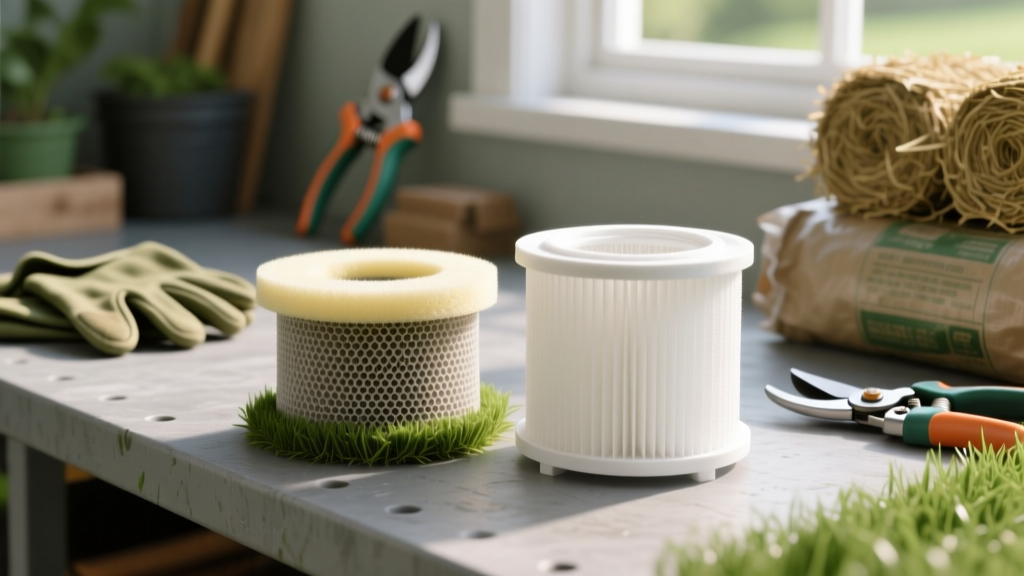
How to Clean Lawn Mower Air Filter: Foam vs. Paper Guide
The Hidden Cost of a Clogged Air Filter
A small engine requires a precise 14.7:1 air-to-fuel stoichiometric ratio for optimal combustion. When your air filter becomes clogged with silica dust, grass clippings, and pollen, the engine runs 'rich' (too much fuel, not enough air). This rich condition causes incomplete combustion, leading to carbon scoring on the cylinder walls and fouling the spark plug. Replacing a ruined carburetor on a modern zero-turn mower costs between $85 and $160, while a replacement foam filter costs roughly $12. Understanding exactly how to clean lawn mower air filter components is the most cost-effective maintenance task you can perform.
Identifying Your Filter Architecture
Before applying any solvents or compressed air, you must identify the filter media. Applying liquid cleaners to a paper filter will destroy the cellulose matrix and choke the engine. Modern mowers typically utilize one of three filtration systems.
| Filter Type | Material Composition | Washable? | Common Engine Applications | Avg. Replacement Cost |
|---|---|---|---|---|
| Open-Cell Foam | Polyurethane / Polyester | Yes | Briggs & Stratton, Toro, MTD | $8 - $15 |
| Pleated Paper | Cellulose / Synthetic Blend | No | Kohler, Kawasaki, John Deere | $12 - $25 |
| Dual-Stage | Foam Pre-Cleaner + Paper Main | Pre-Cleaner Only | Honda (HRX/HRC series) | $18 - $30 (Combined) |
How to Clean Lawn Mower Air Filter (Foam Type)
Foam filters rely on a tacky oil coating to trap microscopic dust particles. Over time, the oil dries out and the foam loads with debris. Follow this exact procedure to restore maximum airflow without degrading the polyurethane structure.
Step 1: Safe Extraction
Remove the air filter cover (usually secured by a single Phillips-head screw or a friction tab). Pull the foam filter straight out. If your mower has a rubber gasket sealing the airbox, inspect it for dry rot. A compromised gasket allows unfiltered air to bypass the filter entirely, rendering your cleaning efforts useless.
Step 2: Solvent Washing
Wash the filter in a basin of warm water mixed with a grease-cutting dish soap or a dedicated filter cleaner like K&N Power Kleen. Knead the foam gently for three to five minutes until the water runs clear and the original color of the foam (usually yellow, black, or red) returns.
WARNING: Never Use Gasoline as a Solvent
Using gasoline to clean foam filters is a common but disastrous mistake. Gasoline breaks down the chemical bonds in polyurethane, causing the foam to disintegrate into small pieces that the engine will ingest, resulting in catastrophic top-end failure. Furthermore, residual gasoline vapors in the airbox pose a severe fire hazard near the hot muffler.
Step 3: Thorough Drying
Squeeze out excess water and let the filter air-dry completely in a shaded area. Do not use heat guns, hair dryers, or direct sunlight, as UV rays and high heat accelerate foam degradation. The filter must be 100% dry before oiling; trapped water will prevent the oil from adhering to the foam pores.
Step 4: Precision Re-Oiling
Apply a dedicated air filter oil (such as Briggs & Stratton part #100106) or standard SAE 30 motor oil. Pour a small amount over the filter and knead it thoroughly. The goal is an even, light tackiness across all surfaces. Squeeze the filter firmly in a clean rag to remove excess oil. An over-oiled filter will restrict airflow and cause the engine to run lean, while an under-oiled filter will fail to trap fine silica dust.
Maintaining Paper and Dual-Stage Filters
Paper filters function via mechanical interception. The microscopic pores in the cellulose trap dust on the surface and within the pleats. Because they cannot be washed, maintenance relies on mechanical agitation.
- The Tap Method: Remove the paper filter and gently tap the hard plastic rim against a workbench to dislodge loose debris. Never tap the pleated media itself, as this can tear the cellulose.
- Soft Brushing: Use a clean, dry paintbrush to sweep dust out of the deep pleat valleys.
- Compressed Air Limits: If using an air compressor, you must regulate the pressure to a maximum of 30 PSI. Blow the air from the inside out (the clean side toward the dirty side). Pressures above 30 PSI will rupture the microscopic cellulose fibers, creating invisible holes that allow abrasive dust directly into the carburetor.
For Honda dual-stage systems, remove the foam pre-cleaner and wash it using the foam method detailed above. The inner paper cartridge should only be tapped out and replaced annually, regardless of how clean it appears. According to Briggs & Stratton maintenance guidelines, operating in heavily wooded or dry, dusty environments necessitates replacing paper filters twice as often as the standard manual suggests.
Diagnostic Symptoms of Filter Failure
Your engine will communicate when the air filtration system is compromised. Use this diagnostic framework to identify the exact failure mode.
Engine Symptom Matrix
- Black Exhaust Smoke & Sooty Spark Plug: The filter is clogged. The engine is starving for air and running rich. Clean or replace the filter immediately.
- Engine Surging (RPM Fluctuation): The filter has a tear or the airbox gasket has failed. The engine is drawing unmetered air (running lean), which causes the governor to constantly hunt for the correct RPM.
- Hard Starting & Choke Dependency: The filter is heavily saturated with oil or water. The excess fluid is being drawn into the choke circuit, flooding the combustion chamber.
Establishing Your Maintenance Interval
Most manufacturer manuals state to check the air filter every 50 hours or once per season. However, real-world conditions dictate a more aggressive schedule. Data from University of Minnesota Extension highlights that small engines operating in abrasive environments suffer accelerated wear if standard intervals are blindly followed.
- Standard Residential Lawns (Lush, damp grass): Inspect every 25 hours; clean/replace every 50 hours or at the end of the mowing season.
- Dusty / Arid Environments (Dry dirt, sandy soil): Inspect every 10 hours; clean foam filters every 15 hours. Replace paper filters every 25 hours.
- Leaf Mulching & Aeration Season: The volume of fine particulate matter generated during fall leaf mulching or core aeration is massive. Always inspect and clean the filter immediately after completing these specific tasks.
Proper air filtration is the primary defense against premature engine wear. By matching your cleaning technique to the specific filter media and adjusting your intervals based on ambient dust levels, you will easily extend the operational lifespan of your mower engine well past the 1,000-hour mark.

