
Lawn Care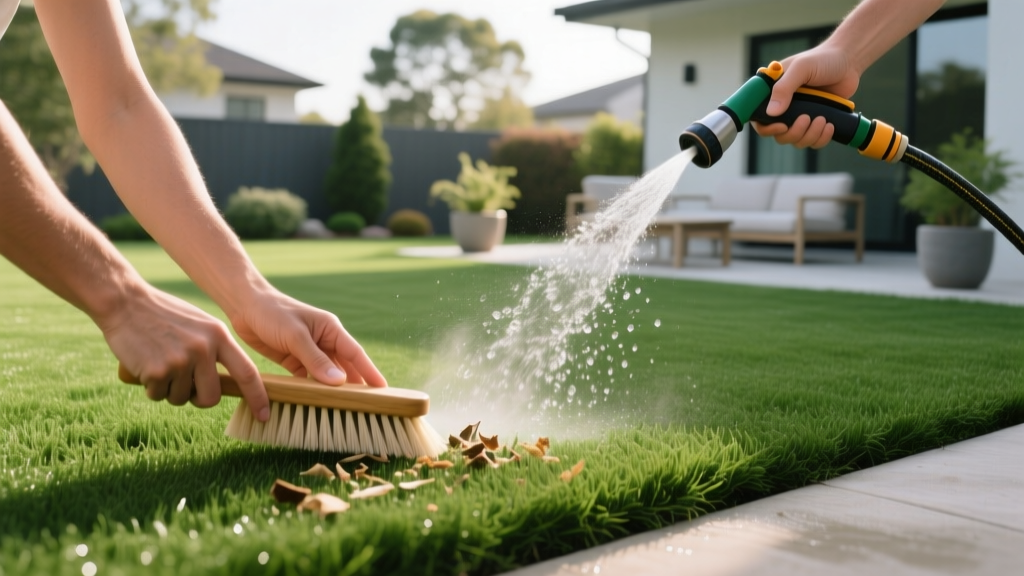
How to Clean Synthetic Grass: Step-by-Step Turf Maintenance
Synthetic turf manufacturers engineer artificial grass to withstand heavy foot traffic and UV degradation, but the 'zero-maintenance' myth leads to premature matting, bacterial buildup, and compromised drainage. While you eliminate mowing and watering, synthetic lawns require a structured, step-by-step maintenance protocol to maintain their structural integrity and hygiene. Neglecting this routine allows organic debris to decompose, blocking the polyurethane drainage backing, while pet urine crystallizes into odor-emitting uric acid salts.
This guide details the exact procedures, chemical dilutions, and tool specifications required to maintain synthetic grass in peak condition, addressing the specific challenges of pet ownership, environmental debris, and infill compaction.
The Essential Synthetic Grass Cleaning Toolkit
Using the wrong tools can permanently damage synthetic turf fibers or displace the critical infill layer. Metal-bristled rakes will slice through polyethylene and nylon blades, while high-pressure water streams can wash away silica sand. Assemble the following toolkit before beginning your maintenance routine:
| Tool Category | Recommended Specification | Estimated Cost (2026) | Purpose |
|---|---|---|---|
| Leaf Blower | Cordless, variable speed (e.g., EGO Power+ LB6504) | $220 - $280 | Surface debris removal without disturbing infill |
| Push Broom | Stiff synthetic/nylon bristles (non-metallic) | $25 - $45 | Lifting matted fibers and redistributing infill |
| Pump Sprayer | 2-gallon pressurized tank (e.g., Chapin 20002) | $30 - $40 | Even application of enzymatic cleaners |
| Hose Nozzle | Adjustable fan/mist setting (no jet streams) | $15 - $25 | Rinsing without displacing base materials |
Step 1: Weekly Debris and Dust Removal
Organic debris such as leaves, pine needles, and twigs trap moisture against the turf backing. Over time, this moisture breeds mold and blocks the perforated drainage holes. Furthermore, accumulated dust and pollen can coat the fibers, dulling the visual appeal of the lawn.
- Dry Blowing Technique: Use a cordless leaf blower on a medium speed setting. Hold the nozzle at a 45-degree angle, approximately 18 inches from the surface. Never point the blower directly downward, as this will blow the silica sand or Zeolite infill out of the turf matrix.
- Perimeter Detailing: Use a plastic lawn rake with flexible tines to gently pull debris from the edges and corners where the blower cannot reach.
- Dust Rinsing: In arid climates or during high-pollen seasons, lightly mist the turf with a garden hose using a wide fan nozzle. This washes particulate matter through the drainage backing into the sub-base.
Step 2: Pet Urine and Odor Neutralization Protocol
Watering down dog urine is insufficient. Urine contains uric acid, which forms microscopic crystals that bond to the synthetic fibers and infill. When humidity rises, these crystals release ammonia gas. To neutralize this, you must use a bio-enzymatic cleaner specifically formulated to break the peptide bonds of uric acid.
According to ForeverLawn maintenance guidelines, treating pet areas requires saturating the turf down to the sub-base, not just the surface fibers.
Enzyme Cleaner Comparison Matrix
| Product | Active Technology | Dilution Ratio | Application Frequency | Cost per Gallon |
|---|---|---|---|---|
| PE-51 Synthetic Turf Deodorizer | Live liquid bacteria / Enzymes | 2 oz per gallon | Bi-weekly (Summer) | $45.00 |
| Simple Green Outdoor Odor Eliminator | Non-toxic enzymatic formula | Pre-mixed (Hose-end) | Weekly | $15.00 |
| Zeolite-Based Turf Deodorizer | Mineral absorption (Granular) | N/A (Top dressing) | Bi-annually | $35.00 (per 50lb bag) |
Pro Tip for Heavy Pet Use: If your lawn experiences heavy pet traffic, replace standard silica sand infill with Zeolite infill. Zeolite is a naturally occurring volcanic mineral with a micro-porous honeycomb structure that physically traps ammonia gases and absorbs up to 60% of its weight in moisture, drastically reducing odors between enzymatic treatments.
Step 3: Spot-Treating Organic and Inorganic Stains
Spills happen. The chemical composition of the stain dictates the cleaning agent. Synthetic grass fibers (typically polyethylene or polypropylene) are non-porous, meaning most stains sit on the surface and can be lifted if treated before UV baking occurs.
- Organic Stains (Food, Berries, Bird Droppings): Mix a 50/50 solution of distilled white vinegar and water. Spray directly onto the stain, let it sit for 5 minutes to break down the organic acids, and wipe away with a microfiber cloth. Rinse thoroughly.
- Grease and Oil (Sunscreen, BBQ Drippings): Use a mild, pH-neutral dish soap (like Dawn Ultra). Mix 1 tablespoon of soap per cup of warm water. Agitate gently with a soft nylon brush, then rinse. Avoid harsh degreasers, which can strip the UV-protective polyurethane coating on the fibers.
- Chewing Gum or Tree Sap: Do not scrape, as this will tear the fibers. Apply a dry ice cube or a commercial aerosol freezing agent to harden the substance, then gently pop it off the fiber with a plastic putty knife.
Chemical Warning: Never use bleach (sodium hypochlorite), acetone, or highly acidic cleaners (pH below 4) on synthetic grass. These chemicals will degrade the UV inhibitors embedded in the yarn, leading to rapid fading, fiber brittleness, and voiding of the manufacturer's warranty.
Step 4: Bi-Annual Power Brooming and Infill Redistribution
Foot traffic and weather cause the synthetic blades to lean and the infill to compact or shift to low-lying areas. Compacted infill loses its shock-absorption properties and fails to keep the blades upright. The experts at HGTV recommend power-brooming high-traffic zones at least twice a year to restore the lawn's structural loft.
- Equipment Selection: Use a specialized synthetic turf power broom (e.g., the turfPower TB100 or a standard rotary brush attachment for a string trimmer). Ensure the bristles are nylon or polypropylene.
- Depth Calibration: Adjust the brush height so the bristles penetrate exactly 1/4 to 1/2 inch into the infill. Setting it too deep will drag the base layer out; setting it too shallow will fail to lift the fibers.
- Execution: Walk at a steady pace in overlapping rows, brushing against the natural grain of the turf to force the blades upright and fluff the infill.
Frequently Asked Questions
Can I use a pressure washer to clean synthetic grass?
Yes, but with strict limitations. Use a maximum of 1,500 PSI and equip the wand with a 40-degree wide fan tip. Keep the nozzle at least 24 inches away from the surface. Using a zero-degree rotary tip or high pressure will blast the silica sand infill out of the turf and potentially tear the primary backing.
How do I remove weeds growing through the drainage holes?
Weeds do not root in the synthetic fibers; they germinate in the dust and organic matter that settles on top of the backing or push up through the drainage holes from the sub-base. Pull them by hand immediately. For persistent issues, apply a pet-safe, non-residual pre-emergent herbicide (such as corn gluten meal) to the surface in early spring to prevent seed germination.
Does snow and ice damage synthetic turf?
Snow will not damage the fibers, but you must avoid using metal shovels or ice-melting salts containing calcium chloride, which can leave a white, corrosive residue that degrades the yarn. Allow snow to melt naturally, or use a plastic snow pusher, leaving a 1-inch buffer of snow to protect the fibers from scraping.

