
Lawn Care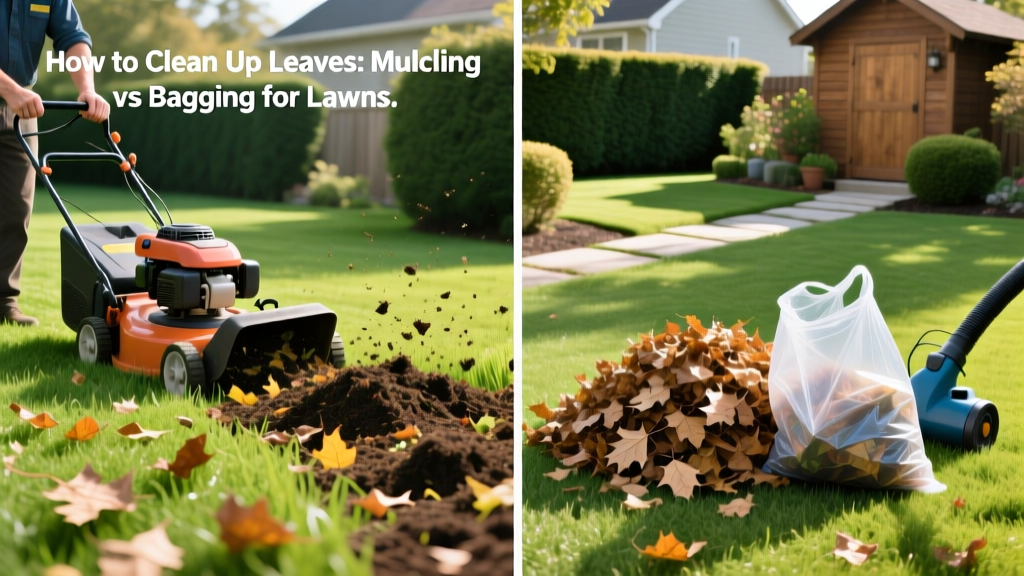
How to Clean Up Leaves: Mulching vs Bagging for Lawns
The Hidden Cost of Ignoring Fall Leaf Drop
Leaving a thick mat of fallen leaves on your turfgrass is one of the most destructive fall lawn care mistakes you can make. While a light scattering is harmless, a continuous layer blocks essential sunlight, traps excess moisture against the soil surface, and creates an ideal microclimate for fungal pathogens like snow mold (Microdochium nivale) and brown patch. Furthermore, compacted wet leaves suffocate grass crowns, leading to thin, patchy turf the following spring.
However, how you choose to clean up leaves matters just as much as doing it at all. Tree leaves contain 50% to 80% of the nutrients a tree extracts from the soil during the growing season. Removing them entirely means hauling away free fertilizer. The goal is to manage the volume without smothering the grass or stripping the soil of organic matter.
Mulching vs. Bagging: Which Method Should You Choose?
The two primary methods for managing lawn leaves are mulching (chopping them into fine pieces that filter into the turf canopy) and bagging (collecting and removing them). Your choice depends on the volume of the drop, the species of trees in your yard, and your available equipment.
| Method | Best For | Pros | Cons | Estimated Cost |
|---|---|---|---|---|
| Mulching | Light to moderate leaf drop; standard suburban lots. | Returns nitrogen and organic matter to the soil; saves time; reduces landfill waste. | Requires a specialized mower blade; can cause clumping if leaves are wet. | $0 (if using existing mower) to $30 (mulching blade upgrade). |
| Bagging | Heavy leaf drop; properties with mature oak or pine trees. | Leaves a pristine, manicured look; prevents thatch-like matting from slow-decaying leaves. | Labor-intensive; requires purchasing bags or municipal yard waste bins; removes nutrients. | $15-$30 per season for heavy-duty paper yard bags. |
| Blowing into Beds | Properties with adjacent garden beds or wooded borders. | Provides winter insulation for perennial roots; suppresses early spring weeds. | Can harbor rodents if piled against tree trunks; may blow back onto the lawn. | $0 (if using existing blower). |
Pro Tip: According to the University of Minnesota Extension, mulching leaves directly into the lawn can reduce dandelion and crabgrass germination rates by up to 60% over a three-year period, as the fine leaf particles occupy the bare soil spaces where weed seeds typically take root.
Step-by-Step Guide to Mulching Leaves
Mulching is the most efficient and ecologically sound way to clean up leaves, provided you achieve the correct particle size. If leaf fragments are larger than a dime, they will mat together and block sunlight.
- Wait for Dry Conditions: Never attempt to mulch wet leaves. Moisture causes leaves to clump under the mower deck, stalling the engine and leaving heavy, suffocating windrows on the grass. Wait at least 48 hours after a rain event.
- Adjust Your Mower Deck: Set your mower deck height to 2.5 to 3.0 inches. This provides enough clearance for the mower to pull the leaves up into the cutting chamber without scalping the turf.
- Install a Mulching Blade and Plug: Remove the side-discharge chute or rear bagger attachment. Insert the mulch plug to seal the deck opening. Ensure you are using a high-lift mulching blade (like the MaxPower 21-inch mulching blade) rather than a standard straight blade, which lacks the airflow necessary to keep leaves suspended for multiple cuts.
- Mow in Overlapping Passes: Mow at a normal walking pace. If the leaf cover is thick, make a second pass perpendicular to your first to ensure the fragments are chopped down to dime-sized pieces.
- Verify Canopy Penetration: Stop and part the grass. You should see leaf particles resting on the soil surface, with the top 50% of the grass blades fully exposed to sunlight.
Warning: Know Your Tree Species
Do not mulch excessive amounts of oak leaves or pine needles directly into the lawn. Oak leaves have high tannin content and break down very slowly, which can temporarily tie up soil nitrogen. Pine needles are highly acidic and can alter your soil pH over time. Bag these specific leaf types or use them as mulch in garden beds for acid-loving plants like azaleas and blueberries.
Do not mulch excessive amounts of oak leaves or pine needles directly into the lawn. Oak leaves have high tannin content and break down very slowly, which can temporarily tie up soil nitrogen. Pine needles are highly acidic and can alter your soil pH over time. Bag these specific leaf types or use them as mulch in garden beds for acid-loving plants like azaleas and blueberries.
Top-Rated Tools for Leaf Cleanup
Using the right equipment drastically reduces the physical toll and time required for fall cleanup. Here are three highly specific, reliable tools for the job:
1. The Mulching Mower: Toro 21" SmartStow Recycler (Model 21329)
Price: ~$389
Why it works: This mower features Toro’s Vortex technology, which creates a cyclonic airflow under the deck to keep leaves suspended longer, resulting in finer mulch. The 21-inch steel deck is ideal for standard suburban lots, and the SmartStow hinge allows you to store it vertically in a tight garage, saving valuable floor space.
2. The Leaf Blower: EGO Power+ 56V 765 CFM Blower (LB7654)
Price: ~$219 (with 2.5Ah battery)
Why it works: Gas blowers are increasingly restricted by local noise and emission ordinances. This cordless EGO model pushes 765 cubic feet per minute (CFM) of air volume, which is sufficient to move heavy, wet oak leaves across a damp lawn. The variable speed dial gives you precise control for delicate work around flower beds.
3. The Manual Rake: Ames True Temper 24-Tine Poly Leaf Rake
Price: ~$24
Why it works: When blowing and mowing aren't enough, a wide poly rake is essential. The 24-inch spread covers more ground than standard bamboo rakes, and the flexible poly tines won't rip out shallow turfgrass roots or damage delicate crowns like rigid steel thatching rakes do.
Troubleshooting Common Leaf Cleanup Mistakes
Myth: Mulching leaves causes lawn thatch.
The Reality: Thatch is a tightly intermingled layer of living and dead stems, stolons, and roots that accumulates between the soil surface and the green vegetation. Tree leaves are not a component of thatch. According to the Environmental Protection Agency (EPA), mulched leaves decompose rapidly due to their high carbon-to-nitrogen ratio and earthworm activity, actually improving soil structure rather than contributing to thatch buildup.
Problem: The mower is leaving long, unchopped windrows.
The Fix: You are moving too fast, or the leaf volume exceeds the mower's capacity for a single pass. Reduce your walking speed by 30%, or raise the mower deck by half an inch to allow more leaves into the cutting chamber before lowering it back down for a final finishing pass.
Problem: Wet leaves are sticking to the underside of the mower deck.
The Fix: Scrape the deck clean immediately after mowing. To prevent future buildup, spray the underside of a clean, dry mower deck with a light coat of silicone lubricant or a specialized mower deck spray (like Mo-Deck) before your next mowing session. This creates a non-stick barrier that sheds moisture and plant resins.
Managing Bagged Leaves: The Composting Equation
If your property’s leaf volume forces you to bag, do not send them to a landfill. Composting leaves creates 'leaf mold,' a highly valuable soil amendment that retains up to 500 times its own weight in water.
Because fallen leaves are considered 'browns' (high carbon, low nitrogen), they will not compost efficiently on their own. You must balance them with 'greens' (high nitrogen). Use a 3:1 ratio by volume: three parts dry leaves to one part green material (such as fresh grass clippings, coffee grounds, or vegetable kitchen scraps). Shredding the leaves with your mower before adding them to the compost bin will reduce a 12-month decomposition cycle down to just 4 to 6 months.
Schedule your final leaf cleanup to coincide with your last fall mowing, typically when daytime temperatures consistently drop below 50°F and the turfgrass enters winter dormancy. A clean, mulched lawn heading into winter is your strongest defense against spring fungal diseases and weed invasions.

