
Lawn Care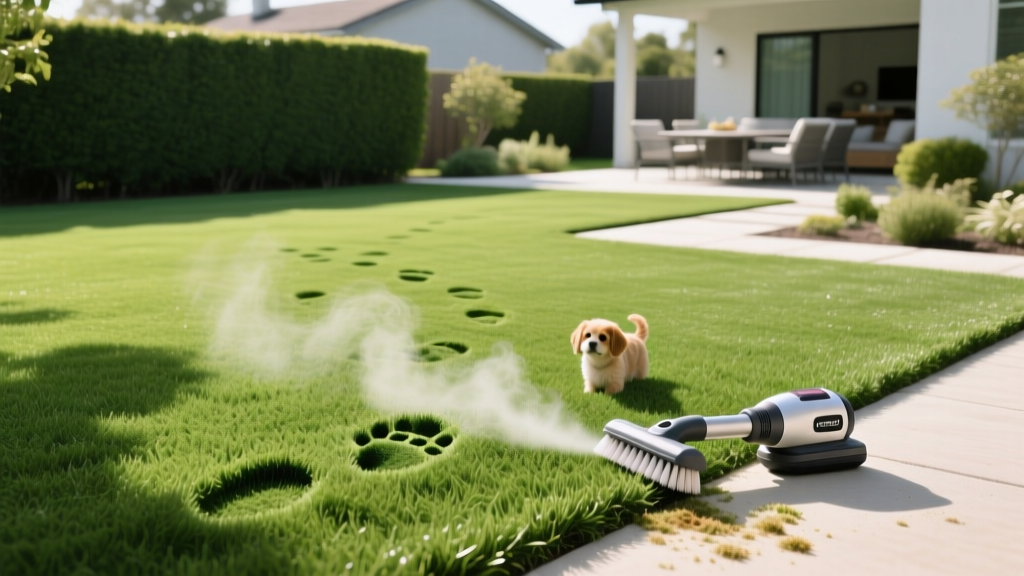
Step-by-Step Protocol for Cleaning Artificial Grass and Pet Odors
Synthetic turf is frequently marketed as a zero-maintenance alternative to natural sod, but this is a dangerous misconception. While it eliminates mowing and watering, cleaning artificial grass requires a precise, scheduled protocol to prevent fiber matting, infill compaction, and anaerobic bacteria buildup. Neglecting this maintenance degrades the face weight, compromises drainage rates, and voids most manufacturer warranties.
This guide provides a professional-grade, step-by-step framework for maintaining synthetic lawns, with a specific focus on high-traffic zones and pet odor elimination.
The Anatomy of Artificial Grass Maintenance
To clean synthetic turf effectively, you must understand its three-layer construction. The visible blades (pile) are supported by a thatch layer, which is in turn anchored by a perforated polyurethane or latex backing. The critical, often ignored component is the infill—typically a blend of silica sand and antimicrobial zeolite or acrylic-coated sand (like Envirofill).
When cleaning artificial grass, your primary objectives are to keep the pile upright, prevent the infill from compacting into a hardpan layer, and flush organic matter through the backing's drainage holes (which typically flow at 30 to 40 inches per hour).
Essential Tools and Cleaning Agents
Using the wrong tools is the fastest way to destroy a synthetic lawn. Metal rakes will tear the thatch layer, and standard household bleach will degrade the UV inhibitors in the polyethylene blades. Below is the required equipment matrix for proper maintenance.
| Tool / Agent | Specification | Purpose | Estimated Cost |
|---|---|---|---|
| Power Broom | Stiff synthetic bristles, 3000+ RPM | Grooming fibers, lifting compacted infill | $400 - $1,200 |
| Enzymatic Cleaner | Uric acid digesting bacteria (e.g., PE-51) | Neutralizing pet urine odors at the molecular level | $25 - $45 (32oz) |
| Hose-End Sprayer | Adjustable dial, 1-4 oz/gal ratio | Even chemical distribution without manual mixing | $15 - $25 |
| Plastic Leaf Rake | Flexible, wide polypropylene tines | Safe extraction of leaves and surface debris | $20 - $35 |
| Turf Deodorizer | Crushed zeolite (e.g., ZeoFill) | Replenishing ammonia-absorbing infill annually | $25 per 40lb bag |
Step-by-Step Routine: Weekly and Monthly Cleaning
A consistent schedule prevents minor issues from becoming permanent damage. Follow this exact sequence for routine cleaning of artificial grass.
Step 1: Dry Debris Extraction (Weekly)
Use a flexible plastic leaf rake or a specialized turf broom to remove leaves, twigs, and windblown debris. Never drag a metal tine rake across the surface. If organic matter is left to decompose on the turf, it creates a soil layer that promotes weed germination and blocks the drainage perforations in the backing.
Step 2: Surface Rinsing and Dilution (Bi-Weekly)
Rinse the turf with a standard garden hose to wash away dust, pollen, and light surface dirt. If you must use a pressure washer to remove stubborn mud or spills, adhere to strict limits.
Warning: Pressure Washer Limits
Never exceed 1,500 PSI when cleaning artificial grass. High pressure will blast away your silica sand and zeolite infill, leaving the turf backing exposed to UV degradation and causing the blades to mat permanently. Always maintain a minimum 12-inch distance between the nozzle and the turf surface, and use a 40-degree wide fan tip.
Never exceed 1,500 PSI when cleaning artificial grass. High pressure will blast away your silica sand and zeolite infill, leaving the turf backing exposed to UV degradation and causing the blades to mat permanently. Always maintain a minimum 12-inch distance between the nozzle and the turf surface, and use a 40-degree wide fan tip.
Step 3: Infill Grooming and Cross-Brushing (Monthly)
Foot traffic and pet activity push the infill down and bend the fibers. Use a manual push broom with stiff synthetic bristles (or a motorized power broom for lawns over 500 sq. ft.) to brush the turf. Crucial technique: Brush against the natural grain of the grass blades. This lifts the pile back to a vertical position and fluffs the infill, restoring the turf's shock absorption and drainage capabilities.
Deep Cleaning Protocol: Eliminating Pet Urine and Odors
Pet urine is the most significant challenge in synthetic turf maintenance. Urine contains uric acid, which forms microscopic crystals that bind to the turf backing and infill. Water alone cannot dissolve these crystals; it only temporarily masks the smell until the next hot day reactivates the ammonia off-gassing.
According to guidelines from the Synthetic Turf Council, biological enzymatic cleaners are the only effective method for breaking down these crystals. Follow this deep-cleaning protocol:
- Timing is Critical: Apply enzymatic cleaners only in the early morning or late evening. Direct UV sunlight destroys the live bacteria in the enzyme solution before it can penetrate the infill and digest the uric acid. The ideal temperature range for application is between 55°F and 85°F.
- Pre-Rinse: Lightly hose down the affected area to dilute fresh urine and open the turf's drainage pathways.
- Application Rate: Connect a hose-end sprayer filled with a concentrated outdoor enzyme cleaner (such as Simple Green Outdoor Odor Eliminator or PE-51). Apply at a rate of 1 ounce of concentrate per square foot. For a standard 500 sq. ft. dog run, you will need approximately 1 gallon of diluted solution.
- The Dwell Time: Allow the solution to soak into the infill and backing for 10 to 15 minutes. Do not let it dry completely during this window; if it's a very hot day, lightly mist it with water to keep it active.
- Final Flush: Rinse the area thoroughly with clean water to push the broken-down organic matter through the drainage holes and into the sub-base.
Troubleshooting Common Artificial Grass Issues
Even with strict adherence to a cleaning schedule, environmental factors can cause specific issues. Use this decision matrix to diagnose and correct common synthetic turf problems.
| Symptom | Root Cause | Corrective Action |
|---|---|---|
| Blades are permanently flattened (Matting) | Heavy foot traffic, lack of grooming, or insufficient infill weight. | Power broom against the grain. Add 1.5 lbs of silica sand per sq. ft. to weigh down the base of the fibers. |
| Lingering ammonia smell on hot days | Uric acid crystal buildup; zeolite infill has reached maximum absorption capacity. | Perform the deep enzymatic cleaning protocol. Top-dress the lawn with fresh ZeoFill infill to restore ammonia capture. |
| Green moss or algae on turf edges | Poor drainage, excessive shade, or organic debris buildup trapping moisture. | Clear surrounding debris. Apply a turf-safe, zinc-based moss killer. Avoid copper sulfate, which can stain the backing. |
| Stiff, crunchy texture underfoot | Infill has compacted into a hardpan layer due to lack of brushing and heavy rain. | Aerate the infill using a stiff push broom or power broom. If severely compacted, use a turf aerator roller to fracture the sub-base. |
Seasonal Maintenance Adjustments
Cleaning artificial grass requires slight modifications based on the season to protect the structural integrity of the materials.
- Autumn: Increase the frequency of dry debris extraction. Wet, decaying leaves will stain the polyethylene blades and create a breeding ground for bacteria. Use a leaf blower on a low setting rather than raking to avoid disturbing the infill.
- Winter: Never use metal shovels or ice melt salts containing calcium chloride, which can leave a permanent white, chalky residue on the blades and degrade the backing. Use a plastic shovel and allow snow to melt naturally, or use a turf-safe magnesium chloride de-icer sparingly.
- Spring: Perform a comprehensive power brooming and apply a preventative pre-emergent weed killer around the perimeter of the turf to stop windblown seeds from taking root in the infill layer. Always check EPA guidelines to ensure any herbicide used near synthetic drainage zones is environmentally compliant and safe for local groundwater.
By treating synthetic turf as a permeable, layered system rather than a static plastic carpet, homeowners can extend the lifespan of their investment from the standard 8-10 years well beyond 15 years, maintaining optimal drainage and aesthetic vibrancy.

