
Lawn Care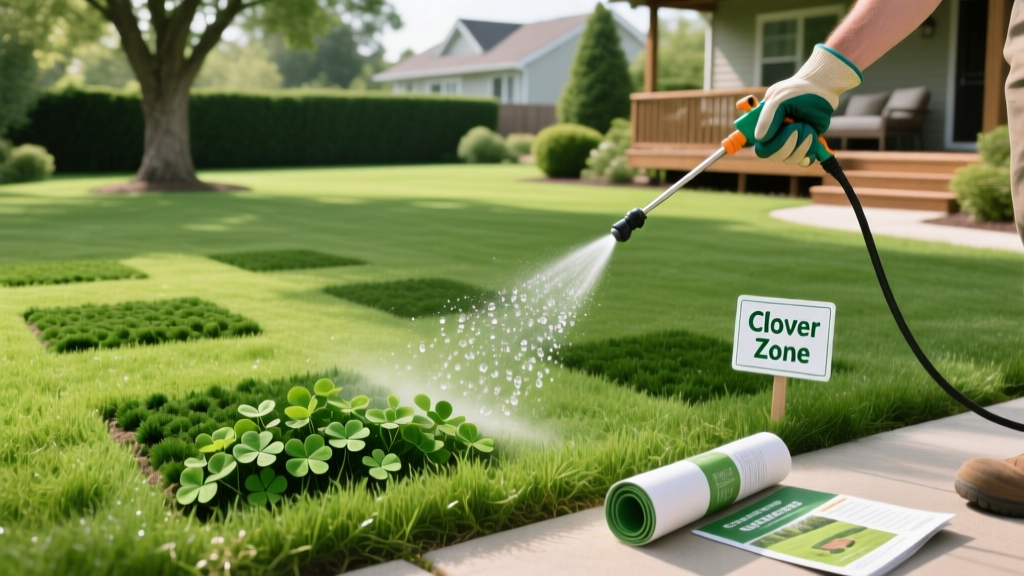
Proven Clover Killing Strategies: Spot-Treatment Guide for Lawns
The Biology of the Invasion: Why Clover Targets Your Lawn
Clover is not merely a cosmetic nuisance; it is a biological indicator of soil imbalance. As a legume, white clover (Trifolium repens) possesses a symbiotic relationship with Rhizobium bacteria, allowing it to fix atmospheric nitrogen into the soil. When your turfgrass is starved of nitrogen, clover exploits the deficiency, outcompeting the grass canopy. According to turfgrass researchers at the University of Minnesota Extension, clover thrives in low-fertility, compacted soils where cool-season grasses like Kentucky bluegrass and perennial ryegrass struggle to establish deep root systems.
The Nitrogen Paradox: Many homeowners attempt to kill clover without addressing the underlying soil deficit. While herbicides will burn back the foliage, the clover's extensive stolon (above-ground runner) network will rapidly regenerate unless the turf canopy is thickened via targeted nitrogen fertilization. Spot-treatment must be paired with cultural correction.
Identifying the Culprit: Clover Species Matrix
Accurate identification dictates your chemical selection. While white clover is the most prevalent, yellow woodsorrel (often misidentified as clover) and red clover require slightly different approaches due to their distinct growth habits and leaf cuticles.
| Species | Leaflet Structure | Flower & Growth | Spot-Treatment Vulnerability |
|---|---|---|---|
| White Clover (T. repens) | Three oval leaflets, often with white 'V' chevron | White/pink globe flowers; creeping stolons | Highly vulnerable to 2,4-D and Triclopyr mixes |
| Red Clover (T. pratense) | Larger, hairy leaflets with prominent white chevrons | Magenta flowers; upright, bunch-type growth | Moderate; requires higher surfactant rates due to leaf hairs |
| Yellow Woodsorrel (Oxalis stricta) | Three heart-shaped leaflets (no chevron) | Yellow 5-petal flowers; upright with taproot | Resistant to some 2,4-D; requires Dicamba or Triclopyr |
Chemical Spot-Treatment Protocols (Synthetic Herbicides)
For rapid, systemic eradication of established clover patches, synthetic selective broadleaf herbicides remain the industry standard. Spot-treating with a 1-gallon to 2-gallon pump sprayer offers superior precision and drastically reduces chemical runoff compared to broadcast hose-end spraying.
Formulation Selection: Amine vs. Ester
The active ingredient 2,4-D is available in two primary formulations, and choosing the wrong one based on ambient temperature is a common failure point in clover killing.
- Amine Formulations (e.g., Hi-Yield Trimec 992): Water-soluble and non-volatile. These are mandatory for spot-treatments when daytime temperatures exceed 85°F. They are slightly slower to show visual burn (5-7 days) but will not vaporize and drift onto nearby ornamental shrubs or garden beds.
- Ester Formulations (e.g., SpeedZone Broadleaf Herbicide): Lipid-soluble, penetrating the waxy cuticle of the clover leaf rapidly. SpeedZone contains a four-way blend (2,4-D ester, MCPP-p, Dicamba, and Carfentrazone) that triggers visible necrosis within 24 to 48 hours. Restriction: Do not apply ester formulations when temperatures are above 85°F, as volatilization will damage non-target broadleaf plants.
Exact Mix Rates for 1-Gallon Spot Sprayers
Over-mixing herbicides does not kill clover faster; it causes rapid leaf-tissue necrosis that traps the chemical in the dead foliage before it can translocate down to the stolon and root system. Follow these precise measurements for a 1-gallon tank:
- SpeedZone (Ester): 1.5 fluid ounces per gallon of water.
- Trimec 992 (Amine): 1.5 fluid ounces per gallon of water.
- Non-Ionic Surfactant (NIS): 0.5 teaspoons (approx. 2.5 ml). Clover leaves are heavily waxed. A surfactant like Hi-Yield Spreader Sticker reduces surface tension, allowing the droplets to flatten and penetrate the cuticle rather than beading up and rolling off into the soil.
Organic & Non-Toxic Spot-Treatment Options
For lawns adjacent to edible gardens, water features, or for homeowners avoiding synthetic auxin herbicides, iron-based solutions offer a highly effective alternative for clover killing.
FeHEDTA (Chelated Iron) Mechanisms
Products utilizing FeHEDTA (Iron HEDTA), such as Fiesta Turf Weeder or Natria Lawn Weed Control, exploit a physiological difference between monocots (grasses) and dicots (broadleaf weeds). When applied at a 10% to 15% solution concentration, the broadleaf clover absorbs massive quantities of iron, leading to fatal oxidative stress and cellular collapse within hours. Turfgrasses naturally restrict iron uptake at the root and leaf level, allowing them to survive and even benefit from the mild iron application, which promotes dark-green coloration.
Warning: The Horticultural Vinegar Myth
Many online guides recommend 20% to 30% acetic acid (horticultural vinegar) for organic clover control. While it will burn clover foliage, it is completely non-selective. It will scorch your turfgrass to the soil line, leaving bare dirt patches that invite worse weeds like crabgrass or nutsedge. Furthermore, repeated application severely lowers soil pH and harms beneficial soil microbes. Stick to FeHEDTA for organic spot-treatments.
Many online guides recommend 20% to 30% acetic acid (horticultural vinegar) for organic clover control. While it will burn clover foliage, it is completely non-selective. It will scorch your turfgrass to the soil line, leaving bare dirt patches that invite worse weeds like crabgrass or nutsedge. Furthermore, repeated application severely lowers soil pH and harms beneficial soil microbes. Stick to FeHEDTA for organic spot-treatments.
Step-by-Step Application Framework
Executing a flawless spot-treatment requires strict adherence to environmental parameters. The North Carolina State Extension notes that herbicide efficacy drops by up to 40% when applied to drought-stressed weeds.
- Hydrate the Target (48 Hours Prior): If the lawn is dry, water the clover patches deeply two days before treatment. Actively growing, turgid clover translocates systemic herbicides down to the roots much faster than wilted, drought-stressed clover.
- Mow at Standard Height: Do not scalp the lawn before spraying. Leaving the clover leaves fully extended maximizes the surface area available to intercept the herbicide droplets.
- Calibrate the Spray Wand: Adjust your pump sprayer nozzle to a medium-coarse droplet setting. A fine mist increases the risk of wind drift onto desirable plants, while heavy streams will simply bounce off the clover canopy and waste product.
- Apply to the Point of Runoff: Spray the clover patch until the leaves are visibly wet and glistening, but stop before the liquid begins dripping off the leaf edges onto the soil.
- Enforce the Rainfast Window: Ensure no rainfall or irrigation occurs for at least 24 hours post-application (6 hours minimum for SpeedZone, but 24 hours guarantees maximum stolon penetration).
Post-Eradication: Closing the Canopy
Once the clover has turned black and desiccated (typically 7-14 days for synthetics, 3-5 days for FeHEDTA), the physical space it occupied is now vulnerable. According to turf management data from UMN Turfgrass Science, failing to fill these voids results in a 70% chance of secondary weed invasion.
Immediately following the death of the clover, apply a fast-release nitrogen fertilizer (such as 46-0-0 Urea) at a rate of 0.5 lbs of nitrogen per 1,000 square feet. This specific dosage stimulates lateral rhizome and stolon growth in your existing turfgrass, forcing it to creep laterally and choke out any remaining clover seedlings attempting to germinate in the bare spots. For cool-season lawns with severe thinning, pair this nitrogen application with a spot-seeding of perennial ryegrass, which germinates in 5-7 days and acts as a rapid biological bandage over the treated area.

