
Lawn Care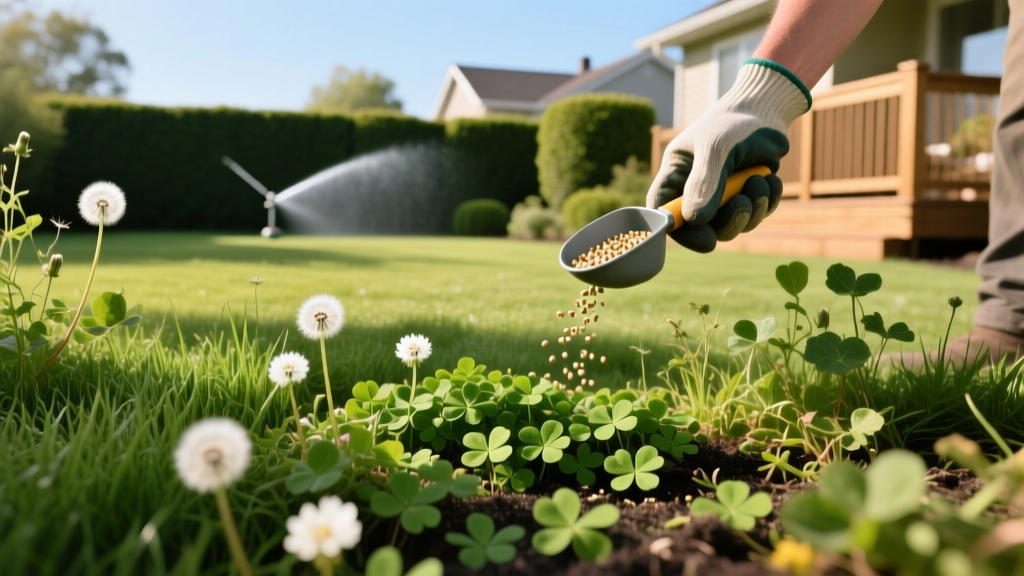
Clover Seed for Lawns: Spot-Treating Weeds vs Planting Microclover
Clover has long been the nemesis of the pristine, monoculture Kentucky bluegrass lawn. However, the modern turf management paradigm is shifting. Homeowners are increasingly searching for clover seed for lawns not to eradicate it, but to integrate it as a sustainable, nitrogen-fixing groundcover. This guide bridges the gap between traditional weed species spot-treatment and the emerging practice of eco-turf seeding, providing exact protocols for both managing aggressive clover invasions and intentionally planting beneficial microclover.
The Clover Dilemma: Weed vs. Eco-Turf
The term "clover" encompasses over 300 species in the Trifolium genus, but turf managers primarily deal with two distinct categories: aggressive broadleaf weeds and dwarf eco-turf cultivars. White Dutch Clover (Trifolium repens) is a rapid-spreading perennial weed that forms dense mats, choking out desirable grasses. Conversely, Microclover (specifically cultivars like 'Pirouette' and 'Minica') features significantly smaller leaves, shorter stolons, and a growth habit that blends seamlessly with traditional turfgrasses rather than dominating them.
Understanding this biological distinction is critical before reaching for an herbicide or a seed spreader. According to the University of Minnesota Extension, integrating microclover into a turf stand can reduce synthetic nitrogen fertilizer requirements by 30% to 50% due to its symbiotic relationship with Rhizobium bacteria, which fix atmospheric nitrogen into the soil.
Soil Diagnostics: Why Aggressive Clover Invades
Before spot-treating White Dutch Clover, analyze the underlying soil conditions that allowed it to establish. Clover is an indicator species for specific soil imbalances:
- Low Nitrogen: Clover thrives in nitrogen-deficient soils (below 2 lbs of available N per 1,000 sq ft annually) because it generates its own.
- Compaction: Heavy clay soils with poor drainage favor clover's shallow, fibrous root system over the deeper roots of fescues and bluegrasses.
- Phosphorus Levels: Clover tolerates a wide pH range (5.5 to 7.5) but responds aggressively to high phosphorus levels. If your soil test shows P > 50 ppm, clover will easily outcompete turfgrass.
Species Identification and Behavior Matrix
Accurate identification dictates your management strategy. Use the matrix below to determine whether you are dealing with an invasive weed or a candidate for eco-turf integration.
| Species / Cultivar | Leaflet Size | Stolon Spread Rate | Flower Production | Primary Lawn Role |
|---|---|---|---|---|
| White Dutch Clover | Large (0.5 - 1.5 inches) | Aggressive (up to 12 inches/year) | Heavy (large white/pink globes) | Invasive Weed |
| Microclover ('Pirouette') | Small (0.2 - 0.4 inches) | Moderate (blends with turf canopy) | Minimal (sparse, small blooms) | Eco-Turf / Nitrogen Fixer |
| Strawberry Clover | Medium (0.5 - 1 inch) | Moderate to Aggressive | Distinctive pink, burr-like heads | Invasive Weed (Warm Climates) |
Spot-Treatment Protocols for Aggressive Clover
When White Dutch or Strawberry clover is actively displacing your desired turfgrass, spot-treatment is required. Broadcast herbicide applications are inefficient and damage non-target broadleaf plants. Follow these targeted protocols:
1. Iron-Based Herbicides (FeHEDTA)
Chelated iron (Iron HEDTA) is highly effective against clover while being safe for most cool- and warm-season grasses. Clover absorbs iron rapidly, leading to cellular necrosis, while turfgrasses metabolize it safely.
- Recommended Products: Fiesta Turf Herbicide, Natria Lawn Weed Control.
- Application Rate: 3.0 to 4.0 fluid ounces per 1,000 square feet for spot treatments.
- Timing: Apply when daytime temperatures are between 60°F and 80°F. Avoid application if temperatures exceed 85°F to prevent turf phytotoxicity.
- Protocol: Apply directly to the clover foliage until wet, but avoid runoff. A second application is almost always required 14 to 21 days after the initial treatment to kill the deep taproot and stolon nodes.
2. Synthetic Auxin Herbicides
For severe infestations, selective broadleaf herbicides containing 2,4-D choline, Dicamba, and Quinclorac provide systemic control. The University of California Statewide IPM Program notes that triclopyr is particularly effective on stubborn clover species that exhibit resistance to 2,4-D.
- Recommended Products: Ortho WeedClear for Lawns, SpeedZone Broadleaf Herbicide.
- Surfactant: Always add a non-ionic surfactant (at 0.25% v/v) to the tank mix. Clover leaves have a waxy cuticle that repels water-based herbicides; the surfactant breaks this surface tension.
⚠️ CRITICAL WARNING: If you plan to transition your lawn to an eco-turf or have desirable broadleaf plants nearby, avoid synthetic auxin herbicides. These chemicals persist in the soil for 30 to 90 days and will immediately kill any microclover seed you attempt to plant later.
Integrating Clover Seed for Lawns: The Microclover Advantage
If your goal is to reduce fertilizer inputs, improve drought tolerance, and create a resilient lawn, planting microclover seed is a highly effective strategy. Microclover acts as a living mulch, shading the soil to retain moisture and suppressing actual weeds like crabgrass and dandelions.
Sourcing and Seed Costs
Do not use generic "white clover" seed sold for pasture forage; it will revert to the aggressive, large-leaf phenotype. You must purchase certified microclover cultivars.
- Top Cultivars: Outsidepride Miniclover Seed, Pro Time Microclover, PT 769.
- Cost Expectation: $35 to $45 per pound. While expensive by weight, the seeding rate is incredibly low compared to traditional grass seed.
- Inoculation Requirement: Ensure the seed is pre-inoculated with Rhizobium leguminosarum biovar trifolii. Uninoculated seed will fail to fix nitrogen in soils where this specific bacteria strain is absent, rendering the eco-benefits null.
Step-by-Step Overseeding Guide
Integrating microclover into an existing turf stand requires precise seed-to-soil contact. Broadcast spreading over an established canopy will result in a germination rate below 10%.
- Core Aeration: Pull 3-inch soil plugs at a density of 20 to 30 holes per square foot. This fractures the thatch layer and creates micro-depressions for the seed to settle.
- Seed Application: Apply microclover seed at a rate of 1.0 to 2.0 lbs per 1,000 square feet for overseeding. (For bare-soil establishment, increase to 5.0 lbs per 1,000 sq ft).
- Topdressing: Drag a piece of chain-link fence or a stiff mat across the lawn to work the seed into the aeration holes. Apply a 1/8-inch layer of finely screened compost to cover the seed.
- Irrigation Protocol: Microclover seed lacks the endosperm energy reserves of large grass seeds. It must remain constantly moist. Water lightly 2 to 3 times daily for 10 to 14 days until cotyledons emerge. Do not allow the top 1/2 inch of soil to dry out during this window.
Mowing and Long-Term Maintenance
Once established, a mixed grass-microclover lawn requires a specific mowing regimen to maintain the ecological balance. Set your mower deck to 2.5 to 3.5 inches. At this height, the turfgrass provides a structural canopy that forces the microclover to grow upright and blend in, rather than spreading laterally and forming distinct, clover-only patches.
Fertilization must also be adjusted. Reduce your annual nitrogen application by 50%. Applying high rates of synthetic nitrogen (e.g., 4 lbs N/1000 sq ft/year) will cause the companion grasses to grow so aggressively that they shade out and kill the microclover, defeating the purpose of the eco-lawn. By maintaining a balanced, lower-nitrogen diet, the grass and clover enter a symbiotic equilibrium, resulting in a dense, dark green, and highly drought-tolerant turf.

