
Lawn Care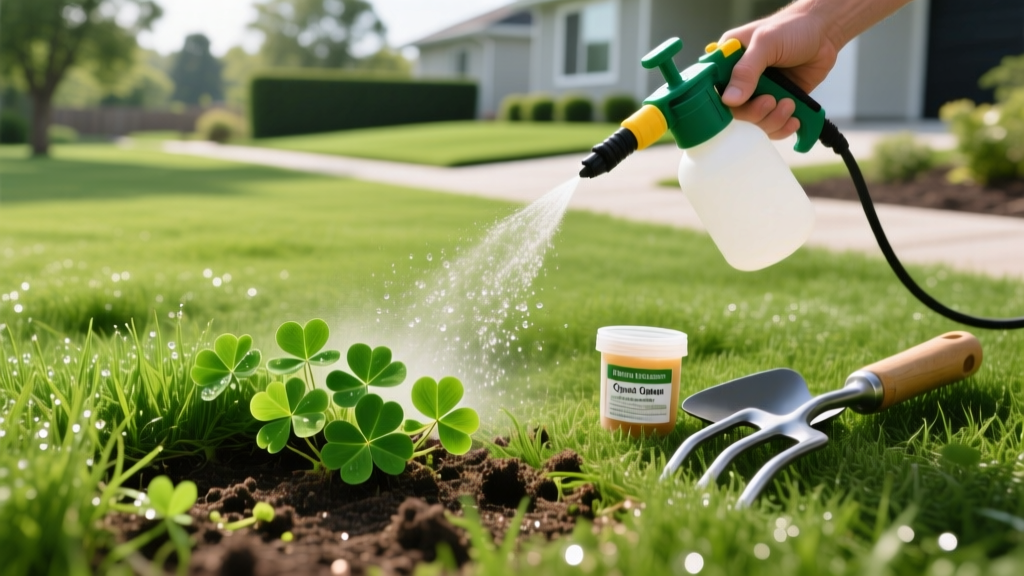
Clover Weed Spot-Treatment: Best Herbicides and Natural Fixes
Why Clover Weed Invades: The Nitrogen Indicator
Clover weed (Trifolium repens) is not just a random nuisance; it is a biological indicator of soil health. As a legume, clover forms a symbiotic relationship with Rhizobium bacteria in its root nodules, allowing it to fix atmospheric nitrogen. When your lawn soil is deficient in nitrogen, turfgrass thins and weakens, creating the exact low-competition environment clover needs to establish its creeping stolons. Spot-treating clover weed without addressing the underlying nitrogen deficit guarantees a recurring infestation.
This guide provides exact chemical mixing ratios, organic alternatives, and mechanical removal protocols to eradicate clover weed from both cool-season and warm-season lawns.
Identifying the Invader: White, Red, and Microclover
Accurate identification dictates your herbicide selection and application timing. According to Penn State Extension, misidentifying clover species often leads to ineffective chemical applications.
- White Clover: The most common lawn invader. Features low-growing creeping stolons, trifoliate leaves with distinct white "chevron" or V-shaped watermarks, and spherical white-to-pink flower heads.
- Red Clover: Grows more upright with hairy stems and larger leaves. Typically indicates poorer soil conditions and is easier to pull due to a shallower, more fibrous root system compared to white clover.
- Microclover: A smaller, less aggressive cultivar often intentionally mixed into eco-lawns. If you are trying to eradicate this, note that its smaller leaf surface area requires higher surfactant concentrations for herbicide adherence.
The Spot-Treatment Decision Matrix
Herbicide safety depends entirely on your turfgrass species. Applying the wrong active ingredient can cause severe phytotoxicity, melting your lawn while the clover survives. Use this framework to select your active ingredient.
| Lawn Type | Grass Species | Safe Active Ingredients | Ingredients to Avoid |
|---|---|---|---|
| Cool-Season | Kentucky Bluegrass, Tall Fescue, Perennial Ryegrass | 2,4-D, Dicamba, MCPP, Carfentrazone, Quinclorac | None (Standard broadleaf mixes are safe) |
| Warm-Season | Bermudagrass, Zoysia | 2,4-D, Dicamba, MCPP, Quinclorac, Metsulfuron-methyl | High rates of 2,4-D during summer heat (>85°F) |
| Warm-Season | St. Augustine, Centipede | Atrazine, Metsulfuron-methyl, Penoxsulam | 2,4-D, Dicamba, MCPP (Causes severe stunting/browning) |
Chemical Spot-Treatment: Exact Products and Mixing Rates
For rapid knockdown, synthetic selective herbicides are the industry standard. The goal is to use a pump sprayer for precise spot-treatment rather than broadcasting chemicals across the entire lawn.
1. SpeedZone Broadleaf Herbicide (Professional Grade)
SpeedZone contains a four-way blend: Carfentrazone-ethyl (0.6%), 2,4-D (28.5%), MCPP-p (5.4%), and Dicamba (2.3%). The inclusion of Carfentrazone provides a rapid "burn" effect, causing clover leaves to desiccate within 24 to 48 hours, while the systemic ingredients travel to the 4-to-6-inch deep taproot.
Mixing Protocol: Mix 1.5 fluid ounces of SpeedZone per 1 gallon of water to treat 1,000 square feet.
Cost: Approximately $45 for a 20 oz bottle (yields over 13 gallons of spot-treatment solution).
Cost: Approximately $45 for a 20 oz bottle (yields over 13 gallons of spot-treatment solution).
2. Ortho WeedClear Lawn Weed Killer (Consumer Grade)
For smaller lawns, Ortho WeedClear (Ready-to-Spray) utilizes a similar three-way blend without Carfentrazone. It acts slower, taking 10 to 14 days to fully kill the clover root system.
- Application: Attach directly to a garden hose. Apply until leaves are uniformly wet but not dripping.
- Cost: ~$15 for a 32 oz hose-end bottle.
Organic and Natural Spot-Treatment Protocols
If you maintain an organic lawn or have children and pets playing on the grass daily, synthetic herbicides may not be viable. Research from NC State Extension highlights chelated iron as the most effective organic alternative.
Iron HEDTA (FeHEDTA) Applications
Products like Fiesta Turf Weed Killer utilize Iron HEDTA. Broadleaf weeds like clover absorb the iron rapidly, leading to fatal oxidative stress and cellular necrosis (blackening of the leaves). Turfgrass also absorbs the iron but metabolizes it safely, often resulting in a temporary, beneficial dark-green color boost to the grass.
- Mix Rate: 3.3 fluid ounces of Iron HEDTA per 1 gallon of water.
- Timing: Apply when temperatures are between 50°F and 75°F. High heat reduces efficacy and can cause temporary turf phytotoxicity.
- The Two-Pass Rule: Iron HEDTA burns the top growth but rarely kills the deep taproot on the first pass. You must schedule a second application exactly 21 days after the first to kill the regenerating crown.
- Cost: ~$35 for a 32 oz concentrate.
Mechanical Extraction: The Taproot Rule
Hand-pulling clover weed is only effective if you remove the entire root system. Clover taproots can extend up to 6 inches deep in loamy soils. If the root snaps at the 2-inch mark, the crown will generate three to four new shoots within a week, worsening the infestation. Use a specialized weeding tool like the Fiskars Stand-Up Weeder or a soil knife to pry the soil open, grip the base of the stolon, and pull at a 45-degree angle to leverage the taproot out intact.
Post-Treatment Lawn Recovery and Prevention
Eradicating the clover weed leaves bare patches in your turf. If left unaddressed, these patches will be colonized by crabgrass or spurge within weeks.
Warning: The Nitrogen Correction
Because clover thrives in low-nitrogen environments, you must alter the soil chemistry to prevent its return. Apply a fast-release nitrogen fertilizer, such as 46-0-0 Urea, at a rate of 1.0 lb of actual nitrogen per 1,000 square feet immediately after the clover dies back. This flushes the surrounding turfgrass with the nutrients it needs to aggressively spread and fill the voids.
Because clover thrives in low-nitrogen environments, you must alter the soil chemistry to prevent its return. Apply a fast-release nitrogen fertilizer, such as 46-0-0 Urea, at a rate of 1.0 lb of actual nitrogen per 1,000 square feet immediately after the clover dies back. This flushes the surrounding turfgrass with the nutrients it needs to aggressively spread and fill the voids.
Mowing Height Adjustments
Clover requires sunlight to germinate and spread its stolons. By raising your mower deck to 3.5 or 4.0 inches, you force your turfgrass to grow taller, creating a dense canopy that shades the soil surface. This photoperiod disruption prevents new clover seeds from receiving the light required for germination.
Frequently Asked Questions
Will vinegar kill clover weed?
Horticultural vinegar (20% to 30% acetic acid) will burn the leaves of clover weed on contact, but it is entirely non-systemic. It will not reach the taproot, and the clover will regrow within days. Furthermore, acetic acid indiscriminately burns turfgrass and temporarily lowers soil pH, making it a poor choice for lawn spot-treatment.
Is it too late to treat clover in the summer?
Treating clover weed when daytime temperatures exceed 85°F is risky. High heat causes herbicides to volatilize (turn into gas), which can drift and damage nearby ornamental shrubs or cause severe burning to your turfgrass. If you must treat in summer, apply Iron HEDTA or systemic herbicides in the early evening when temperatures drop below 80°F.
Should I leave clover in my lawn for the bees?
While clover flowers provide nectar for pollinators, allowing it to spread compromises the structural integrity and drought-resistance of your turf. If you want to support pollinators without sacrificing your lawn, consider dedicating a specific garden bed to native wildflowers rather than letting clover weed hijack your primary turf areas.

