
Lawn Care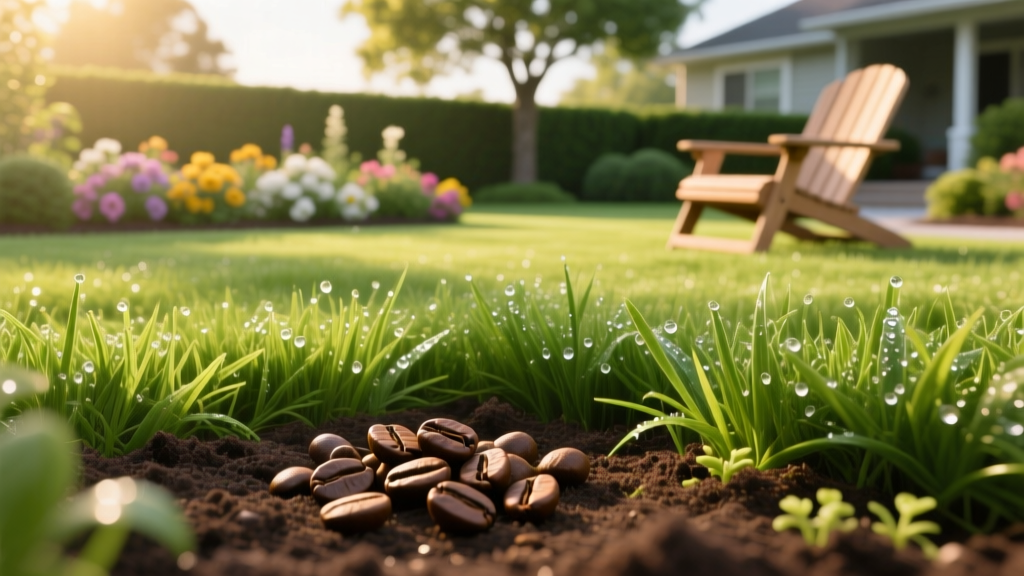
Are Coffee Grounds Good for Lawns? A Soil Science Explainer
The Nutritional Reality of Spent Coffee Grounds
The short answer to whether coffee grounds benefit turfgrass is yes, but only when applied with an understanding of soil microbiology. A pervasive myth in lawn care forums suggests that dumping raw espresso or drip coffee residue directly onto grass will acidify the soil and burn the turf. In reality, the brewing process strips away most of the acidic compounds, leaving spent grounds with a near-neutral pH of 6.5 to 6.8. However, misapplication leads to severe turf suffocation and nitrogen immobilization.
According to research from Oregon State University Extension, spent coffee grounds are primarily a slow-release nitrogen source and a moderate soil conditioner. They are not a complete fertilizer and should not replace targeted N-P-K turf programs.
Chemical Profile of Spent vs. Fresh Grounds
| Metric | Fresh (Unused) Grounds | Spent (Brewed) Grounds |
|---|---|---|
| N-P-K Ratio | 2.1 - 0.3 - 0.3 | 1.5 - 0.2 - 0.2 (approx) |
| pH Level | 5.0 - 5.5 (Acidic) | 6.5 - 6.8 (Near Neutral) |
| Carbon-to-Nitrogen (C:N) | 20:1 | 24:1 to 28:1 |
| Caffeine Content | High (Allelopathic risk) | Negligible |
The Hydrophobic Crust and Nitrogen Robbery
The most common failure mode when applying coffee grounds to lawns is the formation of a hydrophobic crust. When wet grounds are dumped in thick piles and allowed to dry in the sun, the fine particles bind together into a dense, water-repellent barrier. This layer prevents irrigation and rainfall from reaching the turf root zone, effectively drought-stressing the grass directly beneath it.
Warning: Nitrogen Immobilization
While a C:N ratio of 24:1 is relatively balanced, applying pure coffee grounds in thick layers (>1/4 inch) forces soil microbes to consume available soil nitrogen to break down the carbon structures. This temporarily starves your turf of nitrogen, causing rapid yellowing (chlorosis) in the surrounding grass. Always mix grounds with high-nitrogen amendments or apply in micro-doses.
While a C:N ratio of 24:1 is relatively balanced, applying pure coffee grounds in thick layers (>1/4 inch) forces soil microbes to consume available soil nitrogen to break down the carbon structures. This temporarily starves your turf of nitrogen, causing rapid yellowing (chlorosis) in the surrounding grass. Always mix grounds with high-nitrogen amendments or apply in micro-doses.
Furthermore, Washington State University Extension notes that uncomposted coffee grounds can exhibit mild allelopathic properties, meaning residual compounds may inhibit seed germination. If you are overseeding a lawn with ryegrass or fescue, keep raw coffee grounds away from the seedbed until the new grass has been mowed at least twice.
Protocol: How to Properly Apply Coffee Grounds to Turf
To harness the soil-building benefits of coffee grounds without suffocating your turf, follow this exact application protocol. This method integrates grounds into the soil profile while maintaining oxygen flow to the roots.
Step 1: Desiccation and Clump Breaking
Never apply wet grounds directly from the filter. Spread them on a tarp in direct sunlight for 48 hours until completely desiccated. Once dry, use a garden rake or a mortar and pestle to break up any aggregated clumps. The particles must be loose and granular.
Step 2: The 4:1 Carrier Mix
To prevent hydrophobic crusting and balance the C:N ratio, mix your dried coffee grounds with a carbon-rich, bulky carrier. The optimal ratio is 4 parts dry, shredded autumn leaves (or peat moss) to 1 part dried coffee grounds by volume. This creates physical air pockets that prevent the fine coffee particles from compacting.
Step 3: Micro-Dosing Application
Apply the mixture as a top-dressing at a maximum depth of 1/8 inch. For a 1,000 square foot lawn, this equates to roughly 10 to 15 pounds of the mixed material. Use a push broadcast spreader if the mixture is dry and finely milled, or apply by hand using a sweeping motion.
Step 4: Mechanical Integration
Immediately after application, drag a stiff-tined lawn rake or a drag mat across the turf. The goal is to force the coffee-ground mixture down through the thatch layer and directly into contact with the soil surface. Follow up with a deep irrigation cycle (0.5 inches of water) to activate soil microbes and begin the decomposition process.
Coffee Grounds vs. Commercial Organic Fertilizers
How do coffee grounds stack up against established organic lawn care staples like Milorganite or feather meal? The comparison below highlights the trade-offs between cost, labor, and nutrient density.
| Feature | Spent Coffee Grounds | Milorganite (06-04-00) | Feather Meal (12-0-0) |
|---|---|---|---|
| Cost per 1,000 sq ft | $0.00 (Free, high labor) | ~$7.20 | ~$9.50 |
| Nitrogen Release Time | 3 to 6 months | 8 to 10 weeks | 4 to 6 months |
| Soil Biology Impact | High (feeds fungi/bacteria) | Moderate | Low |
| Application Risk | High (crusting, N-tie up) | Low | Low |
While commercial organics provide predictable, homogenous nutrient delivery, coffee grounds excel at building long-term soil structure and feeding the microbial food web. According to NC State TurfFiles, increasing soil organic matter by just 1% can increase the soil's water-holding capacity by up to 20,000 gallons per acre. Coffee grounds are an excellent, free vector for increasing this organic matter over time.
Frequently Asked Questions
Will coffee grounds attract earthworms to my lawn?
Yes. Earthworms are highly attracted to the microbial activity that coffee grounds stimulate. As the grounds decompose, they draw anecic earthworms (like nightcrawlers) to the surface, which naturally aerate the soil and pull organic matter deep into the root zone.
Can I use grounds from a local coffee shop?
Commercial espresso grounds are generally safe, but they are much finer than drip coffee grounds, making them significantly more prone to hydrophobic crusting. If using shop grounds, you must mix them aggressively with coarse compost or sand before applying to turf.
Do coffee grounds repel lawn pests like grubs or ants?
No. While caffeine is a natural insecticide, the brewing process removes almost all of it. Spent grounds will not repel grubs, chinch bugs, or fire ants. Rely on targeted biological controls like Bacillus thuringiensis (Bt) or beneficial nematodes for pest management.

