
Lawn Care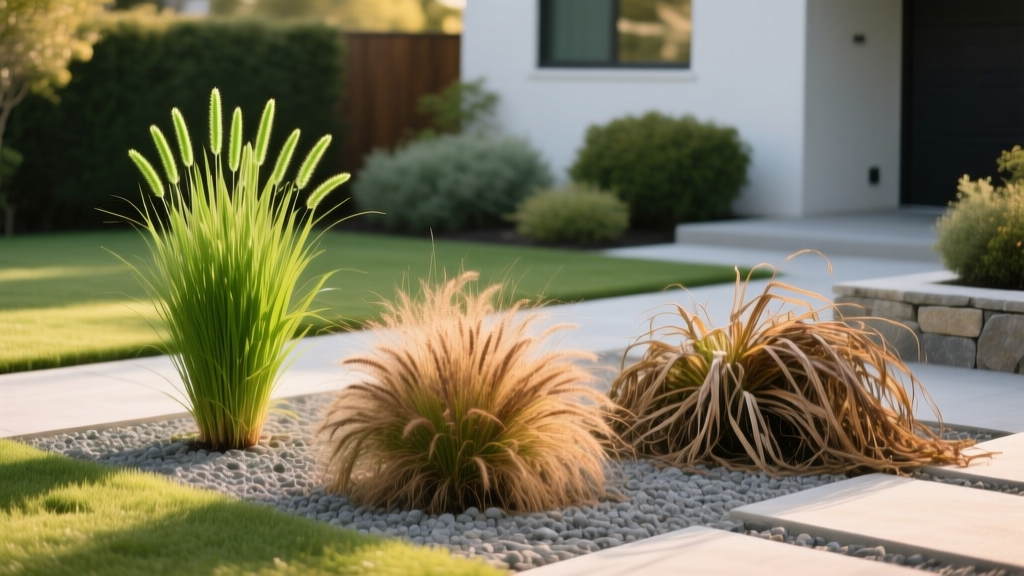
Compact Ornamental Grasses: Diagnosing Browning & Flopping
The Anatomy of Failure in Compact Ornamental Grasses
Compact ornamental grasses—such as Pennisetum alopecuroides 'Hameln', Festuca glauca 'Elijah Blue', and Hakonechloa macra 'Aureola'—are prized for their dense foliage and low-maintenance profiles. However, their genetic drive to expand via rhizomes and stolons often clashes with the confined spaces they are planted in. When these grasses exhibit browning centers, structural flopping, or unseasonal dieback, the root cause is rarely a single pathogen. Instead, it is usually a physiological response to overcrowding, improper soil chemistry, or misaligned dormancy cycles.
According to Penn State Extension, the most common diagnostic error homeowners make is treating ornamental grasses like turfgrass. Ornamentals require vastly different nutrient ratios and division timelines. Below is a comprehensive diagnostic framework for rescuing failing compact grasses.
Symptom 1: The 'Browning Center' Syndrome
If the outer ring of your compact grass is vibrant green but the center is a mass of dead, brown thatch, you are witnessing natural sympodial growth combined with crown senescence. Grasses are monocots; they lack a vascular cambium, meaning they cannot heal internal wounds or regenerate from dead central tissue. As the plant matures, the active growth points (meristems) migrate outward, leaving the original crown to suffocate under its own thatch accumulation.
Diagnostic Criteria
- Timing: Most evident in mid-to-late summer for warm-season grasses (like Pennisetum) and early spring for cool-season grasses (like Festuca).
- Physical Test: Pull gently on the brown central blades. If they detach with a dry, corky base and no white root attachment, the tissue is permanently dead.
The Solution: Surgical Division and Replanting
You cannot revive a dead center. The only solution is mechanical division to harvest the viable outer ring.
- Preparation: Water the plant deeply 24 hours before division to soften the soil matrix.
- Excavation: Using a sharp, flat-edged spade, cut a 12-inch diameter circle around the grass clump, severing the outer feeder roots. Lift the entire root ball.
- Division: Place the root ball on a tarp. Use a spade or a heavy-duty hori hori knife to cut the clump into quarters. Discard the entire central third of each quarter—it is dead tissue.
- Replanting Depth (Critical): Replant the outer divisions immediately. According to UMass Extension, the crown of the divided grass must sit exactly 1/4 inch above the surrounding soil grade. Planting it even slightly below grade traps moisture against the crown, inviting Pythium and Phytophthora crown rots.
- Aftercare: Apply a 2-inch layer of pine bark mulch around the perimeter (keeping it 3 inches away from the crown) and water with 1 inch per week for six weeks to establish the severed root system.
Symptom 2: Structural Flopping and Splaying
Compact grasses are genetically selected for short, rigid culms (stems). When a 2-foot dwarf fountain grass suddenly grows to 3 feet and splays open in the center like a collapsed umbrella, the structural integrity of the cell walls has been compromised.
The Culprit: Nitrogen Toxicity and Shade Creep
Flopping is almost exclusively caused by two environmental factors:
- Excess Nitrogen: Applying standard lawn fertilizers (e.g., 24-0-6 or 30-0-3) to ornamental beds forces rapid, elongated cell division. The cells expand faster than lignin (the structural polymer) can deposit, resulting in weak, hollow stems that buckle under the weight of the seed heads.
- Canopy Encroachment: As surrounding trees and shrubs mature over a 3-to-5-year period, they cast incremental shade. Grasses like Festuca glauca and Pennisetum require 6+ hours of direct sun to maintain rigid, upright growth. In shade, they etiolate (stretch) toward the light, becoming spindly.
Corrective Action Plan
Emergency Mid-Season Cutback: If warm-season compact grasses flop in July or August, do not leave them unsightly. Grab a pair of hedge shears and cut the entire plant back to 6 inches above the crown. Apply a low-nitrogen, high-potassium fertilizer (such as a 0-0-10 or 5-10-10 NPK ratio). The potassium (K) will thicken the cell walls of the new flush, resulting in a shorter, sturdier, and more upright clump by late September.
For cool-season grasses like Blue Fescue, never cut them back in the heat of summer; this will expose the crown to lethal solar radiation and kill the plant. Instead, gently comb out dead foliage with a wire rake in early spring and transition to a zero-nitrogen fertilizer regimen.
Symptom 3: Fungal Pathogens (Rust and Leaf Spot)
Compact grasses planted in dense landscape beds often suffer from poor air circulation, creating a microclimate ideal for fungal proliferation. The two most common pathogens are Puccinia (Rust) and Helminthosporium (Leaf Spot).
Visual Diagnosis Matrix
| Pathogen | Visual Symptoms | Environmental Trigger | Chemical Control (Active Ingredient) |
|---|---|---|---|
| Rust (Puccinia) | Orange, yellow, or brown powdery pustules on the upper leaf surface. Wipes off on a white paper towel. | Prolonged leaf wetness (10+ hours) and temperatures between 65°F–75°F. | Propiconazole 14.3% (Apply at 0.5 to 1.0 fl oz per 1,000 sq ft every 14 days). |
| Leaf Spot (Helminthosporium) | Dark brown, elliptical lesions with distinct tan centers. Does not wipe off; tissue is necrotic. | High humidity, overhead irrigation late in the day, and excessive thatch. | Chlorothalonil or Myclobutanil (Apply preventatively before summer rains begin). |
Note: Always verify current local pesticide regulations and follow the exact label rates for ornamental grasses. The NC State Extension Plant Database provides updated cultivar-specific resistance data.
Symptom 4: Misinterpreting Winter Dieback vs. Dormancy
Homeowners frequently panic in early spring, assuming their compact ornamental grass is dead, or conversely, they cut back warm-season grasses too early, exposing the crown to late-spring freeze damage. Understanding the physiological difference between cool-season and warm-season dormancy is critical for landscape survival.
Species-Specific Cutback Timetable
- Cool-Season Grasses (Festuca, Calamagrostis, Carex): These grasses actively grow in spring and fall, going semi-dormant in the peak heat of summer. Do not cut them back to the ground. In late winter (February/early March), simply wear thick gloves and pull out the dead, brown winter blades by hand, or use a wide-toothed comb to rake out the debris. Cutting them to the ground destroys the active spring growth points.
- Warm-Season Grasses (Pennisetum, Miscanthus, Hakonechloa): These grasses grow in summer and go completely dormant (turning entirely brown/tan) in winter. Leave the brown foliage standing all winter to protect the crown from ice and snow, and to provide winter habitat for native pollinators. Cut them back hard (to 3-4 inches above the crown) only in late March or early April, just before the soil temperature consistently reaches 55°F and new green shoots emerge at the base.
Soil Chemistry: The Hidden Variable
When all above-ground symptoms point to a failing plant, but division and fungicide treatments yield no results, test your soil pH and drainage capacity. Most compact ornamental grasses thrive in a slightly acidic pH of 5.5 to 6.5. However, Hakonechloa macra (Japanese Forest Grass) requires a pH closer to 6.0–7.0 and consistently moist, humus-rich soil. If planted in heavy, unamended clay with a pH above 7.2, Hakonechloa will suffer from severe iron chlorosis, presenting as stunted, pale yellow foliage with necrotic margins. Amend the soil with elemental sulfur to lower pH, and incorporate 30% by volume of composted pine bark to improve macroporosity before replanting.

