
Lawn Care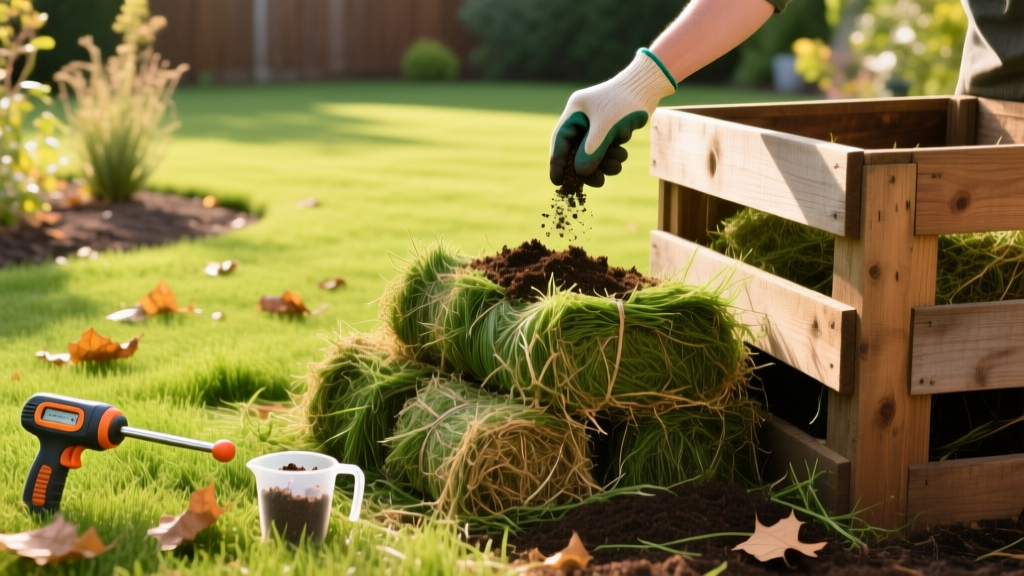
Composting Grass Clippings: C:N Ratios and Recipes for Lawn Soil
The Chemistry of Grass Clippings: Why They Fail in the Pile
Grass clippings are a potent, nitrogen-dense resource. By dry weight, they contain approximately 4% nitrogen, 2% potassium, and 1% phosphorus. However, this exact nutrient profile is why most homeowners fail when composting grass clippings. When piled alone or layered too thickly, the high moisture content (often 75% to 85% by weight) and low carbon levels cause the pile to go anaerobic. The result is a slimy, foul-smelling mat that releases ammonia and hydrogen sulfide rather than breaking down into humus.
Successful composting requires managing the Carbon-to-Nitrogen (C:N) ratio. Soil bacteria require a diet of roughly 30 parts carbon to 1 part nitrogen (30:1) to efficiently break down organic matter. Fresh grass clippings have a C:N ratio of just 15:1 to 20:1. To compost them effectively, you must deliberately introduce high-carbon "browns" to balance the equation and create structural porosity for oxygen flow.
Critical Warning: Never compost grass clippings that have been treated with broadleaf herbicides (like 2,4-D or dicamba) or persistent pyridine carboxylic acids (like clopyralid or aminopyralid). These chemicals can survive the composting process and will severely damage or kill your lawn and garden plants when applied as topdressing. Always verify your lawn's chemical history before harvesting clippings.
The Master Formula: Balancing C:N Ratios for Hot Composting
To achieve thermophilic (hot) composting—which reaches temperatures between 135°F and 160°F to kill weed seeds and turf pathogens—you must mix your grass clippings with the correct carbon amendments. According to research from Penn State Extension, the ideal starting ratio by volume is 1 part fresh grass clippings to 2 or 3 parts dry brown material.
| Material | C:N Ratio | Moisture Content | Primary Function in Pile |
|---|---|---|---|
| Fresh Grass Clippings | 15:1 - 20:1 | 75% - 85% | Nitrogen source, microbial activator |
| Dry Autumn Leaves | 40:1 - 60:1 | 10% - 20% | Carbon source, moderate bulking |
| Shredded Corrugated Cardboard | 300:1 - 350:1 | 5% - 10% | High carbon, excellent moisture absorption |
| Wheat or Oat Straw | 50:1 - 80:1 | 10% - 15% | Carbon source, superior structural aeration |
| Pine Needles (Dried) | 60:1 - 80:1 | 10% - 15% | Carbon source, slow breakdown (use sparingly) |
Step-by-Step Layering Technique
Building the pile correctly from the ground up prevents the anaerobic conditions that plague grass-heavy compost. Follow this precise layering sequence:
- The Aeration Base: Start with a 4-inch layer of coarse wood chips or thick twigs at the bottom of your bin or on the bare ground. This allows passive air flow from beneath.
- The Brown Layer: Add 6 inches of dry leaves, shredded cardboard, or straw. Water this layer lightly until it feels like a damp, wrung-out sponge (targeting 45% to 55% overall pile moisture).
- The Green Layer: Add a 2-inch layer of fresh grass clippings. Do not exceed 2 inches, or the center will mat and suffocate.
- The Inoculant: Sprinkle a half-inch layer of finished compost or native topsoil over the grass to introduce thermophilic bacteria.
- Repeat and Cap: Repeat the brown/green sequence until the pile is at least 3 feet high and 3 feet wide (the minimum mass required for heat retention). Cap the top with a final 4-inch layer of browns to deter flies and trap odors.
Thermodynamics: Monitoring the Heat Curve
Hot composting is a biological fire. Within 48 to 72 hours of building a properly balanced pile, microbial activity will drive the core temperature into the thermophilic range (135°F to 160°F). You must monitor this using a 24-inch dial compost thermometer.
- 135°F to 155°F (The Sweet Spot): Maintain this range for at least 14 days. This is where pathogen and weed seed destruction occurs, as outlined by the University of Minnesota Extension.
- Above 160°F: The pile is too hot and beneficial microbes are dying off. Turn the pile immediately to release heat and introduce oxygen.
- Below 110°F: The active thermophilic phase is ending. Turn the pile to remix uncomposted outer edges into the hot center, or allow it to enter the mesophilic curing phase.
Troubleshooting Common Compost Pile Failures
Grass clippings are volatile. When the pile deviates from the ideal parameters, use this diagnostic framework to correct the issue before the batch is ruined.
Diagnostic Matrix:
- Symptom: Sharp ammonia odor.
Cause: C:N ratio is too low (excess nitrogen).
Fix: Turn the pile and thoroughly mix in 3 parts shredded corrugated cardboard or dry leaves by volume. - Symptom: Rotten egg (sulfur) smell and slimy texture.
Cause: Anaerobic conditions due to compaction and excess moisture.
Fix: Aggressively turn the pile with a pitchfork. Mix in 3 inches of coarse straw or woodchips to create permanent air pockets. - Symptom: Pile fails to heat up past 90°F.
Cause: Pile is too dry, too small, or lacks nitrogen.
Fix: Check moisture (add water if dry). Ensure pile is at least 27 cubic feet. Add a fresh layer of grass clippings or a diluted urea solution to jumpstart bacteria.
Curing, Screening, and Applying to Your Lawn
Once the pile no longer heats up after turning, it enters the curing phase. Allow it to rest for 30 to 60 days. During this time, actinomycetes and fungi break down the tough lignins, resulting in a dark, earthy-smelling humus.
For lawn topdressing, texture is critical. Raw compost will smother grass blades and create an uneven surface. You must screen the compost using a 1/4-inch galvanized hardware cloth frame. Discard or re-compost the large debris that remains on the screen.
Application Rates and Financial Breakdown
Apply the screened compost to your lawn immediately following core aeration. The aeration holes will pull the compost down into the root zone, improving soil structure and water retention.
Pro Application Tip: Apply compost at a depth of exactly 1/4 inch. This translates to roughly 1 cubic yard of screened compost per 300 square feet of turf. Use a leveling rake or a push broom to work the material down to the soil surface, ensuring the grass blades remain exposed to sunlight.
The financial return on composting your own grass clippings is substantial. In 2026, bulk premium topdressing compost costs between $45 and $75 per cubic yard delivered, while bagged equivalents at retail can exceed $160 per cubic yard. By diverting your grass clippings and combining them with free autumn leaves or recycled cardboard, you generate a premium soil amendment for the cost of your time and a $25 compost thermometer, closing the nutrient loop on your property entirely.

