
Lawn Care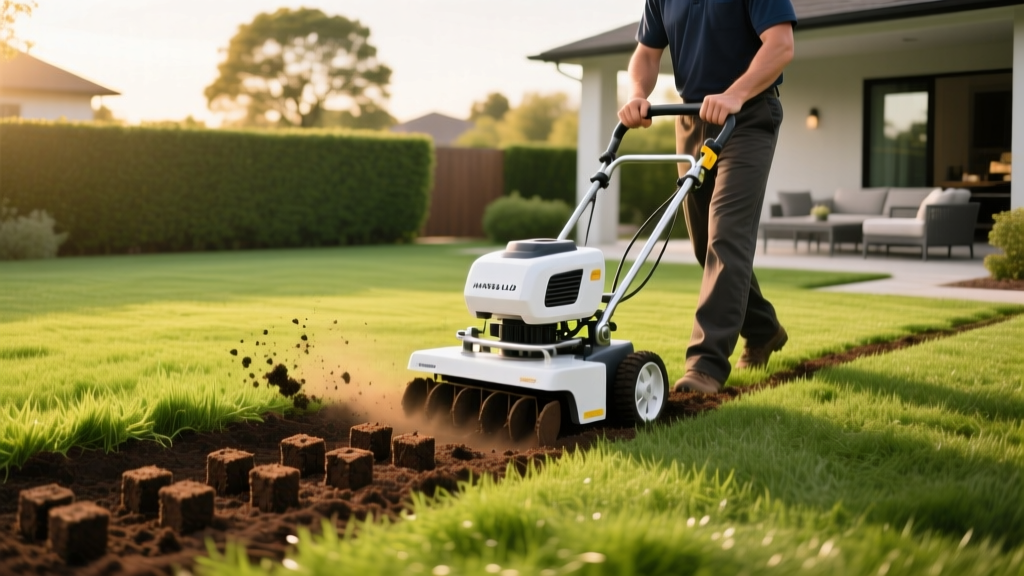
How Much Does It Cost to Aerate a Lawn? 2026 Pricing Guide
The True Cost to Aerate a Lawn: Professional vs. DIY
Relieving soil compaction is non-negotiable for maintaining dense, drought-resistant turf. When you aerate a lawn, you extract 2-to-3-inch soil cores, breaking up thatch and allowing oxygen, water, and nutrients to reach the root zone. However, the financial investment varies wildly depending on whether you hire a turf management professional or rent a walk-behind machine yourself.
In 2026, the national average cost to hire a professional landscaping company for core aeration ranges from $0.15 to $0.35 per square foot. For a standard 5,000-square-foot suburban lawn, expect to pay between $750 and $1,750. DIY aeration drastically reduces the base price to roughly $85 to $150 for equipment rental, but introduces hidden logistical costs, physical labor, and transportation hurdles that often negate the savings.
2026 Quick Cost Summary:
• Professional Service: $750 – $1,750 (5,000 sq. ft. lawn)
• DIY Machine Rental: $85 – $150 (4-hour to full-day rate)
• Manual/Push Aerator: $25 – $45 (Not recommended for >1,000 sq. ft.)
• Post-Aeration Overseeding: $120 – $250 (Seed & starter fertilizer materials)
Professional Aeration Pricing by Square Footage
Landscaping companies typically price aeration based on total turf square footage, not total lot size. Most reputable turf specialists enforce a minimum call-out fee, usually between $150 and $250, to cover fuel, equipment transport, and crew time. According to turfgrass management guidelines from the University of Minnesota Extension, professional-grade stand-on aerators apply up to 40 lbs of downward force per core, vastly outperforming consumer rental units.
| Lawn Size (Sq. Ft.) | Approximate Acreage | Professional Cost Range (2026) | Minimum Call-Out Fee Applied? |
|---|---|---|---|
| 2,000 | ~0.04 Acres | $150 – $250 | Yes (Flat Minimum) |
| 5,000 | ~0.11 Acres | $750 – $1,250 | No (Per Sq. Ft. Rate) |
| 10,000 | ~0.23 Acres | $1,500 – $2,800 | No (Volume Discount Likely) |
| 20,000+ | 0.5+ Acres | $2,800 – $5,500 | No (Commercial Tractor Rates) |
DIY Aeration: Equipment Rental & Hidden Logistics
Renting a walk-behind core aerator from a local hardware store or equipment yard seems like a massive discount. The base rental rate for a 4-hour window is typically $85 to $100, while a full-day rental runs $130 to $160. However, the true cost of DIY aeration requires factoring in equipment transport and site preparation.
The Weight and Transport Problem
A standard walk-behind core aerator weighs between 200 and 300 pounds. You cannot load this machine into the trunk of a sedan or the back of a compact SUV. You will need a pickup truck or a heavy-duty utility trailer. If you do not own a truck, renting a half-ton pickup from a home improvement center adds $80 to $120 to your daily expenses, plus fuel. Furthermore, these machines are notoriously difficult to steer. Turning a 250-lb aerator on a slope requires significant physical leverage, and improper turning while the tines are engaged will tear deep gouges into your turf.
The Spike Aerator Trap
You will find manual spike aerators, pitchforks, and aerator sandals sold for $25 to $45. Do not use these on heavy clay soils. As documented by NC State Extension, spike aeration simply punches holes into the ground, which compresses the surrounding soil laterally and worsens compaction. Always rent or hire for hollow-tine core extraction.
Coverage Rates & Post-Aeration Dosages
Aerating a lawn is rarely a standalone task. The open soil channels created by core extraction provide a 10-to-14-day window of maximum seed-to-soil contact and nutrient absorption. Calculating the exact dosage of seed and fertilizer is critical to avoid burning the lawn or wasting expensive materials.
Overseeding Coverage Rates
When dropping seed immediately after aeration, you must adjust your spreader settings based on the grass species. The aeration holes act as micro-seedbeds, requiring slightly less seed than bare-soil overseeding, but more than standard maintenance overseeding.
- Tall Fescue: Apply 5 to 8 lbs of seed per 1,000 sq. ft. Fescue seeds are larger and require deeper soil contact.
- Kentucky Bluegrass (KBG): Apply 1.5 to 2 lbs per 1,000 sq. ft. KBG seeds are tiny; over-applying leads to dense, weak seedlings that succumb to damping-off disease.
- Perennial Ryegrass: Apply 3 to 5 lbs per 1,000 sq. ft. Often used as a nurse grass to provide rapid germination and shade for slower KBG seeds.
- Bermudagrass (Warm-Season): Apply 1 to 2 lbs of hulled seed per 1,000 sq. ft. (Only aerate and seed warm-season grasses in late spring/early summer, never in fall).
Starter Fertilizer Dosage
Post-aeration fertilization requires a high-phosphorus starter fertilizer (e.g., an N-P-K ratio of 10-18-10 or 16-24-12) to stimulate root development. Apply exactly 1.0 lb of actual Nitrogen per 1,000 sq. ft. To calculate the bag coverage, divide 100 by the first number on the fertilizer bag. For a 10-18-10 fertilizer, you need 10 lbs of product per 1,000 sq. ft. Applying more than 1.5 lbs of Nitrogen immediately after core extraction risks chemical burn to the exposed, sensitive root tissue.
Calculating Your Exact Material Needs
Before renting equipment or hiring a crew, map your turf area. Multiply the length and width of your lawn zones, subtracting the square footage of driveways, garden beds, and patios.
- Measure Turf Area: e.g., 5,000 sq. ft. of Tall Fescue.
- Calculate Seed: 5,000 / 1,000 = 5 units. 5 units x 6 lbs (average Tall Fescue rate) = 30 lbs of seed.
- Calculate Fertilizer: 5 units x 10 lbs (for 10-18-10 starter) = 50 lbs of starter fertilizer.
- Calculate Soil Topdressing (Optional but recommended): To level the lawn and fill aeration holes, apply a 1/4-inch layer of screened compost. This requires roughly 0.75 cubic yards of compost per 1,000 sq. ft. For a 5,000 sq. ft. lawn, order 3.75 cubic yards of bulk compost.
Troubleshooting Edge Cases: Slopes, Clay, and Irrigation
Standard pricing and coverage rates assume a flat, moderately loamy lawn with standard irrigation. Real-world properties introduce variables that dictate how you aerate.
Heavy Clay Soils
If your soil forms a tight ribbon when squeezed wet, you have heavy clay. A single pass with a core aerator is insufficient. You must perform a double-pass aeration: the first pass horizontally across the lawn, and the second pass vertically (perpendicular to the first). This doubles the hole density to roughly 15-20 holes per square foot. Expect professional quotes to increase by 40-50% for double-pass services, and allocate an extra 3 hours if doing it yourself.
Steep Slopes and Incline Safety
Walk-behind aerators are dangerously unstable on slopes exceeding a 30% grade (a 3-foot drop over 10 horizontal feet). The rear-heavy weight distribution can cause the machine to flip backward toward the operator. For steep inclines, professionals use stand-on commercial aerators or tractor-mounted PTO aerators. If you are DIY-ing a sloped lawn, aerate only the flat zones and use a manual pitchfork for the steep embankments.
Irrigation System Protection
Aeration tines penetrate 2.5 to 3 inches deep. Shallow irrigation lines, drip tubes, and invisible dog fences are often buried at exactly this depth. Before any tines touch the grass, you must flag every sprinkler head, valve box, and shallow utility line. Hitting a PVC irrigation joint with an aerator tine results in a $150 to $300 repair bill per zone, instantly wiping out any DIY cost savings.
FAQ: Common Aeration Cost Questions
Should I leave the soil plugs on the lawn?
Yes. Do not rake or bag the extracted cores. Rain and mowing will break them down within two weeks, returning valuable microorganisms and organic matter to the thatch layer. Removing them strips the lawn of topsoil.
How often should I pay to aerate my lawn?
High-traffic lawns with heavy clay soils require annual aeration, ideally in early fall for cool-season grasses and late spring for warm-season grasses. Sandy, well-draining soils with low foot traffic may only need aeration every 2 to 3 years.
Does liquid aeration work as a cost-effective alternative?
Liquid aeration products (surfactants like ammonium lauryl sulfate) cost about $30 to $50 per bottle and claim to break up clay chemically. While they improve water infiltration temporarily, they do not physically remove thatch or create physical channels for deep root expansion. For severely compacted lawns, mechanical core extraction remains the only proven agronomic solution.

