
Lawn Care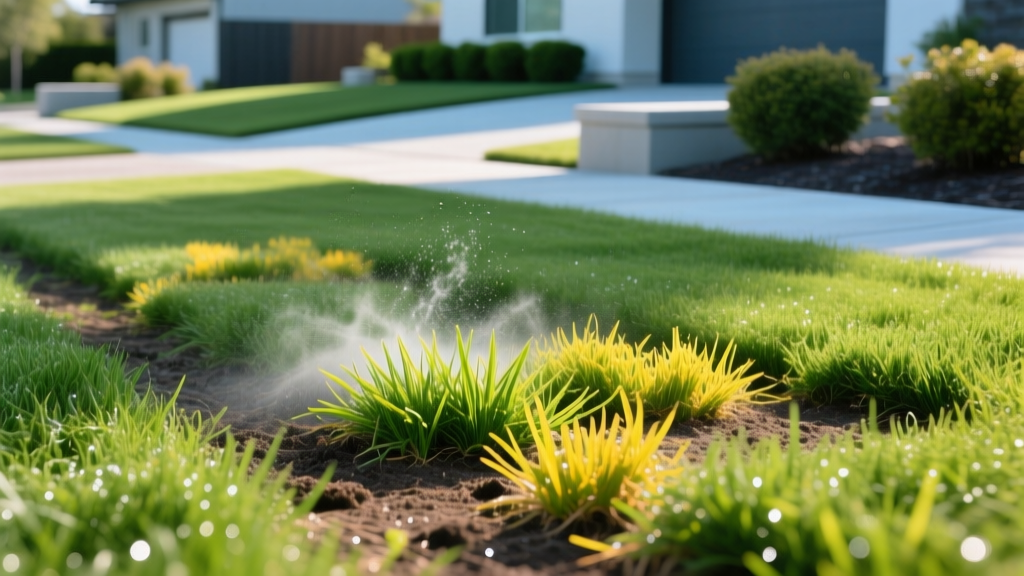
Crabgrass Post Emergent Spot Treatment: Best Herbicides & Tips
The Biology of Post-Emergent Crabgrass Failure
When pre-emergent barriers fail or are applied too late, smooth and large crabgrass (Digitaria species) quickly colonize bare soil. Once crabgrass reaches the 3-leaf to tillering stage, it develops a thick, waxy cuticle designed to repel water and chemical penetration. This biological defense mechanism is why standard consumer-grade weed killers often fail to kill mature crabgrass. Effective crabgrass post emergent spot treatment requires specific active ingredients, precise surfactant selection, and strict adherence to temperature thresholds to avoid severe phytotoxicity to your desirable turf.
Spot treatment with a calibrated pump sprayer is vastly superior to broadcast applications for isolated crabgrass outbreaks. It minimizes chemical exposure to the surrounding lawn, reduces soil residue, and lowers the overall cost of your lawn care program. According to University of Minnesota Extension, targeting individual crabgrass clumps before they produce seed heads in late summer is critical, as a single plant can drop up to 150,000 seeds.
Active Ingredient Matrix: Quinclorac vs. Fenoxaprop vs. Mesotrione
Not all post-emergent herbicides are created equal. The three primary professional-grade active ingredients for crabgrass control operate through entirely different biochemical pathways. Selecting the right chemistry depends on your turfgrass species, the crabgrass growth stage, and your fall overseeding plans.
| Active Ingredient | Brand Example | Mechanism of Action | Best Turf Type | Crabgrass Stage | Key Limitation |
|---|---|---|---|---|---|
| Quinclorac | Drive XLR8 | Synthetic Auxin (Group 4) | Cool-season, Bermudagrass, Zoysia | 1-leaf to Mature | Requires MSO surfactant; soil residue delays seeding. |
| Fenoxaprop-p-ethyl | Acclaim Extra | ACCase Inhibitor (Group 1) | Cool-season grasses only | 1-leaf to 3-leaf | Very slow action (2-3 weeks); poor on mature plants. |
| Mesotrione | Tenacity | HPPD Inhibitor (Group 27) | Cool-season, Centipedegrass, St. Augustine | Pre-emergent to 3-leaf | Causes severe bleaching; ineffective on large, mature crabgrass. |
The Quinclorac Spot-Treatment Protocol
For mature crabgrass (tillering stage or larger) in cool-season lawns or Bermudagrass, Quinclorac is the undisputed industry standard. However, it is highly unforgiving if mixed or applied incorrectly. Follow this exact protocol for maximum efficacy.
Step 1: Hydrate the Turf
Never apply Quinclorac to drought-stressed crabgrass or desirable turf. When plants are drought-stressed, they close their stomata and thicken their cuticles to conserve water, effectively blocking herbicide absorption. Water the lawn deeply 24 hours before application. The target weeds must be actively growing and turgid.
Step 2: Precision Mixing and Surfactant Selection
The most common reason for Quinclorac failure is using the wrong surfactant. Non-ionic surfactants (NIS) are insufficient for penetrating the waxy cuticle of mature crabgrass. You must use a Methylated Seed Oil (MSO).
- Herbicide Rate: 0.75 fluid ounces of Quinclorac (e.g., Drive XLR8) per 1,000 square feet.
- Surfactant Rate: 0.5 fluid ounces of MSO per 1,000 square feet.
- Carrier Volume: Mix the above into 1.0 to 1.5 gallons of water for spot spraying.
Cost Analysis: A 13.6 oz bottle of Drive XLR8 costs approximately $55 to $65. At the 0.75 oz rate, one bottle treats roughly 18,000 square feet, bringing the chemical cost down to about $3.30 per 1,000 square feet.
Step 3: Mowing Restrictions
Do not mow for 2 days before and 2 days after application. Leaving the crabgrass uncut maximizes the leaf surface area available to intercept the spray droplets. Once the plant absorbs the synthetic auxin, it will exhibit epinasty (twisted, uncontrolled growth) within 48 hours, followed by necrosis and death within 10 to 14 days.
CRITICAL WARNING: Warm-Season Turf Sensitivity
While Quinclorac is safe on Bermudagrass and Zoysiagrass, it will cause severe injury or death to St. Augustinegrass, Bahiagrass, and Carpetgrass. If you have these warm-season species, you must use Fenoxaprop (for Bermudagrass/Zoysia only) or rely on manual removal and pre-emergent prevention for St. Augustine. Always verify your turf species against the product label.
While Quinclorac is safe on Bermudagrass and Zoysiagrass, it will cause severe injury or death to St. Augustinegrass, Bahiagrass, and Carpetgrass. If you have these warm-season species, you must use Fenoxaprop (for Bermudagrass/Zoysia only) or rely on manual removal and pre-emergent prevention for St. Augustine. Always verify your turf species against the product label.
Temperature Constraints and Phytotoxicity Risks
Timing your application around the weather forecast is non-negotiable. Quinclorac and other post-emergent crabgrass herbicides become highly volatile and phytotoxic when daytime high temperatures exceed 85°F (29°C).
When applied in extreme heat, the herbicide can vaporize and drift onto desirable turf, causing severe leaf burn. Furthermore, cool-season grasses like Kentucky Bluegrass and Tall Fescue are already under heat stress in mid-summer; adding a systemic herbicide to their metabolic load can push them into dormancy or death. The NC State Extension explicitly recommends restricting post-emergent applications to early morning hours when temperatures are below 85°F, or waiting for late-season cool-downs in early autumn.
Overseeding Timelines and Soil Residue
A major strategic consideration for crabgrass post emergent spot treatment is how it impacts your fall lawn renovation plans. Herbicides leave active residues in the soil that can inhibit the germination of desirable grass seed.
Quinclorac Seeding Wait Times
Quinclorac has a significant soil half-life. If you plan to overseed your lawn with Tall Fescue, Kentucky Bluegrass, or Perennial Ryegrass, you must observe strict waiting periods:
- 14 Days: Minimum wait time if applying at lower rates (0.5 oz per 1,000 sq ft).
- 28 Days: Required wait time if applying at the maximum 0.75 oz rate or if multiple applications were made.
The Mesotrione Alternative for Day-of Seeding
If you are spot-treating young crabgrass (less than 3 leaves) and need to overseed immediately, Mesotrione (Tenacity) is the only viable option. Mesotrione can be applied at the time of seeding or even directly over newly germinated cool-season grass seed without causing injury. However, it will not kill large, mature crabgrass plants effectively. It is best used as a transitional tool in late summer when crabgrass is young and fall seeding is imminent.
Troubleshooting Common Spot-Treatment Failures
If your spot treatment yields poor results, diagnose the failure using these common edge cases:
- The crabgrass turned yellow but didn't die: You likely used a non-ionic surfactant (NIS) instead of MSO, or the plant was drought-stressed during application. The chemical penetrated the outer layer but failed to translocate to the root crown.
- The surrounding desirable turf turned white: If using Mesotrione, bleaching is the intended mechanism of action. The turf will recover in 2-3 weeks. If using Quinclorac, white or yellow spotting indicates you applied during high heat or exceeded the recommended dosage, causing chemical burn.
- New crabgrass emerged two weeks later: Post-emergent herbicides do not provide residual pre-emergent control (with the exception of Tenacity's short-term soil barrier). If the soil seed bank is high, you will need to apply a second post-emergent application 14-21 days after the first, or switch to a fall pre-emergent strategy for the following spring.

