
Lawn Care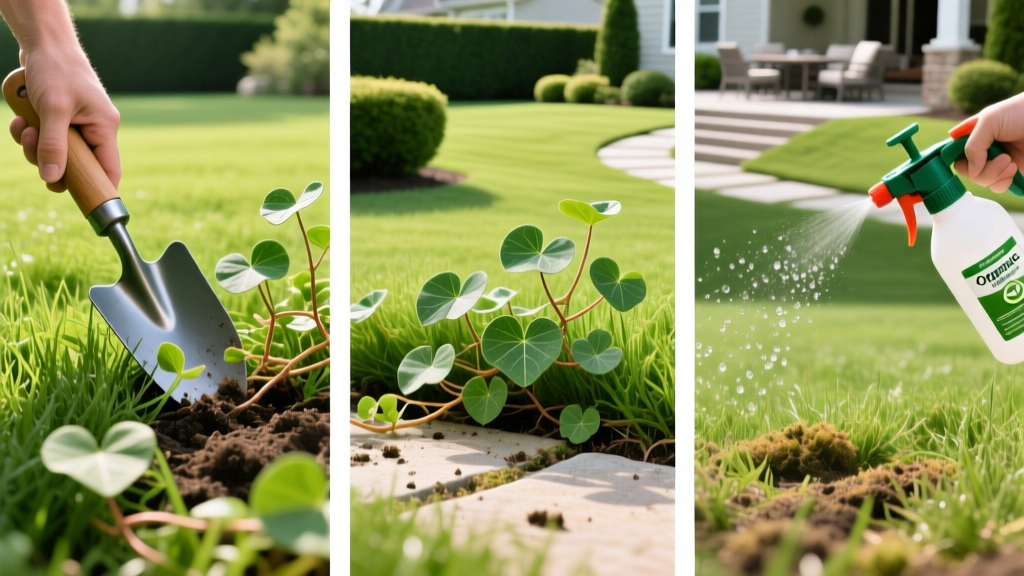
How to Kill Creeping Charlie Grass: Step-by-Step Lawn Maintenance
While frequently searched by homeowners as "creeping charlie grass," Glechoma hederacea is botanically a broadleaf weed in the mint family, not a true grass. It forms dense, low-lying mats that aggressively choke out turfgrass, thriving in the exact conditions where cool-season grasses struggle: compacted soil, poor drainage, and heavy shade. Eradicating it requires a multi-phase lawn maintenance protocol that combines mechanical disruption, targeted chemical control, and cultural renovation.
🔍 Identification Check: Charlie vs. Violets vs. Mallow
Before treating, confirm the weed. Creeping Charlie features kidney-shaped leaves with scalloped edges, square stems (a mint family hallmark), and a distinct minty odor when crushed. It produces small, funnel-shaped purple flowers in spring. Unlike wild violets, which have heart-shaped leaves and grow from deep rhizomes, Charlie spreads via above-ground stolons that root at every node.
Phase 1: Mechanical Disruption and Soil Prep
Herbicides struggle to penetrate dense Charlie mats. Mechanical thinning and soil preparation are mandatory first steps to expose the stolons and improve turfgrass competition.
Step 1: Targeted Manual Extraction
For infestations covering less than 15% of your lawn, manual removal is viable if done correctly. Do not pull dry, brittle stolons; they will snap and leave nodes behind to regenerate.
- Hydrate the Zone: Water the infested area heavily (0.5 inches) the evening before extraction to soften the soil profile.
- Use the Right Tool: Avoid standard hoes. Use a stand-up weeder with serrated claws (e.g., the Fiskars Stand-Up Weeder, approx. $42) or a dedicated dandelion digger to get beneath the root nodes.
- Extract and Dispose: Lift the mat intact. Bag all debris immediately. Do not compost creeping Charlie, as its stolons can survive standard residential composting temperatures.
Step 2: Core Aeration for Compaction Relief
Charlie exploits compacted soil where turfgrass roots cannot penetrate. Rent a gas-powered core aerator (approx. $80 for a half-day rental) and pull 2-to-3-inch plugs across the infested zones. This fractures the soil profile, allowing oxygen to reach turfgrass roots and creating micro-trenches for future seed-to-soil contact.
Phase 2: Chemical Control Strategy
For moderate to severe infestations, chemical intervention is required. Because creeping Charlie has a waxy leaf cuticle that repels water-based sprays, the selection of the active ingredient and the inclusion of a surfactant are critical.
Step 3: Select the Correct Herbicide Matrix
Standard 2,4-D amine formulations alone will only burn the top foliage, leading to rapid regrowth. You need a three-way herbicide containing Triclopyr, which is highly effective against mint-family weeds. Below is a comparison of professional and consumer-grade options current for the 2026 season.
| Product / Active Ingredients | Application Rate (per 1,000 sq ft) | Avg. Cost | Efficacy Rating |
|---|---|---|---|
| SpeedZone Broadleaf (Carfentrazone, 2,4-D, MCPP, Dicamba) |
1.1 to 1.5 fl oz | $135 / Gallon | Excellent (Fast burn) |
| Ortho WeedClear (Triclopyr, 2,4-D, Dicamba) |
2.0 fl oz | $18 / 32 oz bottle | Very Good (Systemic) |
| Tenacity (Mesotrione) |
1 tsp / Gallon | $65 / 8 oz bottle | Poor (Not labeled) |
Step 4: Surfactant Integration and Application
Never spray creeping Charlie with herbicide alone. Add a non-ionic surfactant (such as Southern Ag Surfactant, approx. $15 per quart) at a rate of 0.25% v/v (roughly 1 teaspoon per gallon of mixed spray). The surfactant breaks the surface tension of the water, allowing the Triclopyr to spread evenly across the waxy leaf and penetrate the stoma.
- Timing: Apply when daytime temperatures are between 60°F and 80°F. Avoid spraying if rain is forecast within 24 hours.
- Technique: Use a 1-to-2 gallon pump sprayer for spot treatments. Spray until the leaves are uniformly wet, but avoid runoff into the soil.
- Follow-up: A second application is almost always necessary. Wait 14 to 21 days after the first application to assess regrowth before reapplying.
⚠️ Expert Warning: The DIY Borax Myth
Do not use the internet-famous "borax and water" recipe to kill creeping Charlie. While boron is toxic to Charlie at high concentrations, it does not break down in the soil. According to the University of Wisconsin-Madison Extension, applying borax causes long-term boron toxicity in your soil profile, permanently sterilizing the area and preventing any future turfgrass or garden plants from growing.
Phase 3: Post-Treatment Lawn Renovation
Killing the weed leaves bare soil, which will quickly be recolonized by Charlie or crabgrass if not immediately planted with competitive turf.
Step 5: Shade-Tolerant Overseeding
Creeping Charlie usually wins because the existing turf is too thin or poorly adapted to shade. Once the Charlie has turned brown and died back (about 3 weeks post-herbicide), overseed the bare patches.
- Seed Selection: For heavily shaded areas where Charlie thrived, use a Fine Fescue blend (Creeping Red, Chewings, or Hard Fescue). Fine fescues require less sunlight and outcompete broadleaf weeds in low-light environments.
- Seeding Rate: Apply at 5 to 6 lbs per 1,000 square feet.
- Starter Fertilizer: Apply a starter fertilizer high in phosphorus (e.g., a 18-24-12 NPK ratio) to accelerate root development before winter or peak summer heat.
Step 6: Adjusting the Mowing Deck
Turfgrass shaded by trees needs more leaf surface area to photosynthesize. Raise your mower deck to a minimum of 3.5 to 4.0 inches. Taller grass casts deeper shade on the soil surface, depriving any surviving creeping Charlie stolons of the sunlight they need to photosynthesize and spread.
Seasonal Treatment Matrix
Timing your chemical applications to the plant's biological growth cycles drastically reduces the number of treatments required. According to research from the University of Minnesota Extension, creeping Charlie transports nutrients to its roots in the fall, making it the optimal time for systemic herbicides.
| Season | Plant Activity | Recommended Action |
|---|---|---|
| Early Spring | Flowering and active stolon growth | Manual removal; avoid herbicides as upward sap flow limits root kill. |
| Summer | Stressed by heat, slow growth | Do NOT spray. High temps increase herbicide volatilization, damaging desirable turf. |
| Early Fall | Aggressive root storage preparation | PRIME TIME: Apply Triclopyr-based herbicides. The plant pulls the chemical deep into the root system. |
| Late Fall | Dormancy approach | Overseed bare patches; apply winterizer fertilizer to strengthen turf. |
By combining precise chemical selection with aggressive cultural renovation, you can permanently shift the ecological balance of your lawn away from broadleaf invaders and back to a dense, healthy turfgrass canopy.

