
Lawn Care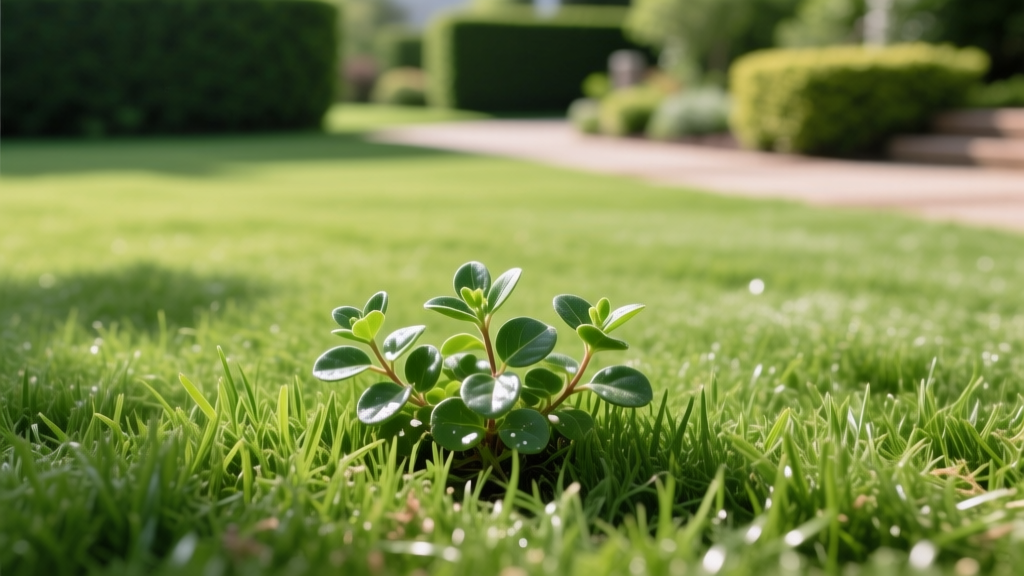
How to Identify and Spot-Treat Creeping Spurge Weed in Lawns
Botanical Profile: Identifying Creeping Spurge Weed
Creeping spurge (Euphorbia serpens) is a low-growing, mat-forming summer annual weed that aggressively colonizes thinning turfgrass. Often confused with spotted spurge (Euphorbia maculata), creeping spurge lacks the distinct purple spot on its leaves and features a more prostrate, creeping growth habit that roots at the nodes. It thrives in compacted soils, hot summer conditions, and poorly irrigated lawns, making it a persistent nuisance in both cool-season and warm-season grasses.
Accurate identification is the first critical step in spot-treatment. Look for these defining characteristics:
- Leaves: Small, oval-shaped, and arranged in opposite pairs along the stem. They are typically smooth-edged and lack the central purple blotch found on spotted spurge.
- Stems: Reddish-brown to green, growing flat against the soil surface and radiating outward from a central taproot.
- The Sap Test: When a stem is broken, it exudes a distinct, sticky white milky sap (latex). This is the most reliable field identification marker for any Euphorbia species.
⚠️ Dermatitis Warning: The milky latex sap of creeping spurge contains diterpene esters, which can cause severe contact dermatitis, skin blistering, and eye irritation. Always wear nitrile gloves and eye protection when manually removing or handling this weed. According to University of Georgia Extension guidelines on home lawn weeds, proper protective equipment is non-negotiable when handling Euphorbia species.
The Spot-Treatment Decision Matrix
Selecting the right eradication method depends entirely on the weed's current growth stage and the density of the infestation. Use the matrix below to determine your immediate action plan.
| Growth Stage | Infestation Size | Primary Method | Recommended Active Ingredient |
|---|---|---|---|
| Seedling (1-3 leaves) | Scattered / Small | Manual Extraction | N/A (Physical removal) |
| Juvenile (4-8 leaves) | Localized Patches | Chemical Spot Spray | Carfentrazone-ethyl + 2,4-D |
| Mature (Flowering) | Large Mats | Targeted Chemical + Hand Pull | Quinclorac + Dicamba mix |
| Pre-Emergence | Historical Problem Areas | Granular Barrier | Prodiamine or Dithiopyr |
Post-Emergent Chemical Protocols for Spot Treatment
When creeping spurge has established a root system and formed a mat, manual removal becomes difficult without leaving taproot fragments behind. Chemical spot-treatment is the most effective eradication strategy. Because spurge species have a waxy leaf cuticle, herbicide absorption is naturally resistant. You must use a multi-active ingredient formulation paired with a non-ionic surfactant.
Formulation Selection and Mixing Rates
The industry standard for post-emergent spurge control is a four-way herbicide containing carfentrazone-ethyl, 2,4-D, MCPP, and dicamba. Products like SpeedZone Broadleaf Herbicide for Turf are highly effective. As of 2026, a 20-ounce bottle of SpeedZone retails for approximately $45 to $55 and treats up to 14,000 square feet.
Exact Mixing Instructions for Spot Treatment:
- Herbicide Rate: Mix 1.5 to 2.0 fluid ounces of SpeedZone per 1 gallon of water. This volume is sufficient to spot-treat roughly 1,000 square feet.
- Surfactant Addition: Add a non-ionic surfactant (such as Hi-Yield Spreader Sticker) at a rate of 0.25% v/v (approximately 1/2 teaspoon per gallon). This breaks the waxy cuticle of the spurge leaves, increasing herbicide uptake by up to 40%.
- Application Technique: Use a pump sprayer with a fan nozzle. Spray the spurge mats until the leaves are uniformly wet, but avoid runoff. Do not spray to the point of dripping.
For lawns with sensitive warm-season grasses like St. Augustine or Centipede, avoid 2,4-D heavy mixes. Instead, opt for a Atrazine based product (for Centipede/St. Augustine) or a pure Quinclorac formulation, applying strictly according to the label's turfgrass tolerance guidelines.
Manual Extraction: When and How to Hand-Pull
Chemical treatments are unnecessary for isolated seedlings. If you catch creeping spurge when it has fewer than four leaves, manual extraction is faster and prevents chemical stress to the surrounding turf.
Because the weed features a central taproot that can reach 12 inches deep in loose soils, simply yanking the stems will result in rapid regrowth. Utilize a specialized tool like the Fiskars Stand-Up Weeder (retailing around $35) or a traditional Hori Hori soil knife. Insert the blade vertically into the soil about two inches away from the central crown, lever the handle back to lift the soil plug, and extract the entire root system. Immediately place the extracted weed into a sealed yard waste bag to prevent any mature seed capsules from shattering and dispersing into the soil profile.
Pre-Emergent Defense Strategy
Spot-treating visible weeds is a reactive measure. To break the life cycle of creeping spurge, you must deploy a pre-emergent herbicide barrier before soil temperatures trigger germination. Spurge seeds germinate when soil temperatures at a 2-inch depth consistently reach 55°F to 60°F, typically in early to mid-spring depending on your USDA hardiness zone.
Prodiamine 65 WDG is the most reliable active ingredient for spurge prevention. Apply at a rate of 0.4 to 1.15 ounces per 1,000 square feet, depending on your specific turfgrass species. Water the application in with at least 0.25 inches of irrigation within 48 hours to move the chemical into the top inch of the soil where weed seeds reside. According to weed management data from NC State TurfFiles, a properly timed spring pre-emergent application reduces summer annual broadleaf populations by over 85%.
Cultural Practices to Suppress Spurge
Creeping spurge is an indicator weed. It exploits environmental weaknesses in your lawn. Eradicating it chemically without fixing the underlying turf conditions guarantees its return the following summer.
- Alleviate Soil Compaction: Spurge thrives in hard, compacted soil where turfgrass roots struggle to penetrate. Perform core aeration in the fall (for cool-season grasses) or late spring (for warm-season grasses) to improve soil oxygenation and drainage.
- Adjust Mowing Heights: Spurge requires high light intensity to germinate and spread. Raising your mowing height by just 0.5 inches allows the turfgrass canopy to shade the soil surface, dramatically reducing spurge seed germination rates.
- Optimize Irrigation: While spurge is drought-tolerant, it outcompetes turfgrass in areas with frequent, shallow watering. Transition to deep, infrequent watering cycles (e.g., 1 inch of water applied once a week) to encourage deep turfgrass root growth that naturally chokes out annual weeds.
Frequently Asked Questions
Will vinegar or organic herbicides kill creeping spurge?
Horticultural vinegar (20% to 30% acetic acid) will burn the foliage of creeping spurge, causing it to wilt within hours. However, because it lacks systemic action, it will not kill the taproot. The weed will rapidly regenerate from the root crown within 7 to 10 days. For permanent eradication, systemic synthetic herbicides or complete physical root removal are required.
How long does it take for SpeedZone to kill spurge?
When mixed with a non-ionic surfactant, carfentrazone-based products like SpeedZone act rapidly. You will observe leaf curling and necrosis (browning) within 24 to 48 hours. Complete plant death, including the root system, typically occurs within 7 to 14 days, depending on ambient temperatures and the maturity of the weed.
Can creeping spurge survive the winter?
No. Creeping spurge is a summer annual. The mature plants will die off completely after the first hard frost in autumn. However, a single mature plant can produce thousands of seeds that remain viable in the soil seed bank for up to three years, waiting for the following spring's temperature triggers to germinate.

