
Lawn Care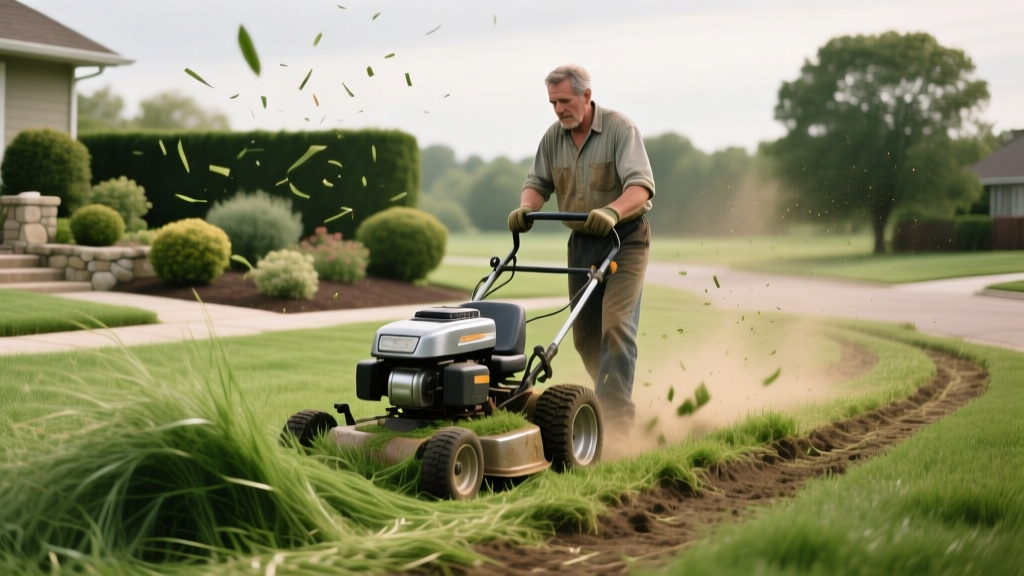
How to Cut the Tallest Grass: Step-by-Step Overgrown Lawn Recovery
Returning from an extended vacation, managing a rental property, or surviving a month of relentless spring rain can leave you staring down the tallest grass in your neighborhood. Attempting to mow severely overgrown turf in a single pass is a catastrophic mistake. It leads to severe turf shock, massive thatch clumping, scalped crowns, and stalled mower engines. Recovering an overgrown lawn requires a calculated, multi-stage reduction strategy that respects the physiological limits of the grass plant.
This step-by-step procedural guide details the exact equipment calibration, cutting schedules, and post-mow nutrient triage required to safely bring the tallest grass back to a manageable, healthy state without triggering fungal outbreaks or root dieback.
Phase 1: Equipment Preparation and Deck Calibration
Before the mower engine turns over, you must prepare your equipment to handle the extreme load of thick, wet, or fibrous overgrown blades. Standard rotary mowers are not designed to mulch 10-inch grass in one sweep.
Blade Sharpening and Balancing
Dull mower blades tear tall grass rather than slicing it. This jagged tearing increases the leaf surface area, causing rapid moisture loss and creating open wounds that invite pathogens like Rhizoctonia solani (brown patch) and Pyricularia grisea (gray leaf spot).
- Action: Remove the blade and sharpen it to a 30-degree bevel using an angle grinder or bench grinder.
- Cost: If you lack the tools, local hardware stores typically charge $15 to $25 for professional sharpening and balancing.
- Verification: Balance the blade on a nail. An unbalanced blade will vibrate at 3,000 RPM, destroying your mower's spindle bearings over time.
Maximum Deck Elevation
Raise your mower deck to its absolute highest setting. For premium residential mowers like the Honda HRX217 or the Toro Recycler 22, this maximum height is typically between 4.0 and 4.5 inches. If you are dealing with the tallest grass varieties—such as unmanaged tall fescue or rough bluegrass—that have exceeded 8 inches, you will need to use a string trimmer to knock the canopy down to 6 inches before the mower ever touches the lawn.
⚠️ Warning: The Scalping Threshold
Never cut more than one-third of the total grass blade height in a single mowing session. According to Penn State Extension, removing more than 33% of the leaf tissue severely restricts the plant's ability to photosynthesize, forcing it to cannibalize its root reserves to push new growth. This results in a shallow, drought-susceptible root system.
Never cut more than one-third of the total grass blade height in a single mowing session. According to Penn State Extension, removing more than 33% of the leaf tissue severely restricts the plant's ability to photosynthesize, forcing it to cannibalize its root reserves to push new growth. This results in a shallow, drought-susceptible root system.
Phase 2: The Multi-Pass Reduction Schedule
The core of overgrown lawn recovery is the multi-pass reduction schedule. You must incrementally lower the cutting height over a period of 10 to 14 days. Use the decision matrix below to plan your mowing intervals based on the current height of your turf.
| Initial Grass Height | Pass 1 Target Height | Recovery Wait Time | Pass 2 Target Height | Final Target Height |
|---|---|---|---|---|
| 6.0 inches | 4.0 inches | 3 Days | 3.0 inches | 2.5 inches (Day 7) |
| 8.0 inches | 5.5 inches | 4 Days | 4.0 inches | 3.0 inches (Day 9) |
| 10.0+ inches | 6.0 inches (Trimmed) | 5 Days | 4.5 inches | 3.5 inches (Day 12) |
During the recovery wait times, the grass will push new tillers (side shoots) and recover its photosynthetic capacity. Mowing too soon after Pass 1 will shock the crown tissue, turning the lawn a pale yellow or white as the lower, unhardened stems are exposed to direct UV radiation.
Phase 3: Clipping Management and Thatch Prevention
When cutting the tallest grass, clipping management is non-negotiable. The volume of biomass generated during Pass 1 and Pass 2 will vastly exceed the soil microbe population's ability to decompose it.
Bagging vs. Mulching
While University of Minnesota Extension generally recommends leaving clippings on the lawn to return nitrogen to the soil, this rule is suspended for overgrown turf.
- Pass 1 (Heavy Reduction): You must use the bagger attachment or follow up with a heavy-duty leaf rake. Leaving 4-inch clumps of wet grass on the turf will smother the underlying crown, block sunlight, and create an anaerobic environment that breeds slime mold and snow mold.
- Pass 2 (Moderate Reduction): If the clippings are dry and less than 1 inch in length, you can switch to mulching mode, provided your mower has a dedicated mulching blade and a plugged discharge chute.
- Composting: Do not dump thick, wet grass clippings directly into a compost bin; they will mat and rot. Mix them with dry carbon sources (shredded leaves, cardboard) at a 1:3 nitrogen-to-carbon ratio.
Phase 4: Post-Cut Hydration and Nutrient Triage
Severely overgrown lawns that have just been reduced in height are under immense physiological stress. Your immediate post-cut goal is to support root stabilization and cellular repair.
Deep Hydration Protocol
The sudden exposure of the soil surface to sunlight will increase evaporation rates. Within 12 hours of your final reduction pass, apply exactly 0.5 inches of water. Use a calibrated rain gauge or a straight-sided tuna can placed in the sprinkler zone to measure output. Over the next week, ensure the lawn receives 1.0 to 1.5 inches of total water, applied in two deep watering sessions rather than daily shallow sprinklings.
Fertilizer Selection for Stressed Turf
Avoid high-nitrogen, fast-release synthetic fertilizers (like standard 46-0-0 urea) immediately after cutting the tallest grass. A sudden flush of top growth will further stress the compromised root system.
Expert Recommendation: Biostimulants and Slow-Release N
Apply a kelp-based biostimulant (containing cytokinins and auxins) to promote root cell division. Alternatively, use a low-nitrogen, high-potassium stress-recovery fertilizer, such as a 14-0-15 or 8-2-12 NPK blend. Potassium (the third number) regulates stomatal opening and closes cellular wounds, drastically improving the turf's drought and disease tolerance during the recovery window.
Apply a kelp-based biostimulant (containing cytokinins and auxins) to promote root cell division. Alternatively, use a low-nitrogen, high-potassium stress-recovery fertilizer, such as a 14-0-15 or 8-2-12 NPK blend. Potassium (the third number) regulates stomatal opening and closes cellular wounds, drastically improving the turf's drought and disease tolerance during the recovery window.
Troubleshooting Edge Cases
Edge Case 1: Weed Canopy Takeover
If the tallest grass in your yard is actually a canopy of broadleaf weeds (like dandelions, clover, or wild violet) that grew unchecked, mowing will simply decapitate the flowers and scatter seeds. Apply a selective post-emergent herbicide containing 2,4-D, Dicamba, and Quinclorac (e.g., Ortho WeedClear) after the lawn has recovered from the mowing stress. Wait at least 14 days post-final-mow before applying chemical herbicides to avoid chemical burn on stressed turf.
Edge Case 2: Mower Deck Clogging
If your mower deck continually clogs with wet, tall grass, stop immediately. Wet grass bends rather than cuts. Wait for the dew to dry completely, or mow in the late afternoon when the turf is bone dry. You can also spray the underside of a clean, dry mower deck with a silicone-based lubricant or specialized mower deck spray to reduce static friction and clumping.
Frequently Asked Questions
Can I use a string trimmer to cut the entire overgrown lawn?
Only for the initial knock-down of grass taller than 8 inches. String trimmers shred grass tips, leaving them white and susceptible to disease. Once the canopy is reduced to 6 inches, you must switch to a wheeled rotary mower to ensure a clean, level cut and proper clipping dispersal.
Will the tallest grass in my yard kill the roots if left uncut all summer?
Yes, indirectly. When grass grows excessively tall, it eventually collapses under its own weight or from wind, matting against the soil. This blocks sunlight from reaching the lower nodes and the soil surface, causing the base of the plant to etiolate (stretch weakly) and eventually rot from trapped moisture and lack of airflow.
How long does it take for an overgrown lawn to look normal again?
With a strict adherence to the multi-pass reduction schedule and proper hydration, an overgrown lawn will visually recover and stand upright within 14 to 21 days. Complete root system stabilization and the resumption of normal weekly mowing cycles typically take 4 to 6 weeks depending on soil temperatures and grass species.