
Lawn Care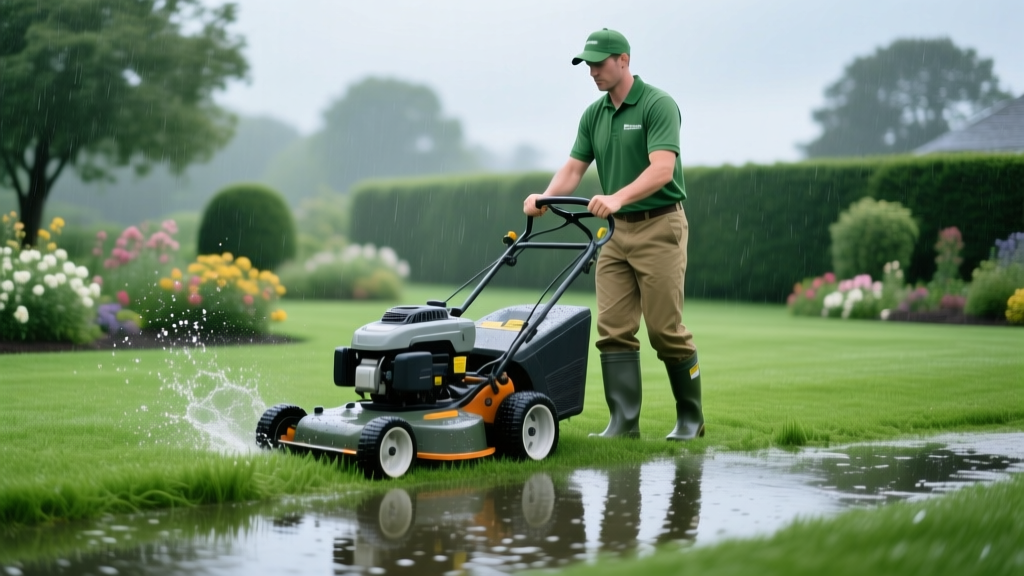
When Cutting Grass in the Rain: A Step-by-Step Wet Mowing Protocol
The Reality of Wet Mowing: When It Is Unavoidable
Turf management best practices universally dictate that you should never mow wet grass. However, erratic 2026 weather patterns and strict commercial maintenance contracts sometimes make cutting grass in the rain an unavoidable necessity. When a scheduled event demands a manicured lawn or a prolonged rainy season threatens to push turf heights past the point of no return, professionals must execute a highly controlled wet mowing protocol. Blindly pushing a mower through saturated turf leads to severe soil compaction, uneven tearing of grass blades, and the rapid spread of fungal pathogens. This guide provides a step-by-step operational framework to mitigate these risks, protecting both your equipment and the structural integrity of your lawn.
Phase 1: The Go/No-Go Decision Matrix
Before initiating any wet mowing procedure, assess the environmental variables. Not all rain events are equal, and soil saturation is the primary limiting factor. Use the matrix below to determine if cutting grass in the rain is viable or if you must delay.
| Soil Saturation Level | Rain Intensity | Grass Type | Operational Verdict |
|---|---|---|---|
| Surface Moisture Only | Light Drizzle / Mist | Tall Fescue, Bermuda | PROCEED with modified protocol |
| Spongy (Footprints remain) | Steady Light Rain | Kentucky Bluegrass, Zoysia | CAUTION - Reduce speed, raise deck |
| Puddling / Mud | Moderate to Heavy | Any Turfgrass | ABORT - High compaction & rut risk |
Phase 2: Machine Calibration and Preparation
Standard dry-cutting settings will fail in wet conditions. Wet grass blades are heavier, more pliable, and prone to bending rather than shearing. You must reconfigure your mower to handle the increased hydraulic load and prevent deck clogging.
Step-by-Step Equipment Setup
- Raise the Cutting Deck: Increase your standard mowing height by 0.5 to 1.0 inches. If you normally cut at 2.5 inches, set the deck to 3.5 inches. This reduces the volume of wet biomass entering the deck and prevents the mower from bogging down.
- Swap to a High-Lift Blade: Remove mulching blades. Mulching blades rely on recirculating clippings, which will instantly turn wet grass into a heavy, deck-choking paste. Install a high-lift discharge blade (such as the Oregon G3 Gator blade) to create maximum airflow and eject clippings laterally.
- Adjust Tire Pressure: Lower your pneumatic tire pressure to 10-12 PSI. This widens the tire footprint, reducing ground pressure and minimizing sub-surface soil compaction, which becomes critical when the soil profile is saturated.
- Clear the Discharge Chute: Ensure the side-discharge chute is fully open and free of dried debris from previous cuts to prevent immediate bottlenecking.
⚠️ Battery Mower Safety Warning: If you are using a modern lithium-ion mower (like the EGO Power+ LM2135 or Ryobi 40V series), check the IPX rating. Most are rated IPX4, meaning they can withstand splashing water from any direction, but they are not waterproof. Never cut grass in the rain if water is pooling around the battery compartment or motor housing, as this will void the warranty and risk catastrophic electrical failure.
Phase 3: Execution and Mowing Mechanics
When cutting grass in the rain, your mowing technique must shift from efficiency-focused to preservation-focused. The goal is to shear the grass cleanly while minimizing the physical footprint on the soil.
The Half-Pass Overlap Technique
Do not attempt to cut a full swath of grass in a single pass. Wet grass clumps heavily, and a full deck width will overload the blade's centrifugal force. Instead, use the Half-Pass Method:
- On your first pass, mow normally.
- On the return pass, overlap your previous cut by 50%. This ensures that the mower is only processing half a deck's width of new, wet grass, while the other half is re-cutting already discharged material.
- Keep your ground speed below 2.5 MPH. Rushing causes the blades to tear the wet turf rather than slicing it, leaving ragged tips that turn brown and invite disease.
Managing Clumping and Discharge
Even with a high-lift blade, wet clippings will form heavy windrows on the lawn. You must side-discharge these clumps away from the uncut grass. If the clippings are exceptionally heavy, you may need to perform a secondary pass with the deck raised to its maximum height solely to break up and disperse the clumps, preventing them from smothering the turf canopy and blocking sunlight.
Phase 4: Post-Mow Turf Protection and Disease Mitigation
The most significant hidden danger of cutting grass in the rain is the mechanical transmission of fungal spores. Diseases like Dollar Spot (Clarireedia jacksonii) and Brown Patch (Rhizoctonia solani) thrive in wet conditions, and mower blades act as highly efficient vectors, carrying spores from infected micro-zones across the entire property.
"Mowing wet turf is essentially inoculating your entire lawn with whatever localized pathogens are present. The mechanical friction of wet mowing opens the plant's vascular system exactly when the environmental humidity is at 100%, creating a perfect storm for foliar diseases."
— Dr. James Kerns, Turfgrass Pathology Expert
Immediate Fungicide Application
If you are forced to mow wet turf during the high-disease pressure months of late spring and summer, a preventative fungicide application is highly recommended within 24 hours of the cut once the grass dries. Look for products containing Azoxystrobin (such as Scotts DiseaseEX) or Propiconazole (like BioAdvanced Fungus Control). These systemic active ingredients will penetrate the freshly cut, open grass blades and protect the plant from the spores your mower just distributed. According to turf management guidelines from the Clemson University Extension, maintaining sharp blades and avoiding wet mowing are the primary cultural controls for disease; when cultural controls fail, targeted chemical intervention is required.
Phase 5: Equipment Decontamination and Storage
Never park a mower with wet grass clippings adhered to the underside of the deck. The moisture will rapidly accelerate corrosion on stamped steel decks and cause aluminum decks to oxidize. Furthermore, leaving wet clippings in the deck guarantees a hardened, concrete-like barrier for your next mow.
Pro-Tip: The Quaternary Ammonium Wash
To simultaneously clean the deck and kill fungal spores, spray the underside of the mower deck and the blade with a diluted quaternary ammonium disinfectant (commonly used in greenhouse sanitation). Let it sit for 5 minutes, then use a plastic putty knife to scrape away the biomass. Avoid metal scrapers, which will gouge the deck's anti-rust coating.
To simultaneously clean the deck and kill fungal spores, spray the underside of the mower deck and the blade with a diluted quaternary ammonium disinfectant (commonly used in greenhouse sanitation). Let it sit for 5 minutes, then use a plastic putty knife to scrape away the biomass. Avoid metal scrapers, which will gouge the deck's anti-rust coating.
Troubleshooting Edge Cases
Even with perfect execution, cutting grass in the rain can result in physical turf damage. Here is how to remediate common failures:
- Deep Tire Ruts: If your mower tires sank into the soil, do not attempt to fill the ruts with dry topsoil immediately. Wait for the soil to dry to a friable state (usually 48-72 hours), then use a spading fork to gently lift the compacted soil from beneath the rut. Top-dress lightly only after the soil structure is aerated. The University of Minnesota Extension notes that attempting to smooth wet, compacted ruts only worsens the sub-surface compaction layer.
- Scalped Patches: Wet grass bends under the mower's front wheels, only to spring back up after the deck passes, resulting in uneven cutting. If you notice scalped strips, do not immediately re-mow. Allow the grass to dry, stand back up, and then perform a corrective pass at a higher deck setting.
- Hydro-Locking Gas Engines: If water enters the air intake of a gas mower during heavy rain, the engine will stall and refuse to turn over. Remove the spark plug, pull the starter cord gently to expel the water from the cylinder, dry the plug, and reinstall. Never force the starter motor if the engine feels locked.
Final Operational Summary
Cutting grass in the rain should always remain a last resort. By utilizing the half-pass technique, optimizing deck airflow with high-lift blades, and executing immediate post-mow disease mitigation, you can navigate these adverse conditions without destroying your turf canopy or compromising your soil structure. Prioritize soil health over aesthetic perfection, and when the puddles form, put the mower back in the shed.

