
Lawn Care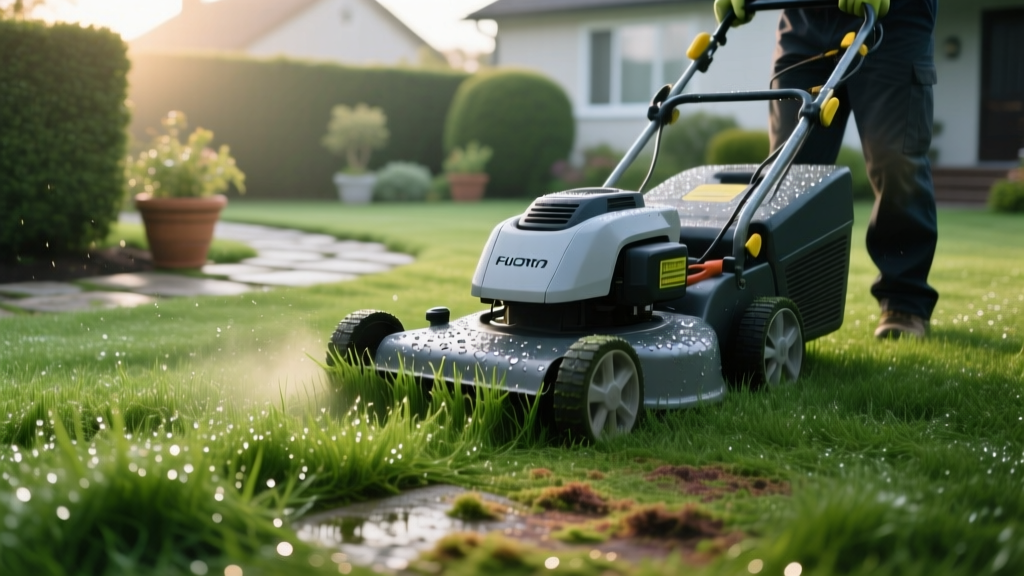
Is It Bad to Cut the Grass Wet? Turf Disease and Mower Risks Explained
The short answer to whether it is bad to cut the grass wet is yes, but the underlying reasons extend far beyond a messy lawn. Mowing saturated turf introduces severe botanical stress, accelerates mechanical wear on your equipment, and creates an ideal vector for devastating fungal pathogens. While turfgrass professionals occasionally mow damp grass under strictly controlled conditions, homeowners using standard residential equipment risk long-term damage to both their lawn's root system and their mower's drivetrain.
This guide breaks down the exact cellular, mechanical, and environmental consequences of mowing wet grass, providing actionable frameworks to mitigate damage when waiting for the sun is simply not an option.
The Botanical Mechanics: Tearing vs. Slicing
To understand why moisture harms turf during mowing, you must look at the grass blade at a cellular level. When dry, grass blades stand rigid and upright, supported by internal turgor pressure. A sharp mower blade spinning at 3,000 RPM cleanly slices through the cellulose structure, leaving a smooth wound that heals rapidly.
When grass is wet, surface tension and the physical weight of water droplets cause the blades to bend and droop. Instead of slicing, the mower blade folds the grass over and tears it. This fraying shreds the epidermal layer and exposes the xylem and phloem. According to turfgrass researchers at the University of Minnesota Extension, these jagged, torn tips lose moisture at a rate up to 50% faster than cleanly cut blades. Within 48 hours, the tips will desiccate and turn a pale, necrotic brown, giving the entire lawn a grayish, scorched appearance even if the soil is perfectly hydrated.
The Fungal Vector: How Mowers Spread Pathogens
Water is the primary transport mechanism for turfgrass diseases. When you mow wet grass, you are not just cutting; you are aerosolizing pathogens. The vortex created beneath a mower deck picks up water droplets harboring fungal spores and blasts them into the fresh, open wounds of adjacent, torn grass blades.
⚠️ High-Risk Pathogen Warning:
Mowing wet turf drastically increases the transmission rate of Rhizoctonia solani (Brown Patch) and Sclerotinia homoeocarpa (Dollar Spot). If your lawn has a history of these diseases, mowing while the dew is heavy or immediately after a rainstorm can trigger a full-scale outbreak within 72 hours.
Mechanical Degradation of Mower Components
Wet grass clippings are exceptionally dense, weighing up to three times more than dry clippings. This added mass fundamentally alters the aerodynamics and mechanical load of your mower.
Deck Clumping and Airflow Starvation
Modern mulching decks rely on a precise vacuum effect to keep clippings suspended in the air chamber so they can be recut multiple times. Wet clippings instantly stick to the deck's interior, destroying this airflow. The resulting clumps drop onto the lawn in heavy, suffocating mounds that block sunlight and trap humidity against the soil surface, further inviting fungal growth.
Spindle and Bearing Failure
The added rotational mass of water-logged clippings increases the moment of inertia on the spindle assembly. In residential zero-turn and riding mowers, this excess load forces the sealed ball bearings (typically 6202-2RS or similar sizes) to operate under extreme lateral stress. Over a single season of frequent wet mowing, this accelerates bearing wear, leading to a wobbling blade, uneven cuts, and eventual spindle seizure—a repair that often costs between $80 and $150 per spindle assembly.
Impact Matrix: Dry vs. Wet Mowing Conditions
| Metric | Dry Grass Mowing | Wet Grass Mowing |
|---|---|---|
| Leaf Tip Condition | Clean, smooth cross-section | Frayed, shredded, and jagged |
| Clipping Dispersal | Evenly distributed micro-mulch | Heavy, suffocating clumps |
| Disease Transmission | Minimal mechanical spread | High aerosolized spore transfer |
| Mower Deck Load | Standard operational RPM | High torque strain, belt slip risk |
| Soil Impact | Minimal compaction | Severe subsurface rutting |
Soil Compaction and Subsurface Rutting
The damage is not limited to the grass blades and the machine; the soil itself suffers. Wet soil has significantly lower shear strength. When a 250-pound residential zero-turn mower or a heavy garden tractor drives over saturated ground, the tires sink past the thatch layer and compress the topsoil.
This compression severs the shallow lateral roots of warm-season grasses like Bermuda and Zoysia, and it collapses the macro-pores in the soil necessary for oxygen exchange. Over time, mowing wet soil creates permanent ruts that require mechanical aeration and topdressing to level out, adding hundreds of dollars to your annual lawn care budget.
The Exceptions: When Wet Mowing is Unavoidable
While avoiding wet mowing is the gold standard, turfgrass managers in specific climates occasionally have no choice. During peak spring growth, cool-season grasses like Kentucky Bluegrass and Tall Fescue can grow up to an inch per day. If a multi-day rainstorm hits, waiting for the lawn to dry might result in the grass reaching 6 or 7 inches in height.
Cutting a 7-inch lawn down to a standard 3 inches violates the fundamental 'One-Third Rule' of mowing, which states you should never remove more than 1/3 of the leaf blade at a single time. Removing 4 inches at once will shock the plant, causing it to draw energy from its root reserves to regrow tissue, severely weakening the lawn. In this scenario, mowing damp grass is the lesser of two evils.
Step-by-Step Wet Mowing Mitigation Protocol
If you are forced to mow wet grass, follow this exact protocol to minimize botanical and mechanical damage:
- Raise the Deck Height: Increase your cutting height by at least 0.5 to 1 inch. If your target is 3 inches, set the deck to 3.5 or 4 inches. This prevents the removal of more than 1/3 of the blade and reduces the volume of heavy, wet clippings entering the deck.
- Disable the Mulch Plug: Remove the mulching baffle and open the side-discharge chute. Wet grass cannot be mulched effectively; attempting to do so will choke the engine and stall the blade.
- Reduce Ground Speed: Slow your mowing pace by 30%. This gives the mower blade more time to process the heavy, wet clippings and prevents the deck from bogging down.
- Apply a Deck Release Agent: Before mowing, spray the underside of the deck with a dry PTFE (polytetrafluoroethylene) or silicone-based mower deck spray. Never use petroleum-based lubricants like WD-40, as they attract abrasive dust and will degrade your mower's rubber drive belts.
- Clean Immediately: Use a putty knife and a high-pressure hose to scrape the underside of the deck within 30 minutes of finishing. Wet clippings ferment rapidly, creating a highly acidic slurry that will corrode stamped steel decks and accelerate rust.
Post-Mow Disease Identification
If you have recently mowed wet grass, monitor your lawn closely for the next 5 to 7 days. According to diagnostic resources from NC State University TurfFiles, look for the following early indicators of fungal infection:
- Dollar Spot: Small, silver-dollar-sized patches of bleached grass with distinct hourglass-shaped lesions on individual blades. Look for white, cobweb-like mycelium in the early morning dew.
- Brown Patch: Irregular, circular patches ranging from 6 inches to several feet across. The borders may appear dark and water-soaked (often called a 'smoke ring') before the center turns tan.
- Rust: Pustules that form on the leaf blades, leaving an orange, powdery residue on your shoes or mower deck when brushed against.
If these symptoms appear, cease mowing immediately until the turf is completely dry, and consider applying a preventative fungicide containing Azoxystrobin or Propiconazole according to the manufacturer's label rates.
Frequently Asked Questions
Can I mow grass with morning dew on it?
Light morning dew is generally acceptable if you are using a sharp blade and a side-discharge deck. However, heavy dew that causes the grass to visibly bend should be treated like rain-wet grass. Wait until the sun burns off the moisture, typically between 9:00 AM and 10:30 AM depending on your local climate and canopy shade.
Does mowing wet grass dull the mower blade faster?
Yes. The combination of water, heavy grass mass, and the microscopic silica naturally present in turfgrass creates an abrasive slurry. This slurry accelerates the wear on the cutting edge, meaning a blade that stays sharp for 25 hours in dry conditions may require sharpening after just 10 to 15 hours of heavy wet mowing.
What is the best time of day to mow to avoid wet grass?
The optimal window is late afternoon, between 4:00 PM and 6:00 PM. By this time, the grass is completely dry, the peak heat of the day has passed (reducing moisture loss from the cut blades), and the lawn has several hours of evening recovery time before the sun returns the next morning.

