
Lawn Care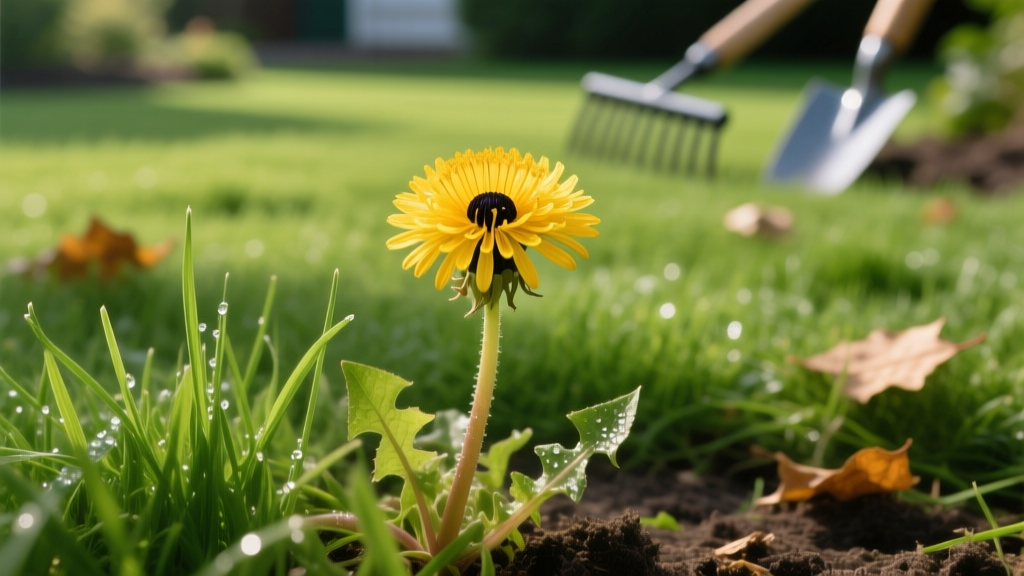
Are Dandelions Flowers or Weeds? Botanical Facts & Lawn Control
The Short Answer: Biology vs. Turfgrass Management
When homeowners ask, "are dandelions flowers or weeds?", the answer depends entirely on the lens through which you view them. Botanically speaking, the common dandelion (Taraxacum officinale) is undeniably a flowering herbaceous perennial. It belongs to the Asteraceae family, producing complex, vibrant blooms that play a critical role in early-spring ecosystems. However, in the context of turfgrass management and lawn care, a "weed" is simply defined as any plant growing where it is not desired. Because dandelions aggressively compete with cultivated turfgrasses like Kentucky Bluegrass and Bermudagrass for water, nutrients, and sunlight, they are universally classified as broadleaf weeds by agronomists and landscapers.
The Botanical Reality: Why Dandelions Are Technically Flowers
To understand dandelion identification, you must look past the single yellow bloom and examine the plant's micro-structure. What appears to be a single flower is actually a composite flower head, scientifically known as a capitulum. This structure is made up of 40 to 100+ individual, tiny flowers called ray florets. Each floret contains its own reproductive organs (stamens and pistils) and eventually develops into a single seed attached to a pappus—the iconic white, parachute-like structure that aids in wind dispersal.
Because they produce true flowers, seeds, and undergo standard angiosperm reproduction, dandelions are definitively flowers. In fact, according to the University of California Integrated Pest Management (UC IPM) program, Taraxacum officinale is one of the most successful flowering perennials in the world, capable of adapting to a massive range of soil pH levels and climatic conditions.
The Lawn Care Perspective: The Mechanics of a Broadleaf Weed
In lawn care, the dandelion's classification shifts from a botanical marvel to a structural nuisance. The primary reason turf managers despise this plant is its root system. A mature dandelion develops a thick, brittle taproot that can penetrate up to 10 to 15 feet deep in ideal, loose loamy soils. In the heavily compacted clay soils typical of suburban lawns, the taproot usually anchors between 6 and 18 inches deep.
Data Highlight: The Regeneration Threshold
If you attempt to pull a dandelion and snap the taproot, leaving just 1 inch of the root crown (the tissue where the root meets the stem) in the soil, the plant will regenerate new shoots within 7 to 14 days. Complete crown extraction is mandatory for mechanical control.
Furthermore, dandelions exhibit a phenomenon called rosette growth. Their basal leaves grow in a dense, circular pattern that hugs the soil surface. This allows them to easily survive beneath the cutting deck of a standard lawn mower, which is typically set between 2.5 and 4 inches. As the rosette expands, it physically shades out the surrounding turfgrass, causing the grass to thin and die off, which in turn creates bare patches for new weed seeds to germinate.
Dandelion Identification Matrix: Spotting the Look-Alikes
Before applying herbicides or spending hours pulling, accurate dandelion identification is crucial. Several common lawn weeds mimic the dandelion's appearance but require different management strategies. Use the matrix below to differentiate them in your yard.
| Feature | True Dandelion (T. officinale) | Catsear / False Dandelion (H. radicata) | Hawkweed (Hieracium spp.) |
|---|---|---|---|
| Leaf Surface | Smooth, deeply toothed lobes pointing toward center | Coarse, covered in stiff, prominent hairs | Fuzzy, pale green, covered in fine soft hairs |
| Flower Stem | Hollow, smooth, leafless, single flower per stem | Solid, wiry, branched, multiple flowers per stem | Solid, hairy, often with small bracts on stem |
| Sap | Thick, milky white latex sap | Clear or slightly milky sap | Milky white latex sap |
| Root System | Deep, single fleshy taproot | Fibrous, branched root system with tubers | Shallow, creeping stolons and fibrous roots |
The Ecological Dilemma: Pollinator Value vs. Turf Aesthetics
The modern lawn care debate in 2026 heavily features the ecological value of early-blooming weeds. Dandelions are among the first plants to flower in early spring, providing a critical, high-sugar nectar and protein-rich pollen source for emerging native bees, honeybees, and hoverflies. Movements like "No Mow May" encourage homeowners to tolerate dandelion blooms for the first few weeks of the growing season to support local pollinator populations.
Expert Insight: If you choose to let dandelions bloom for pollinators, you must deadhead (mow off) the yellow flowers before they transition into the white, spherical seed heads. A single mature dandelion plant can produce up to 5,000 seeds in a single season, which can travel up to 5 miles on the wind, guaranteeing a massive infestation the following year.
Proven Eradication & Control Strategies
If your goal is a pristine, uniform turfgrass lawn, dandelions must be managed. According to University of Minnesota Extension turf specialists, successful control requires a multi-pronged approach targeting both the visible foliage and the subterranean root system.
1. Mechanical Control: The Soil Moisture Rule
Pulling dandelions by hand or with tools is only effective if the soil moisture is at field capacity (roughly -33 kPa tension). Attempting to pull them from dry, hard soil will result in the taproot snapping 2 inches below the surface, guaranteeing regrowth. Wait 24 hours after a heavy rain or a deep irrigation cycle. Use a specialized stand-up weeder with a serrated, 4-claw grabber (such as the Fiskars Uproot Weeder) to grip the crown firmly and lever the entire root system out intact.
2. Chemical Control: Selective Broadleaf Herbicides
For lawns with widespread infestations, manual removal is impractical. Post-emergent, selective broadleaf herbicides are the industry standard. The most effective formulations utilize a three-way mixture of active ingredients: 2,4-D, Dicamba, and MCPP (Mecoprop), commonly sold under trade names like Trimec or Ortho WeedClear.
- Application Rate: For spot treatments, mix approximately 1.5 fluid ounces of concentrate per gallon of water to cover 1,000 square feet (always verify the specific product label).
- Surfactant: Dandelion leaves have a slightly waxy cuticle. Adding a non-ionic surfactant (like methylated seed oil) at a rate of 0.25% by volume ensures the herbicide sticks to and penetrates the leaf tissue.
- Temperature Constraints: Never apply products containing Dicamba when ambient temperatures exceed 85°F (29°C). At high temperatures, Dicamba undergoes volatilization—turning into a gas that can drift and severely damage nearby ornamental shrubs, tomato plants, and broadleaf trees.
- Timing: Apply in the fall (September to October) when the plant is actively pulling carbohydrates down into the taproot for winter storage. The herbicide will be translocated directly to the root, ensuring a complete kill.
Frequently Asked Questions
Are dandelions edible?
Yes, every part of the true dandelion is edible. The young leaves are rich in vitamins A, C, and K, and can be used in salads. The roots can be roasted and ground as a caffeine-free coffee substitute, and the flowers can be used to make dandelion wine or fritters. Ensure you only harvest from lawns that have not been treated with synthetic herbicides or pesticides.
Do dandelions produce chemicals that kill grass?
While some internet sources claim dandelions use allelopathy (releasing soil toxins) to kill grass, peer-reviewed agronomic studies show this effect is negligible in a turf setting. The grass dies beneath a dandelion rosette primarily due to physical shading and intense competition for localized soil moisture and nitrogen, not chemical warfare.
Will pre-emergent herbicides stop dandelions?
Pre-emergents (like Prodiamine or Dithiopyr) create a chemical barrier in the top inch of soil that stops seeds from germinating. While they will prevent new dandelion seeds from sprouting, they do absolutely nothing to dandelions that are already established as mature perennials with deep taproots. You must use a post-emergent herbicide for existing plants.

