
Lawn Care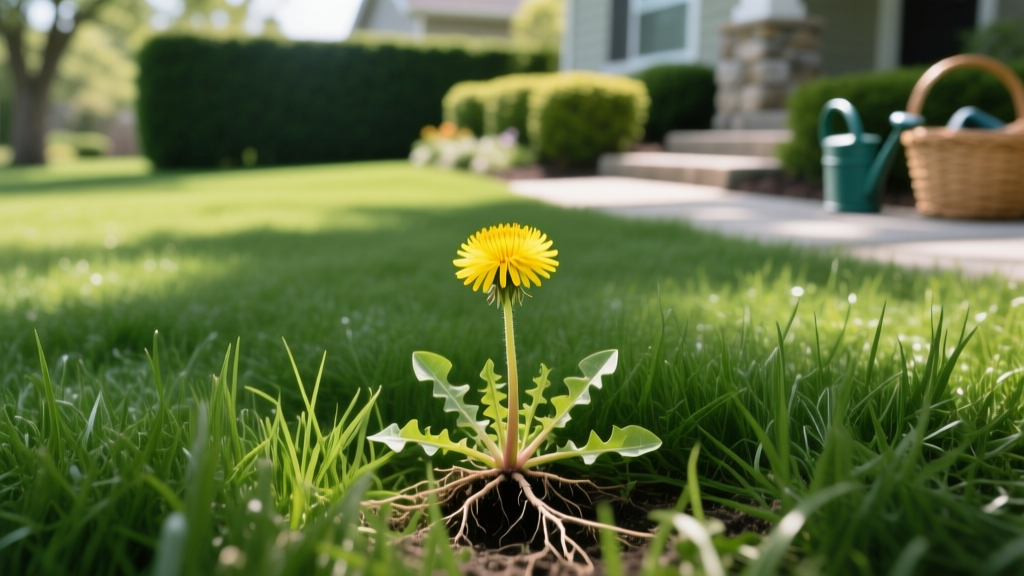
Dandelion Grass Confusion: How to Spot-Treat Dandelions in Your Lawn
Every spring, millions of homeowners search for ways to eliminate 'dandelion grass' from their lawns. But here is the botanical reality: dandelion grass does not exist. Dandelions (Taraxacum officinale) are broadleaf perennial weeds, not grasses. Homeowners often use the term 'dandelion grass' to describe dandelions invading their turfgrass, or they mistakenly confuse them with grassy weeds like dallisgrass or crabgrass.
Understanding this distinction is the foundation of effective weed control. Because dandelions are broadleaf dicots and your lawn consists of monocot grasses, you can utilize selective herbicides that destroy the weed while leaving your turf completely unharmed. This comprehensive spot-treatment guide breaks down exact identification markers, mechanical extraction techniques, and targeted chemical applications to permanently remove dandelions from your lawn.
The Botanical Divide: Broadleaf Weeds vs. Turfgrass
Before selecting a treatment, it is critical to understand why dandelions behave differently than your lawn. According to UC Agriculture and Natural Resources IPM, dandelions belong to the Asteraceae family. They feature a rosette growth habit, meaning their leaves radiate from a central crown at the soil surface, allowing them to thrive even when mowed at standard turf heights.
Expert Insight: The primary reason dandelions survive mowing is their crown placement. If your mower deck is set below 2.5 inches, you risk scalping the turf and exposing soil, which triggers dormant dandelion seeds to germinate. Always maintain a mowing height of 3 to 4 inches for cool-season grasses to shade out weed seeds.
Identifying True Dandelions in Your Turf
Misidentification leads to wasted money on the wrong herbicides. Before you spray, verify that you are dealing with a true dandelion and not a look-alike like false dandelion (catsear) or wild lettuce.
- Leaves: Deeply lobed, jagged edges pointing backward toward the center (the French word dent-de-lion means lion's tooth). Leaves are entirely smooth (hairless).
- Stems: Hollow, leafless, and exude a milky white latex sap when broken.
- Flowers: Single, bright yellow flower head per hollow stalk.
- Root System: A thick, brittle, fleshy taproot that can penetrate 10 to 15 inches into compacted soil.
Spot-Treatment Decision Matrix
Choosing the right eradication method depends on your lawn size, environmental preferences, and the severity of the infestation. Below is a comparison of the three primary spot-treatment strategies for 2026 turf management.
| Treatment Method | Active Agent / Tool | Average Cost | Efficacy on Taproot | Time to Result |
|---|---|---|---|---|
| Mechanical Extraction | Stand-up Weeder (e.g., Fiskars 3-Claw) | $35 - $45 (One-time tool) | High (if >90% root removed) | Immediate |
| Organic Chemical | Iron HEDTA (e.g., Fiesta Herbicide) | $45 - $60 per gallon | Moderate (requires 2-3 apps) | 24 - 48 hours (browning) |
| Synthetic Chemical | 2,4-D + Dicamba + MCPP (e.g., SpeedZone) | $30 - $50 per pint concentrate | Very High (systemic kill) | 7 - 14 days (complete death) |
Method 1: Mechanical Extraction (The Taproot Rule)
If you only have a dozen dandelions, hand-pulling is viable, but only if executed correctly. Penn State Extension notes that if you leave just one inch of the dandelion's taproot in the soil, the weed will regenerate a new crown within weeks.
- Time it right: Extract dandelions 24 hours after a heavy rain or deep irrigation. The soil must be moist to a depth of at least 6 inches to reduce root snapping.
- Use the right tool: Avoid standard trowels. Use a dedicated stand-up weeder with serrated claws (like the Fiskars 3-Claw Weeder or Grampa's Weeder) to grip the taproot firmly below the crown.
- Extract at an angle: Push the tool into the soil at a slight angle toward the center of the weed, step on the lever, and pull back smoothly. Do not jerk upward, or the root will snap.
Warning: Never use a string trimmer or weed whacker to cut dandelions down to the soil line. This removes the leaves but leaves the taproot intact, forcing the plant to push up multiple new rosettes from the severed crown, effectively multiplying your weed problem.
Method 2: Targeted Herbicide Application
For lawns with scattered but numerous dandelions, spot-spraying with a selective herbicide is the most efficient approach. Because dandelions are broadleaf weeds, you must use a post-emergent broadleaf herbicide.
The Synthetic Route: Three-Way Herbicides
Products containing a combination of 2,4-D, Dicamba, and MCPP (commonly sold as Trimec or SpeedZone) are the industry standard. These systemic herbicides are absorbed by the leaves and translocated down into the taproot, killing the entire plant.
- Mixing Rate: Typically 1.5 to 2.0 fluid ounces per gallon of water for spot treatments.
- Surfactant: Always add a non-ionic surfactant (NIS) at a rate of 0.25% v/v (roughly 1/2 teaspoon per gallon). Dandelion leaves have a slightly waxy cuticle; the surfactant breaks surface tension, ensuring the herbicide coats the leaf rather than rolling off.
- Temperature Limits: Do not apply when ambient temperatures exceed 85°F. High heat causes synthetic auxin herbicides to volatilize (turn into a gas) and drift, which can severely damage nearby ornamental shrubs, tomatoes, and garden plants.
The Organic Route: Iron HEDTA
If you prefer an organic approach, look for herbicides where the active ingredient is Iron HEDTA (FeHEDTA), such as Fiesta Turf Weed Killer. Broadleaf weeds absorb excess iron, leading to fatal iron toxicity and cellular necrosis, while monocot grasses naturally regulate iron uptake and remain unharmed.
- Application Strategy: Iron HEDTA is a contact herbicide, not systemic. It will burn the top growth down to the soil within 24 hours, but the taproot may survive. You must plan for a second application 3 to 4 weeks later to kill the regrowth.
Expert Troubleshooting: Why Did My Dandelions Come Back?
If you treated your lawn and the dandelions returned, you likely fell victim to one of these common failure modes:
1. Mowing Too Soon After Spraying
Systemic herbicides require time to travel from the leaf tissue down to the root tip. If you mow your lawn 24 hours after spraying, you are physically removing the herbicide before it has translocated. Rule of thumb: Wait at least 48 hours after application before mowing, and ideally, do not mow for 2 days prior to application so the dandelion has maximum leaf surface area to absorb the chemical.
2. Ignoring the Seed Bank
A single mature dandelion puffball can produce up to 400 wind-borne seeds. If you allow even a few weeds to reach the flowering stage before treating them, you are fighting a losing battle against the soil seed bank. Spot-treat dandelions when they are in the rosette stage (low to the ground, before the flower stalk emerges) for the highest kill rate and zero seed dispersal.
3. Compacted Soil Conditions
Dandelions thrive in compacted, low-oxygen soil where turfgrass roots struggle to penetrate. According to Purdue University Turfgrass Science, persistent broadleaf weeds are often a symptom of poor soil health. If dandelions constantly return to the same patch of lawn, perform a core aeration in the fall and top-dress with compost to relieve compaction and give your turfgrass the competitive advantage.
Post-Treatment Lawn Recovery
Once the dandelion dies, it leaves behind a bare spot in the turf. If left empty, this bare soil will be colonized by crabgrass or a new dandelion seed within weeks.
Immediately after the weed turns brown and begins to decompose, rough up the soil in the void with a hand cultivator, sprinkle a handful of premium grass seed that matches your existing lawn, and lightly cover with peat moss or compost. Keep the spot moist for 14 days. A dense, aggressively growing turf canopy is the ultimate pre-emergent defense against future broadleaf weed invasions.

