
Lawn Care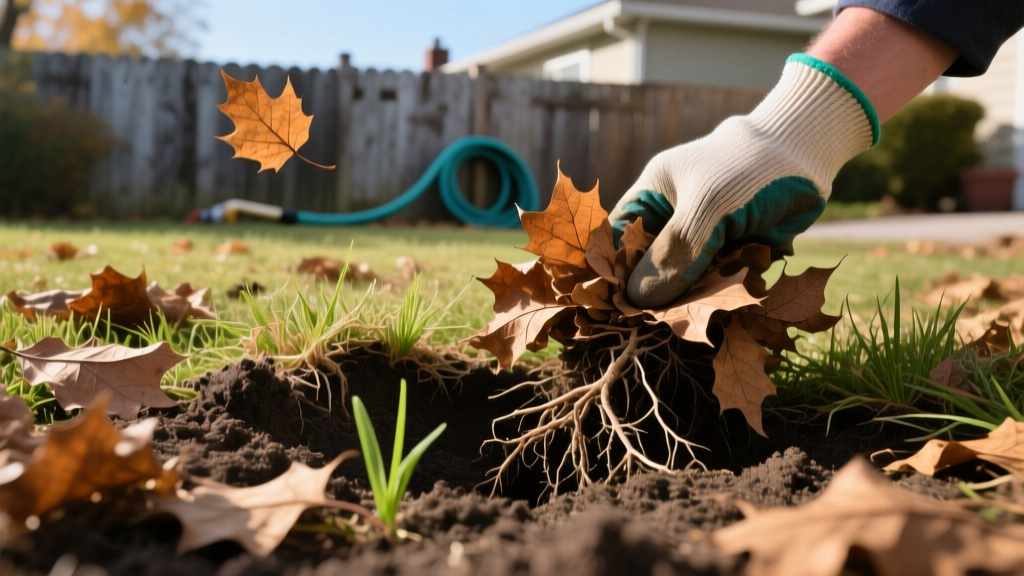
Dead Leaves and the Dirty Ground: Diagnosing and Rescuing Lawns
The Symptom: Dead Leaves and the Dirty Ground
When homeowners pull back a thick mat of autumn foliage, they are often met with an unsettling sight: dead leaves and the dirty ground beneath them. This 'dirty ground' is rarely just bare soil. It is typically a matted, anaerobic layer of decaying organic matter, exposed topsoil, and suffocated turfgrass crowns. Left untreated, this environment breeds snow mold, invites cyanobacteria (Nostoc), and destroys soil structure.
Diagnosing the exact pathology of your lawn requires looking past the surface debris. According to turfgrass researchers at Purdue University Turfgrass Science, prolonged leaf cover blocks photosynthesis, traps excess moisture, and creates a microclimate that accelerates crown rot. Below is a diagnostic matrix to identify what is happening to your soil and turf.
Diagnostic Matrix: Identifying Your Lawn's Pathology
| Visual Symptom | Underlying Pathology | Immediate Rescue Action |
|---|---|---|
| Matted, slimy gray/black soil surface | Anaerobic bacterial decomposition; lack of oxygen exchange. | Mechanical removal followed by deep core aeration. |
| Pink or white webbing on grass crowns | Microdochium nivale (Pink Snow Mold) thriving in trapped moisture. | Apply Azoxystrobin-based fungicide; rake gently to dry crowns. |
| Bare, muddy patches with no root structure | Crown smothering and light deprivation leading to turf death. | Overseed with high-germination cultivars after soil de-compaction. |
| Yellow-green gelatinous blobs on soil | Nostoc cyanobacteria (Star Jelly) feeding on compacted, wet soil. | Improve drainage; apply copper-based algaecide if severe. |
The Science of Smothering: Why Leaves Ruin Soil Structure
The phrase 'dirty ground' accurately describes the breakdown of the soil-air interface. A healthy lawn requires a balance of oxygen, water, and nutrients in the root zone. When a thick layer of wet leaves sits on the turf for more than 14 days, it creates an impermeable seal.
Heavy leaf accumulation reduces light penetration to near zero. Cool-season grasses like Tall Fescue and Kentucky Bluegrass require a minimum of 4-6 hours of filtered light to maintain crown vitality during late autumn. Without it, the plant exhausts its carbohydrate reserves and dies back to the soil line.
Furthermore, the decaying leaves leach tannins and organic acids into the top inch of the soil. This temporarily lowers the soil pH and encourages the growth of saprophytic fungi that compete with your grass for nitrogen. The result is a muddy, foul-smelling substrate that repels new seed germination.
Step-by-Step Rescue Protocol for Leaf-Damaged Lawns
Rescuing a lawn suffering from leaf smothering requires a phased approach. Do not attempt to aggressively rake wet, muddy soil, as this will sever surviving rhizomes and worsen compaction.
Phase 1: Safe Debris Removal
If the leaf layer is less than 2 inches thick and relatively dry, use a mulching mower equipped with a specialized blade (such as the Toro Atomic Blade, retailing around $45). Set your mower deck to 3.0 inches. The goal is to chop the leaves into dime-sized fragments that will filter down to the soil surface and decompose without blocking the grass crowns.
If the leaves are wet, matted, or exceed 2 inches in depth, mulching will fail. You must remove them. Use a backpack blower like the Stihl BR 800 X (approx. $650 in 2026) on a medium setting to lift the mat without scouring the topsoil. Avoid metal tined rakes on wet ground; they will pull up live grass crowns along with the dead leaves.
Phase 2: Breaking the Anaerobic Seal
Once the debris is cleared, the 'dirty ground' must be re-oxygenated. Rent a walk-behind core aerator (such as a Classen or Ryan Lawnaire, typically $85 to $120 per day). Core aeration pulls 2-to-3-inch plugs of soil, leaving them on the surface to break apart and introduce soil microbes back into the thatch layer. Space your aeration passes 3 inches apart in a crisscross pattern to ensure maximum soil fracturing.
Phase 3: Pathogen and Fungal Eradication
If your diagnostic matrix revealed fungal symptoms, you must treat the area before introducing new seed. For snow mold and brown patch triggered by leaf cover, apply a systemic fungicide containing Azoxystrobin or Propiconazole. Products like Scotts DiseaseEx cost roughly $22 per 5,000 sq. ft. bag and provide up to 28 days of curative and preventative control. Always follow the EPA guidelines for safe pest control when handling and applying chemical treatments.
Reseeding and Soil Amendment Strategies
After aerating and treating, the bare, muddy patches must be re-established. Standard contractor-grade seed will struggle in the compromised soil left behind by decaying leaves. Opt for premium, endophyte-enhanced seed blends.
- Seed Selection: Jonathan Green Black Beauty Ultra or similar elite Tall Fescue blends ($85 for 25 lbs) contain deep-rooting cultivars that resist future fungal pressures.
- Application Rate: Apply 6 to 8 lbs of seed per 1,000 square feet for bare spots. Use a broadcast spreader and walk in perpendicular directions for even distribution.
- Starter Fertilizer: Apply a high-phosphorus starter fertilizer (e.g., 18-24-12 NPK) to stimulate rapid root development in the damaged soil profile. Milorganite or Scotts Turf Builder Starter Food are reliable options.
- Topdressing: Cover the seed with a 1/4-inch layer of screened compost or peat moss. This retains moisture and protects the seed from birds and wind.
2026 Cost Breakdown for Lawn Rescue
Budgeting for a full lawn rescue requires understanding current market rates. Below is an estimated cost breakdown for a standard 5,000 sq. ft. lawn suffering from severe leaf smothering and dirty ground pathology.
| Service / Material | DIY Cost (2026) | Professional Service Cost |
|---|---|---|
| Leaf Removal (Blowing & Bagging) | $0 (if owned) / $150 (rental) | $250 - $400 |
| Core Aeration (Equipment Rental) | $95 / day | $125 - $175 |
| Fungicide Application | $22 - $35 | $85 - $120 |
| Premium Seed & Starter Fertilizer | $110 - $140 | $200 - $250 |
| Total Estimated Project Cost | $227 - $420 | $660 - $945 |
Preventative Canopy Management
The best rescue is prevention. The University of Minnesota Extension recommends a proactive approach to autumn canopy management. Never allow leaves to accumulate for more than a week during peak drop. If you have heavy oak or sycamore trees, which produce high-tannin, slow-decomposing leaves, commit to a strict weekly mulching schedule or install temporary leaf netting over high-value turf zones.
By understanding the relationship between dead leaves and the dirty ground, you can transition from reactive cleanup to proactive turf management, ensuring your lawn enters winter dormancy with a healthy, oxygenated root system.

