
Lawn Care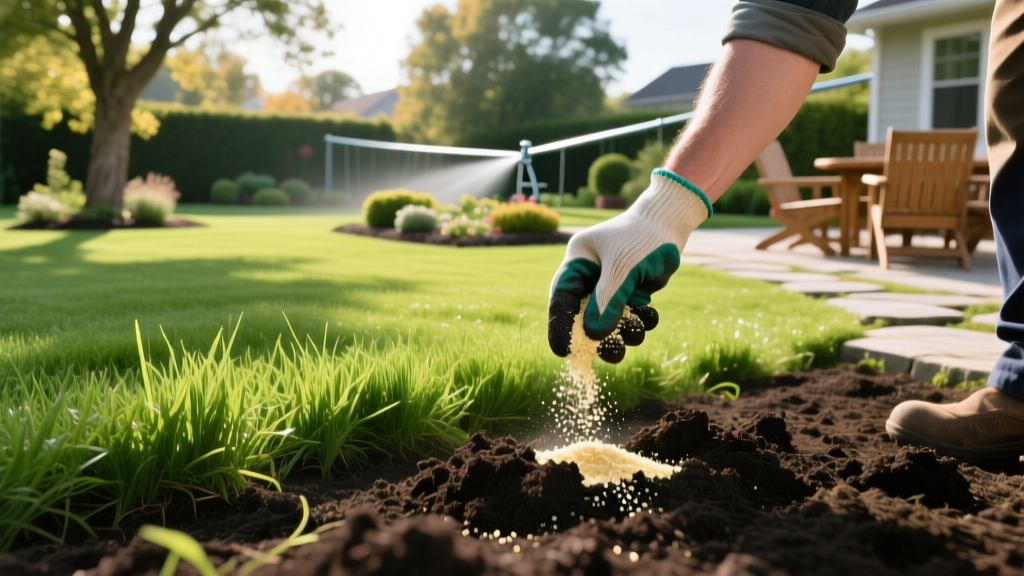
How to Decrease Soil pH Fast Using Elemental Sulfur and Peat
The Chemistry of Alkaline Lawns: Why High pH Starves Your Grass
When your soil pH creeps above 7.2, essential micronutrients like iron, manganese, and zinc become chemically locked in the soil matrix. No matter how much fertilizer you apply, your grass cannot absorb them. This results in interveinal chlorosis—characterized by yellowing leaf blades with dark green veins—stunted root growth, and increased susceptibility to drought stress. While most turfgrasses thrive in a slightly acidic range of 6.0 to 7.0, acid-loving species like Centipedegrass and Creeping Bentgrass require a pH between 5.0 and 6.0. If your soil test reveals an alkaline reading, you must strategically decrease soil pH to restore nutrient bioavailability.
Lowering soil pH is fundamentally more difficult and slower than raising it. Alkaline soils often possess high Cation Exchange Capacity (CEC) and contain free calcium carbonate (lime), which acts as a massive chemical buffer. Before attempting to decrease soil pH, perform a simple effervescence test: drop a few drops of white vinegar on a dry soil sample. If it fizzes, your soil contains free lime. You will need to apply significantly more acidifying amendments to neutralize the carbonate before the pH will actually drop.
Amendment Comparison Matrix: Choosing the Right Acidifier
Not all soil acidifiers are created equal. The choice of amendment dictates the speed of the pH drop, the cost per 1,000 square feet, and the potential risk of heavy metal toxicity. Below is a comparative analysis of the most common amendments used to decrease soil pH in turf environments.
| Amendment | Speed of Action | Cost (per 1,000 sq ft) | Best Use Case | Risk Profile |
|---|---|---|---|---|
| Elemental Sulfur (90%) | Slow (3-6 months) | $8 - $15 | Broadcast lawn applications, long-term correction | Very Low |
| Aluminum Sulfate | Fast (1-4 weeks) | $25 - $40 | Hydrangeas, localized garden beds | High (Aluminum toxicity) |
| Sphagnum Peat Moss | Moderate (1-2 months) | $40 - $60 | Topdressing, new lawn establishment, small patches | Low (Hydrophobic when dry) |
| Ammonium Sulfate (21-0-0) | Gradual (Continuous) | $12 - $18 | Routine fertilization and maintenance | Moderate (Burn risk if over-applied) |
The Gold Standard: Applying Elemental Sulfur to Lawns
Elemental sulfur is the undisputed industry standard for broadcast lawn applications. However, it is not an acid itself. When applied to the soil, elemental sulfur must be oxidized into sulfuric acid by soil-dwelling bacteria, primarily Thiobacillus thioparus and Thiobacillus thiooxidans. Because this is a biological process, environmental conditions dictate its efficacy.
Expert Insight: Soil temperature is the limiting factor for sulfur oxidation. If your soil temperature is below 55°F (13°C), bacterial activity halts, and the sulfur will sit inert on the surface. For the fastest results, apply elemental sulfur in early spring or early fall when soil temperatures are consistently between 70°F and 85°F and the soil is moist.
Calculating Exact Application Rates
To decrease soil pH by exactly 1.0 point (e.g., from 7.5 to 6.5), the required amount of elemental sulfur varies drastically based on your soil texture. Clay soils buffer pH changes much more aggressively than sandy soils.
- Sandy Soil: 0.8 lbs per 100 sq ft (8 lbs per 1,000 sq ft)
- Loam Soil: 1.5 lbs per 100 sq ft (15 lbs per 1,000 sq ft)
- Clay Soil: 2.0 to 2.5 lbs per 100 sq ft (20-25 lbs per 1,000 sq ft)
Product Recommendations & Pricing: For residential lawns, Espoma Soil Acidifier (which contains 30% elemental sulfur mixed with gypsum) is widely available and costs approximately $18 for a 6 lb bag. For larger properties, professional-grade Tiger-Sul 90 (90% pastille sulfur with a bentonite clay binder for swelling and breakdown) is vastly more economical, retailing around $45 for a 40 lb bag as of early 2026.
Step-by-Step Application Protocol
- Mow Low: Drop your mower deck one setting lower than usual to ensure the sulfur granules reach the soil surface rather than getting trapped in the thatch layer.
- Calibrate the Spreader: Use a rotary spreader. Because elemental sulfur granules are dense and small, you will likely need to open the spreader gauge wider than standard fertilizer settings. Perform a test pass on a driveway to check the spread pattern.
- Apply in Two Passes: Apply half the required rate in a North-South direction, and the other half in an East-West direction to prevent streaking and localized acid burns.
- Water Immediately: Apply 0.25 inches of irrigation immediately after spreading. This washes the sulfur off the grass blades (preventing foliar burn) and moves it into the topsoil where the Thiobacillus bacteria reside.
- Retest in 90 Days: Never apply more than 10 lbs of elemental sulfur per 1,000 sq ft in a single application. If the pH has not reached the target after 3 months, apply a second, lighter dose.
Warning: The Aluminum Sulfate Trap
Many hardware stores sell Aluminum Sulfate as a fast-acting soil acidifier. While it works rapidly, it introduces massive amounts of soluble aluminum into the soil profile. In turfgrass, excessive aluminum is highly toxic and will severely stunt root development, leading to shallow-rooted lawns that die off during summer droughts. Reserve aluminum sulfate strictly for ornamental garden beds like hydrangeas, and never broadcast it across your lawn.
Many hardware stores sell Aluminum Sulfate as a fast-acting soil acidifier. While it works rapidly, it introduces massive amounts of soluble aluminum into the soil profile. In turfgrass, excessive aluminum is highly toxic and will severely stunt root development, leading to shallow-rooted lawns that die off during summer droughts. Reserve aluminum sulfate strictly for ornamental garden beds like hydrangeas, and never broadcast it across your lawn.
Long-Term Maintenance: Acidifying Fertilizers
Once you have successfully brought your soil pH down to the 6.0–6.5 range using elemental sulfur, you must maintain it. Irrigation water in many municipalities is treated with lime and is inherently alkaline, which will slowly drive your soil pH back up over time.
To counteract this, transition your lawn care program away from standard urea-based fertilizers and switch to Ammonium Sulfate (21-0-0). When turfgrass roots absorb the ammonium ion (NH4+), they release hydrogen ions (H+) into the rhizosphere as a biological byproduct. This naturally decreases soil pH in the root zone over time. Apply Ammonium Sulfate at a rate of 1 lb of nitrogen per 1,000 sq ft (which equates to roughly 4.7 lbs of product per 1,000 sq ft) during your active growing seasons. This dual-action approach feeds the lawn while actively fighting alkaline drift.
Frequently Asked Questions
Can I use sphagnum peat moss to lower my lawn's pH?
While sphagnum peat moss has a naturally low pH (3.0 to 4.0), it is highly impractical for broadcast lawn applications. To meaningfully alter the pH of an established lawn, you would need to topdress with inches of peat, which would smother the existing turf, create severe hydrophobic (water-repelling) dry spots, and cost hundreds of dollars. Peat moss is best reserved for amending soil prior to seeding a new lawn or for localized garden beds.
How long does it take for elemental sulfur to work?
According to Michigan State University Extension, the microbial oxidation of elemental sulfur typically takes 3 to 6 months to reflect a measurable change on a soil test. If you apply sulfur in late fall when soil temperatures drop below 55°F, the reaction will pause and resume the following spring.
Will decreasing soil pH kill my lawn if I drop it too low?
Yes. If you over-apply acidifiers and drop the soil pH below 5.0, you risk inducing severe aluminum and manganese toxicity, which manifests as necrotic brown spotting on leaf tips and rapid root death. Always follow the University of Massachusetts Amherst guidelines on maximum application rates and never attempt to drop the pH by more than 1.0 point in a single calendar year.

