
Lawn Care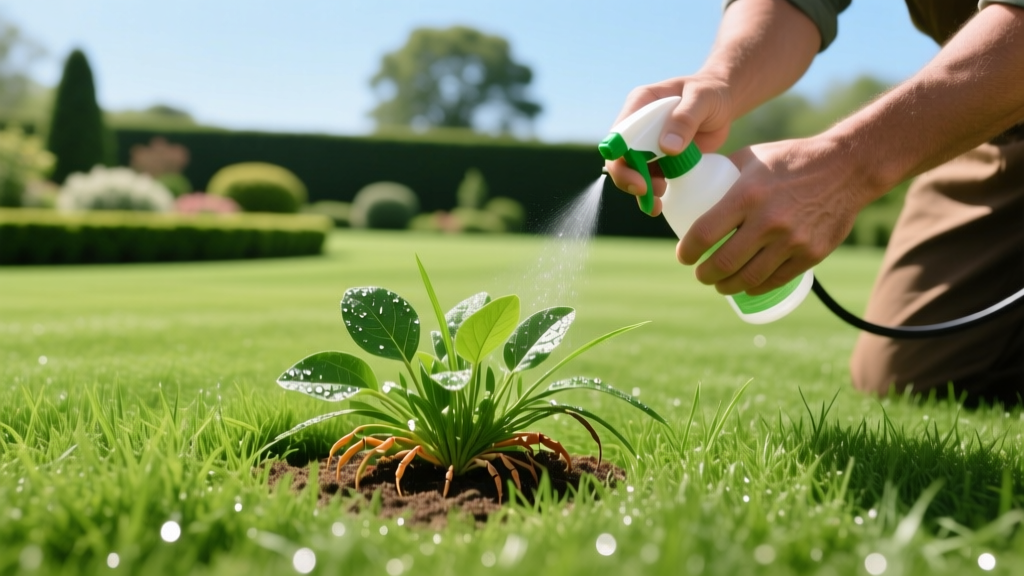
How to Destroy Crabgrass: Targeted Spot-Treatment Guide
The Biology of the Invasion: Why Spot-Treatment Fails
Crabgrass (Digitaria sanguinalis and Digitaria ischaemum) is an annual weed that exploits thin turf, compacted soil, and high heat. Most homeowners fail to destroy crabgrass because they treat it too late or use the wrong active ingredient for the plant's current growth stage. Crabgrass develops in distinct "tiller" stages. At the 1- to 2-tiller stage, the plant is highly susceptible to post-emergent herbicides. Once it reaches the 5- tiller stage and begins producing seedheads in late July, its waxy leaf cuticle thickens, and its vascular system prioritizes seed production over nutrient transport, making chemical absorption incredibly difficult.
Smooth vs. Hairy Crabgrass: Smooth crabgrass (D. ischaemum) has hairless leaves and stems, thriving in compacted, low-nutrient soil. Hairy crabgrass (D. sanguinalis) features distinct hairs on the leaf blades and sheaths, and prefers slightly more fertile, disturbed areas. Both are destroyed using the same chemical protocols, but hairy crabgrass typically emerges 2 to 3 weeks earlier in the spring.
The Chemistry of Destruction: Selecting Your Herbicide
To effectively spot-treat crabgrass without harming your surrounding turf, you must select a selective post-emergent herbicide. The two industry standards are Quinclorac and Fenoxaprop-p-ethyl. As of 2026, generic quinclorac formulations have become highly accessible to homeowners through online turf suppliers, dropping the cost per 1,000 square feet to roughly $1.50.
| Active Ingredient | Best Use Case | Turf Safety | Est. Cost (per 1k sq ft) |
|---|---|---|---|
| Quinclorac (e.g., Drive XLR8, Ortho WeedClear) | 1- to 3-tiller stage. Also suppresses broadleaf weeds. | Safe for Fescue, KBG, Bermuda, Zoysia. Do not use on St. Augustine or Centipede. | $1.50 - $2.00 |
| Fenoxaprop-p-ethyl (e.g., Acclaim Extra) | Larger, multi-tiller crabgrass. Excellent mid-summer rescue treatment. | Safe for cool-season grasses and Zoysia. Do not use on Bermuda or St. Augustine. | $3.00 - $4.50 |
| Mesotrione (e.g., Tenacity) | Pre-emergent and early post-emergent (seedling stage only). | Safe for cool-season grasses and Centipede. Causes temporary bleaching of turf. | $5.00 - $7.00 |
According to the University of Minnesota Extension, Quinclorac acts as a synthetic auxin, causing rapid, uncontrolled growth that essentially tears the weed's vascular tissue apart. However, it requires a non-ionic surfactant (NIS) to penetrate the waxy leaf surface of mature crabgrass.
Step-by-Step Spot-Treatment Protocol
Do not use a hose-end sprayer for spot treatments. The lack of precision leads to herbicide waste and potential turf burn. Use a 1-gallon or 2-gallon handheld pump sprayer.
- Calculate the Mix Ratio: For a standard 39.6% Quinclorac concentrate (like Drive XLR8), the label rate is 0.367 fluid ounces per 1,000 square feet. For a 1-gallon pump sprayer targeting isolated patches, mix 0.5 fluid ounces of Quinclorac per gallon of water.
- Add the Surfactant: This is the most common failure point. Add a Non-Ionic Surfactant (NIS) at a 0.25% v/v rate. This equals roughly 1/2 teaspoon of surfactant per gallon of water. Never substitute dish soap; the degreasers in dish soap will strip the protective wax off your desirable turfgrass, causing chemical burn.
- Check Environmental Conditions: Apply only when temperatures are between 65°F and 85°F. Applying Quinclorac to Bermudagrass when temperatures exceed 90°F will cause severe, temporary phytotoxicity (yellowing) to the desirable turf.
- Execute the Spray: Spray the crabgrass until the leaves are wet, but not to the point of runoff. The goal is to keep the chemical on the leaf surface for absorption, not wash it into the soil.
- Observe the Rainfast Window: Quinclorac requires 2 hours to become rainfast. Fenoxaprop requires 4 hours. Do not irrigate your lawn for at least 24 hours post-application to maximize foliar absorption.
Edge Case: St. Augustinegrass and Centipedegrass
If you have St. Augustine or Centipede grass, Quinclorac and Fenoxaprop will severely damage or kill your lawn. Your only selective post-emergent option is Atrazine (for St. Augustine) applied in cooler weather, or spot-treating the crabgrass with a non-selective herbicide like Glyphosate using a precision wick-weeder, followed immediately by plugging and replanting the dead spots.
If you have St. Augustine or Centipede grass, Quinclorac and Fenoxaprop will severely damage or kill your lawn. Your only selective post-emergent option is Atrazine (for St. Augustine) applied in cooler weather, or spot-treating the crabgrass with a non-selective herbicide like Glyphosate using a precision wick-weeder, followed immediately by plugging and replanting the dead spots.
Troubleshooting: What to Expect After Application
Herbicide efficacy is not instantaneous. Understanding the visual degradation of the weed prevents the common mistake of reapplying too early and burning the surrounding lawn.
- Days 1-3: No visible changes. The synthetic auxin is disrupting cellular division at the meristems (growth points).
- Days 4-7: Leaf margins begin to yellow and curl. The stem near the soil line may turn a bruised purple or red.
- Days 8-14: Complete necrosis (browning) of the crabgrass. The plant collapses into the turf canopy.
- Failure Mode (Green but Stunted): If the crabgrass stops growing but remains green after 14 days, it was likely in the 5+ tiller stage. The root system survived the initial shock. You must execute a second application 14 to 21 days after the first.
"The single biggest mistake homeowners make with crabgrass is treating it in August. By late summer, the plant has already produced thousands of seeds and its biological focus is entirely on reproduction, making it highly resistant to systemic herbicides. The battle is won in May and June."
— Turfgrass Management Principles, Rutgers University (NJAES)
The Mandatory Follow-Up: Closing the Canopy
Destroying the weed is only 50% of the job. Crabgrass requires sunlight hitting bare soil to germinate. If you kill a 6-inch patch of crabgrass, you now have a 6-inch patch of bare soil primed for the next flush of seeds.
Immediately after the crabgrass turns brown, rake out the dead debris. If it is early summer (before August 15th in most northern zones), overseed the bare spot with a fast-germinating perennial ryegrass or tall fescue blend. Apply a starter fertilizer (high in phosphorus, such as a 18-24-12 NPK ratio) to force rapid canopy closure. If it is late summer, apply a granular pre-emergent containing Prodiamine or Dithiopyr (Dimension) to the bare spot to create a chemical barrier that prevents any remaining crabgrass seeds in the soil seedbank from germinating the following spring.
By combining precise tiller-stage identification, chemically sound spot-treatments with proper surfactants, and immediate canopy closure, you can systematically eradicate crabgrass without resorting to expensive, lawn-wide chemical renovations.

