
Lawn Care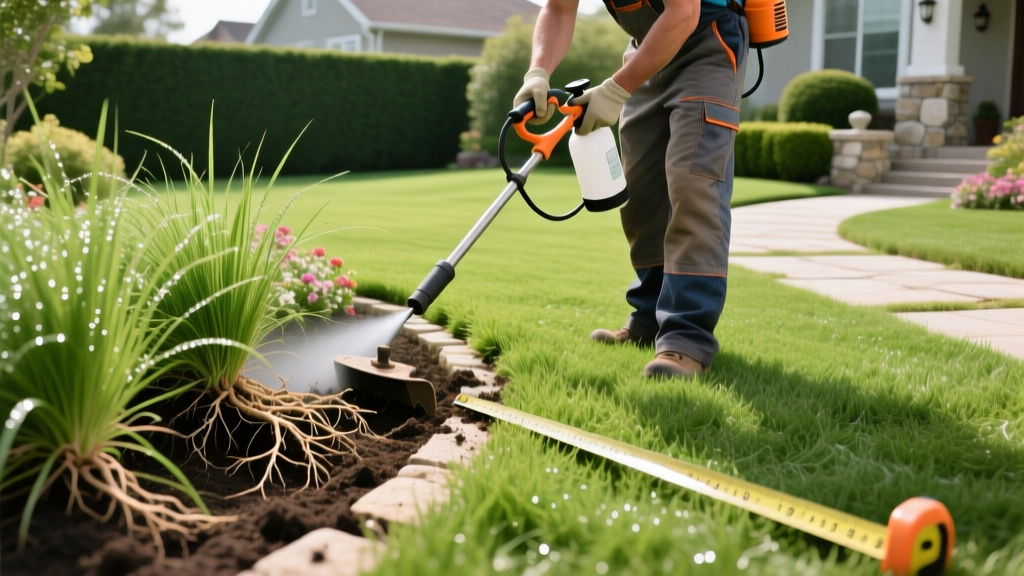
Step-by-Step Devil Grass Maintenance and Containment Procedures
The Dual Nature of Devil Grass (Cynodon dactylon)
In turf management circles, Cynodon dactylon—commonly known as Bermudagrass—frequently earns the colloquial moniker "devil grass." This nickname stems from its aggressive, nearly indestructible network of above-ground stolons and below-ground rhizomes. While these creeping structures make devil grass an exceptionally durable, traffic-tolerant lawn for warm-season climates, they also make it a notorious invader of adjacent flower beds, hardscapes, and neighboring cool-season lawns. According to the NC State TurfFiles database, hybrid devil grass varieties like Tifway 419 and TifTuf can spread laterally by up to 6 feet in a single growing season if left uncontained.
Maintaining devil grass requires a shift in perspective: you are not just growing a lawn; you are managing an aggressive groundcover. The following step-by-step procedures outline the exact agronomic practices, physical barriers, and chemical protocols required to maintain a premium devil grass lawn in 2026 while keeping its invasive tendencies strictly in check.
Phase 1: Rhizome Containment and Perimeter Edging
Before focusing on turf density, you must establish physical boundaries. Standard plastic landscape edging (typically 3 to 4 inches deep) is entirely ineffective against devil grass rhizomes, which will easily penetrate or grow beneath shallow barriers.
⚠️ Critical Containment Specification:
Install a high-density polyethylene (HDPE) rhizome barrier with a minimum thickness of 60 mil and a depth of 24 inches. Leave exactly 1.5 inches of the barrier exposed above the soil grade to block surface stolons. In 2026, professional-grade 24-inch HDPE barrier materials cost approximately $3.50 to $4.25 per linear foot.
Install a high-density polyethylene (HDPE) rhizome barrier with a minimum thickness of 60 mil and a depth of 24 inches. Leave exactly 1.5 inches of the barrier exposed above the soil grade to block surface stolons. In 2026, professional-grade 24-inch HDPE barrier materials cost approximately $3.50 to $4.25 per linear foot.
Installation Procedure
- Trenching: Use a motorized bed edger or a flat spade to dig a 4-inch wide trench along the entire perimeter where the lawn meets garden beds or hardscapes.
- Barrier Placement: Drop the 24-inch HDPE roll into the trench. Ensure the top edge sits 1.5 inches above the finished soil line.
- Backfilling and Tamping: Backfill the trench with native soil, tamping it down every 4 inches with a hand tamper to eliminate air pockets that rhizomes could exploit.
- V-Notch Trimming: Cut a V-notch into the top of the barrier at 45-degree angles near corners to prevent the plastic from cracking under UV exposure and thermal expansion.
Phase 2: Precision Mowing Protocols
Devil grass thrives on frequent, low mowing. The ideal cutting height depends entirely on whether you are growing a common seed variety or a sterile hybrid. Mowing too high results in a spongy, thatch-prone lawn; mowing too low with the wrong equipment causes severe scalping and soil exposure.
Mowing Height and Equipment Matrix
| Grass Variety | Target Height | Required Mower Type | Mowing Frequency (Peak Summer) |
|---|---|---|---|
| Common Devil Grass (Seed) | 1.5" – 2.5" | Rotary (Sharp high-lift blade) | Every 5–7 days |
| Hybrid (Tifway 419, Celebration) | 0.5" – 1.25" | Reel Mower (5 to 11 blades) | Every 2–3 days |
| Dwarf Hybrid (TifSport, MS-22) | 0.25" – 0.75" | Precision Greens Reel | Daily to every 2 days |
💡 Pro Tip: Reel Mower Investment
If you are maintaining hybrid devil grass, a front-throw reel mower (such as the McLane 20" or TruCut H-20) is mandatory. Rotary mowers cannot cleanly cut grass below 1.0 inch. Expect to invest between $1,400 and $1,800 for a reliable residential reel mower in 2026. Sharpen the reel and bedknife annually using a professional backlapping service to prevent tearing the leaf tips, which invites dollar spot fungus.
If you are maintaining hybrid devil grass, a front-throw reel mower (such as the McLane 20" or TruCut H-20) is mandatory. Rotary mowers cannot cleanly cut grass below 1.0 inch. Expect to invest between $1,400 and $1,800 for a reliable residential reel mower in 2026. Sharpen the reel and bedknife annually using a professional backlapping service to prevent tearing the leaf tips, which invites dollar spot fungus.
Phase 3: High-Output Fertilization Schedule
Because devil grass grows aggressively and is mowed frequently, it extracts massive amounts of nitrogen from the soil profile. The Clemson Home & Garden Information Center recommends applying 3.0 to 5.0 pounds of actual nitrogen per 1,000 square feet annually. However, dumping high-nitrogen synthetic fertilizers all at once causes explosive, weak top-growth that exacerbates thatch accumulation.
Annual Nutrient Blueprint
- Spring Green-Up (April/May): Apply a 30-0-10 slow-release polymer-coated urea (e.g., Polymer-Coated Urea 44-0-0 blended with potash) at 0.75 lbs of N per 1,000 sq ft. This feeds the root system as soil temperatures cross 65°F.
- Peak Summer (June–August): Switch to a 15-0-15 or 16-4-8 formulation containing 50% slow-release nitrogen. Apply 1.0 lb of N per 1,000 sq ft every 30 days. The higher potassium (K) content is critical for drought tolerance and stolon rigidity.
- Color Enhancement without Surge Growth: If the lawn looks pale but is growing too fast to manage, apply a liquid chelated iron (Fe-EDDHA) spray at 4 oz per 1,000 sq ft. This darkens the turf canopy within 48 hours without triggering the need for extra mowing.
- Fall Hardening (September): Apply a 0-0-60 (Muriate of Potash) or sulfate of potash application at 1.0 lb of K2O per 1,000 sq ft to increase cellular sap concentration, improving winter freeze survival.
Phase 4: Thatch Management and Core Aeration
Devil grass produces lignin-heavy stolons that decompose slowly. When the thatch layer exceeds 0.5 inches, water penetration drops by up to 40%, and the lawn becomes highly susceptible to gray leaf spot and root-feeding nematodes.
The Verticutting Protocol
Do not use a standard power rake for devil grass; it will tear the rhizomes out of the soil. Instead, use a dedicated verticutter with fixed, vertically oriented blades.
- Set the verticutter blades to a depth of exactly 1/4 inch to 3/8 inch. The goal is to slice the thatch mat and sever surface stolons, not to dig into the soil.
- Run the machine in two perpendicular directions (North-South, then East-West).
- Rake and remove all pulled debris immediately. Leaving the debris on the lawn will smother the crown and invite fungal pathogens.
- Follow verticutting immediately with a heavy irrigation cycle and a light application of 10-10-10 starter fertilizer to stimulate lateral recovery.
Phase 5: Selective Weed Control and Pest Management
Devil grass is highly sensitive to certain herbicide active ingredients, particularly during high-temperature summer stress. Misapplication can cause severe phytotoxicity, resulting in yellowing and stunted growth for weeks.
🚫 Herbicide Warning:
Avoid using standard 2,4-D amine formulations when daytime temperatures exceed 85°F. The ester and amine forms of 2,4-D will volatilize and burn devil grass foliage. Instead, use a WG (Water Dispersible Granule) formulation like Celsius WG (thiencarbazone, iodosulfuron, dicamba), which is explicitly labeled safe for Bermudagrass even in high heat.
Avoid using standard 2,4-D amine formulations when daytime temperatures exceed 85°F. The ester and amine forms of 2,4-D will volatilize and burn devil grass foliage. Instead, use a WG (Water Dispersible Granule) formulation like Celsius WG (thiencarbazone, iodosulfuron, dicamba), which is explicitly labeled safe for Bermudagrass even in high heat.
Pre-Emergent and Post-Emergent Strategy
- Pre-Emergent (Spring & Fall): Apply Prodiamine 65 WDG (Barricade) at a rate of 1.15 lbs per acre (approx. 0.4 oz per 1,000 sq ft) when soil temperatures hit 55°F in early spring, and again in early fall to prevent Poa annua. Note: Prodiamine will inhibit root development, so do not apply if you plan to overseed cool-season ryegrass for winter color within the next 4 months.
- Post-Emergent Grass Weeds: For crabgrass and dallisgrass outbreaks, use Quinclorac (Drive XLR8) at 0.75 oz per 1,000 sq ft, mixed with a high-quality methylated seed oil (MSO) surfactant to ensure cuticle penetration.
Troubleshooting: Eradicating Devil Grass from Garden Beds
Even with a 24-inch HDPE barrier, a single stolon can blow in via wind or be transported by lawn equipment. Once devil grass establishes in a mulched garden bed, hand-pulling is futile; any 1-inch fragment of rhizome left in the soil will regenerate a new plant within 14 days.
According to the UC Statewide IPM Program, the most effective eradication method for escaped devil grass in non-turf areas is a targeted glyphosate wipe. Mix a 5% solution of glyphosate (using a 41% concentrate) and apply it using a sponge-tipped weed wiper or a paintbrush directly onto the devil grass leaves. This prevents herbicide drift from damaging the roots of adjacent ornamental shrubs and perennials. Repeat the application 14 days later if any green tissue re-emerges from the rhizome nodes.
Summary of Annual Maintenance Costs
Budgeting for a premium devil grass lawn requires accounting for its high-input nature. For a standard 5,000 sq ft lawn in 2026, expect the following annual baseline costs:
- Fertilizer & Soil Amendments: $180 – $250
- Herbicides (Pre & Post): $120 – $160
- Reel Mower Maintenance (Sharpening/Adjustment): $85 – $150
- Annual Verticutting/Aeration (Equipment Rental or Pro Service): $200 – $350
By adhering to these strict containment and agronomic protocols, you can harness the durability and beauty of devil grass while neutralizing the invasive traits that earned it its infamous name.

