
Lawn Care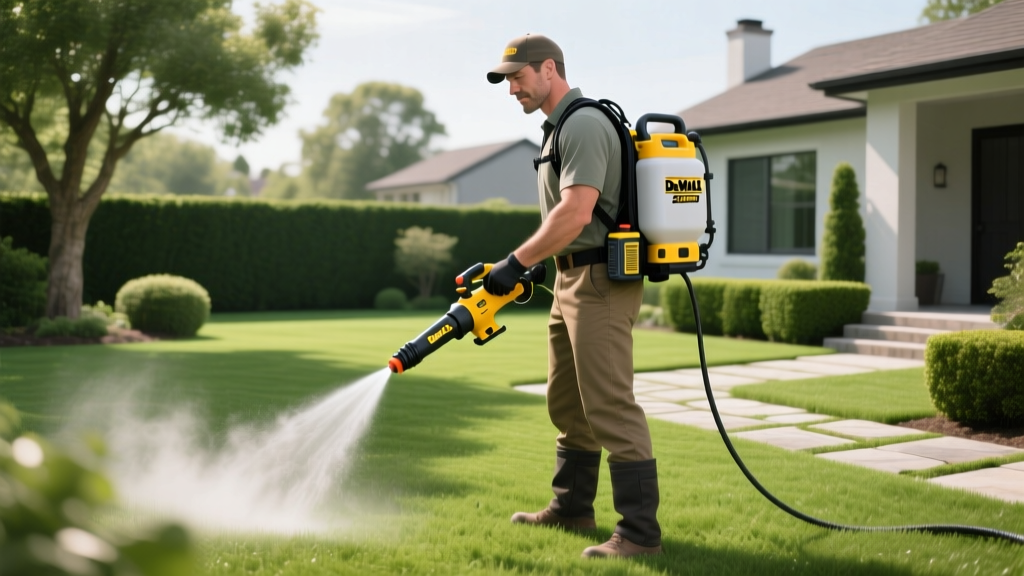
DeWalt 20V Backpack Sprayer Review: Specs, Run Time & Maintenance
Manual pump sprayers cause shoulder fatigue, and gas-powered alternatives require constant fuel stabilization and emit deafening noise. The DeWalt 20V MAX Backpack Sprayer (Model DCPS520) bridges this gap by leveraging a high-torque electric diaphragm pump to deliver consistent pressure without the physical exertion or exhaust fumes. For lawn care professionals and serious homeowners managing large properties, transitioning to a battery-operated sprayer fundamentally changes application efficiency. This guide breaks down the exact technical specifications, real-world battery run times, and the strict maintenance protocols required to keep the DCPS520 operational for years.
DeWalt DCPS520 Technical Specifications & Performance
Understanding the physical limits of the DCPS520 is critical before loading it with expensive herbicides or liquid fertilizers. Unlike manual sprayers that suffer from pressure decay as you spray, the DeWalt's electric motor maintains a steady baseline pressure until the tank is empty or the battery depletes.
| Specification | DCPS520 Data | Real-World Application Impact |
|---|---|---|
| Tank Capacity | 4.0 Gallons (15.1 Liters) | Covers approx. 3,000 - 4,000 sq ft per fill depending on nozzle GPM. |
| Max Pressure | 60 PSI | Sufficient for most liquid herbicides; lacks the 100+ PSI needed for tall tree foliar feeding. |
| Flow Rate | Up to 1.0 GPM | Allows for rapid application of systemic grub control products. |
| Wand Length | Telescoping up to 42 inches | Reduces bending and keeps spray drift away from the operator's lower body. |
| Empty Weight | 12.5 lbs | Heavier than manual plastic sprayers due to the internal motor and battery housing. |
Battery Life and the 20V MAX Ecosystem
The DCPS520B is sold as a bare tool (approx. $229), while the DCPS520M1 kit (approx. $329) includes a 4.0Ah battery (DCB240) and a standard charger. The sprayer's brushless motor is highly efficient, but run time is directly correlated to the pressure setting and the battery's amp-hour (Ah) rating.
Run Time Matrix:
- 2.0Ah Battery: ~4 to 5 full tanks (Best for spot-treating weeds under 1,000 sq ft).
- 4.0Ah Battery (Kit standard): ~12 to 14 full tanks (Ideal for full-property pre-emergent applications).
- 5.0Ah+ Battery (e.g., DCB205): ~16 to 18 full tanks (Recommended for commercial lawn routes).
Because the sprayer draws peak amperage only when the trigger is engaged and the pump is pressurizing, intermittent spraying (walking between treatment zones) extends the battery life significantly beyond continuous discharge tests. Always carry a secondary charged battery in your truck or cart if you are spraying more than 15 gallons in a single session.
Maintenance Protocol: Extending the Lifespan of Your DCPS520
The most common cause of failure in electric backpack sprayers is chemical crystallization inside the diaphragm pump and the degradation of rubber seals. According to EPA's Safe Pest Control guidelines, proper equipment decontamination prevents cross-contamination and protects the environment. Follow this exact post-use protocol to prevent catastrophic pump failure.
Step-by-Step Post-Application Flush
- Depressurize: Turn off the unit and squeeze the wand trigger until the spray stops completely. This relieves pressure on the internal check valves.
- Triple Rinse: Fill the tank with 1 gallon of clean water. Agitate the tank manually to wash the interior walls. Spray the water through the wand until empty. Repeat this process twice.
- Inlet Strainer Check: Unscrew the main tank cap and lift out the yellow mesh inlet strainer. Rinse it under a high-pressure hose to remove any undissolved granular fertilizer or wettable powder clumps.
- Pump Lubrication: Every 10 uses, add 2 ounces of clean water mixed with a few drops of silicone-based pump lubricant into the tank and spray it through the system to condition the internal diaphragm.
Winterizing and O-Ring Care
Storing the DCPS520 in an unheated garage during winter will freeze residual water inside the pump housing, cracking the plastic manifold. Furthermore, the rubber O-rings at the wand connections and tank cap will dry out and leak.
Critical Warning: Never use petroleum jelly (Vaseline) or WD-40 on the sprayer's O-rings. Petroleum distillates cause Viton and EPDM rubber to swell, soften, and ultimately disintegrate, leading to high-pressure leaks. Only use 100% silicone grease.
Winterization Steps:
- Disconnect the wand and hose from the main tank.
- Pour 1 quart of RV/Marine Antifreeze (propylene glycol) into the tank. Do not use automotive antifreeze (ethylene glycol), which is highly toxic and illegal to spray onto soil.
- Turn on the sprayer and pulse the trigger until pink antifreeze exits the wand tip, ensuring the pump and hose are fully protected against freezing.
- Apply a thin bead of silicone grease to the main tank cap O-ring and the wand quick-connect fittings.
- Store the unit indoors, and remove the lithium-ion battery, storing it at room temperature (approx. 68°F) to prevent cold-weather cell degradation.
DeWalt vs. Manual and Gas-Powered Alternatives
When selecting equipment for a seasonal lawn care program, comparing the DCPS520 against traditional options highlights where the investment makes sense. Consult DeWalt's official support and manual repository for exact replacement part diagrams when comparing component longevity.
| Feature | DeWalt DCPS520 (20V Electric) | Chapin 4-Gal (Manual Pump) | Echo PB-770T (Gas Backpack) |
|---|---|---|---|
| Average Price | $229 (Bare) / $329 (Kit) | $65 - $85 | $600 - $750 |
| Noise Level | ~65 dB (Quiet hum) | 0 dB (Silent) | ~95 dB (Requires ear protection) |
| Pressure Consistency | Constant 60 PSI | Decays from 40 to 15 PSI | Constant 100+ PSI |
| Maintenance Burden | Low (Rinse, O-ring grease) | Medium (Pump handle grease) | High (Fuel stabilizer, spark plugs, carb rebuilds) |
| Best Use Case | Suburban lawns, noise-restricted HOAs | Small garden beds, spot weeding | Commercial acreage, tall tree spraying |
Common Failure Modes and Troubleshooting
Even with rigorous maintenance, electric sprayers encounter operational hiccups. Use this diagnostic framework to resolve issues without immediately ordering replacement parts.
- Symptom: Motor hums, but no liquid exits the wand.
Cause: Vapor lock or dry pump diaphragm.
Fix: Tip the sprayer forward at a 45-degree angle to submerge the internal inlet port in liquid. Squeeze the trigger for 5 seconds to allow gravity to prime the pump. - Symptom: Sprayer pulses rapidly (surging pressure).
Cause: Partially clogged nozzle tip or kinked internal hose.
Fix: Remove the brass nozzle tip and inspect for debris. Use a soft-bristle toothbrush and warm water to clean the mesh filter inside the wand handle. Never use a metal wire to clear a nozzle, as this alters the spray pattern geometry. - Symptom: Liquid leaks from the top of the tank cap.
Cause: Over-tightened cap deforming the O-ring, or debris on the sealing surface.
Fix: Wipe the tank rim with a microfiber cloth. Hand-tighten the cap only until it meets resistance; the internal pressure will create the seal. Do not use wrenches on the plastic cap.
Final Verdict: Who Should Buy the DeWalt 20V Backpack Sprayer?
The DeWalt 20V MAX Backpack Sprayer (DCPS520) is an elite tool for homeowners managing 0.5 to 2-acre properties and lawn care operators working in noise-sensitive residential neighborhoods. The elimination of manual pumping reduces operator fatigue, allowing for more precise, even strides that prevent herbicide overlap and turf burn. While the initial investment is higher than a manual pump sprayer, the time saved and the consistency of the 60 PSI application rate yield a rapid return on investment. If you already own DeWalt 20V power tools, purchasing the bare tool (DCPS520B) and utilizing your existing high-capacity batteries makes this an undeniable upgrade for your seasonal lawn care arsenal.

