
Lawn Care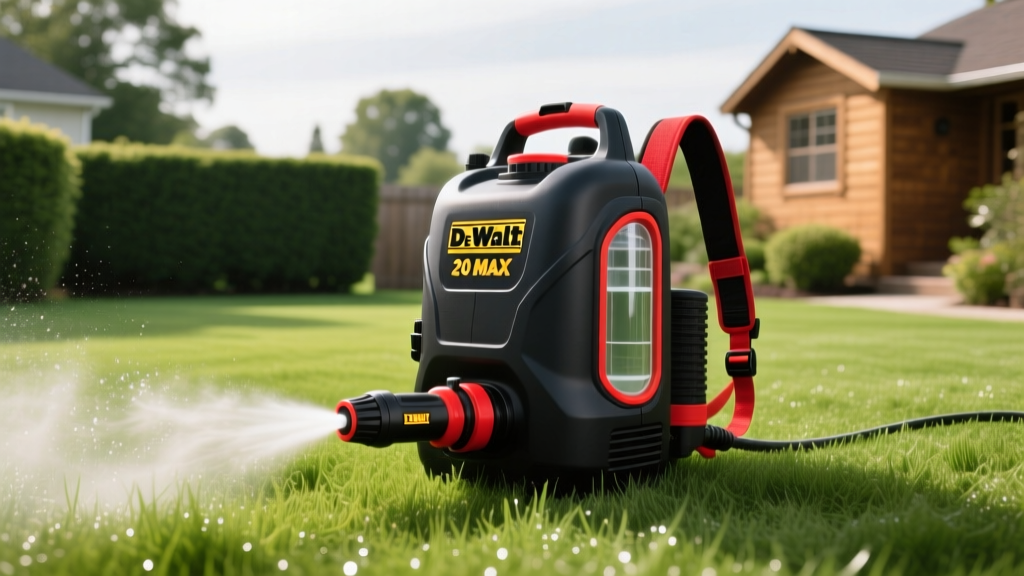
DeWalt Backpack Sprayer Review: 20V MAX 4-Gallon Lawn Care Guide
The Shift to Cordless: DeWalt DCSP538 Overview
Manual pump sprayers inherently suffer from pressure decay. As you spray, the PSI drops from 40 down to 15, resulting in uneven droplet sizes and chemical pooling that burns turf. The DeWalt 20V MAX 4-Gallon Backpack Sprayer (Model DCSP538) solves this by utilizing a battery-powered diaphragm pump that maintains a constant, adjustable pressure output from the first drop to the last. For lawn care professionals and serious homeowners managing half-acre to two-acre properties, eliminating the physical fatigue of manual pumping translates directly to faster application times and more precise herbicide calibration.
As of 2026, the DCSP538 remains a dominant force in the cordless outdoor power equipment (OPE) market. Priced at approximately $189 for the bare tool (DCSP538B) and $299 for the kit (DCSP538T1) including a 4.0Ah battery and charger, it represents a significant investment over a $60 manual Chapin sprayer. This guide breaks down the technical realities, calibration protocols, and critical maintenance routines required to maximize the lifespan of this equipment.
Technical Specifications & Output Metrics
Understanding the hardware limits is essential before mixing expensive chemicals like mesotrione or prodiamine. The DeWalt unit is built around a 12V DC diaphragm pump (stepped up via the 20V MAX battery platform) designed for continuous duty cycles.
| Specification | DeWalt DCSP538 Metric | Lawn Care Implication |
|---|---|---|
| Tank Capacity | 4 Gallons (15.1 Liters) | Covers approx. 4,000 sq ft at 1 GPA standard rate. |
| Max Pressure | 40 PSI (Adjustable Dial) | Sufficient for flat fan and cone nozzles; too low for soil injection. |
| Flow Rate | Up to 1.2 GPM | Allows for rapid tank emptying when broadcasting liquid fertilizers. |
| Hose Length | 33 Feet (Coiled Polyurethane) | Reaches deep into backyard beds without dragging the tank. |
| Wand Length | 19" to 33" (Telescoping) | Telescoping feature prevents bending when spraying low turf. |
| Empty Weight | 11.5 lbs | Lighter than gas alternatives, but heavy when full (approx. 45 lbs). |
Nozzle Selection & PSI Calibration for Lawn Chemicals
The most common failure mode for DIY lawn care is not the sprayer itself, but the mismatch between nozzle type, PSI, and chemical requirement. The DeWalt sprayer features a variable pressure dial on the handle, which is a massive advantage over fixed-output cordless competitors.
Post-Emergent Herbicides (e.g., Trimec, SpeedZone)
Broadleaf herbicides require medium to coarse droplets to ensure the chemical sticks to the leaf cuticle without drifting onto ornamental beds.
- Nozzle: Flat Fan (110-degree angle, such as TeeJet TT11004).
- PSI Setting: 20 to 25 PSI on the DeWalt dial.
- Walk Speed: 3 feet per second.
Foliar Fertilizers & Systemic Fungicides (e.g., Azoxystrobin)
Fungicides and liquid iron require thorough canopy penetration and finer droplets to coat the grass blade evenly.
- Nozzle: Hollow Cone (such as TeeJet TXR8004VK).
- PSI Setting: 35 to 40 PSI (Maximum setting on the DCSP538).
- Application Note: The higher pressure creates the turbulence necessary to push the fungicide down to the crown and soil line where brown patch and dollar spot pathogens reside.
Calibration Warning: According to the EPA's pesticide application guidelines, applying more than the labeled rate is a federal violation and will damage turf. Always use the 1/128th acre method to calibrate your DeWalt sprayer. Mark out a 340 sq. ft. area (18.5 x 18.5 ft), spray it using your target walking speed, and catch the output in a measuring cup. The ounces captured directly equals the Gallons Per Acre (GPA) your sprayer is delivering.
DeWalt Backpack Sprayer vs. Manual & Gas Alternatives
How does the 20V MAX platform stack up against traditional equipment? Below is a functional comparison based on 2026 market offerings.
| Feature | DeWalt 20V MAX (DCSP538) | Manual Pump 4-Gal (e.g., Chapin) | Gas-Powered (e.g., Echo PE-265) |
|---|---|---|---|
| Pressure Consistency | Perfectly constant via dial | Degrades rapidly; requires re-pumping | Constant, but fluctuates with engine RPM |
| Noise Level | ~65 dB (Low hum) | 0 dB (Silent) | ~95 dB (Requires hearing protection) |
| Maintenance | Battery care, O-ring lubrication | Pump seal replacement, handle grease | Spark plugs, fuel stabilizer, carb cleaning |
| Agitation | None (Requires manual shaking) | None (Requires manual shaking) | Yes (Bypass valve agitates tank) |
| Upfront Cost | $189 - $299 | $45 - $70 | $450 - $600 |
The Agitation Deficit: The DeWalt lacks a mechanical bypass agitator. When spraying wettable powders (WP) or suspension concentrates (SC) like Prodiamine 65 WDG, the material will settle at the bottom of the tank. You must physically shake the backpack every 10-15 minutes during application to prevent clogging the wand filter and ensuring an even mix.
Critical Maintenance: Protecting the Diaphragm Pump
The diaphragm pump is the heart of the DCSP538. Unlike piston pumps found in manual sprayers, diaphragm pumps use a flexible rubber membrane to move fluid. If this membrane dries out, cracks, or freezes, the pump housing will split, resulting in an $80+ replacement part.
Step-by-Step Winterization Protocol
Do not store the DeWalt sprayer in an unheated garage over winter. Residual water trapped in the pump manifold will expand when frozen.
- Triple Rinse: Fill the tank with 1 gallon of clean water. Add 1 ounce of household ammonia to neutralize acidic herbicide residues. Spray the mixture through the wand until the tank is empty.
- Clear the Lines: Turn the sprayer on and hold the wand trigger open until the hose is completely empty and the pump runs dry for 3-5 seconds. This evacuates water from the 33-foot hose.
- Antifreeze Flush (Optional but Recommended): Pour 1 quart of RV/marine antifreeze (propylene glycol, never automotive ethylene glycol) into the tank. Spray it through the wand until pink fluid exits the nozzle. This coats the internal diaphragm and prevents freezing.
- O-Ring Lubrication: Unscrew the wand filter housing and the pump manifold fittings. Inspect the Viton and EPDM rubber O-rings. Apply a thin layer of 100% silicone grease.
Critical Warning: Never use petroleum-based lubricants like WD-40, Vaseline, or standard motor oil on sprayer O-rings. Petroleum degrades EPDM and Viton rubber, causing the seals to swell, turn to mush, and leak under pressure. Always use plumber's silicone grease, which is chemically inert to rubber and safe for pesticide application equipment.
Battery Ecosystem & Runtime Realities
The DeWalt DCSP538 is compatible with the entire 20V MAX lineup, but battery selection drastically alters your workflow. The sprayer's diaphragm pump draws approximately 4 to 6 amps under load depending on the PSI setting.
- 4.0Ah Battery (DCB240): Included in the standard kit. Yields approximately 4 to 5 full tanks (16-20 gallons) per charge at 30 PSI. Ideal for properties under 1 acre.
- 5.0Ah Battery (DCB205): The preferred choice for professionals. Yields 6 to 8 full tanks. The extra weight (1.4 lbs vs 1.1 lbs) is negligible when wearing the padded chest and waist straps.
- PowerStack Batteries (DCBP034 / DCB552): While physically compatible, the smaller PowerStack pouch cells may overheat during continuous 40 PSI operation. Stick to standard cylindrical lithium-ion packs for sustained thermal management.
Troubleshooting Common Failure Modes
Sprayer Pulses or Surges at the Nozzle
Cause: Air trapped in the pump manifold or a clogged inline wand filter. Fix: Lower the wand to the ground, set the PSI dial to maximum (40 PSI), and hold the trigger open for 15 seconds to force the air bubble out. If surging persists, unscrew the wand handle and clean the yellow mesh filter screen, which frequently catches undissolved WDG granules.
Pump Runs, But No Fluid Exits
Cause: The internal check valves are stuck open due to dried chemical residue, or the tank pickup tube is disconnected. Fix: Fill the tank with hot water and a drop of dish soap. Let it sit for 30 minutes to dissolve crystallized fertilizer salts (like ammonium sulfate) inside the pump head. Cycle the pump to flush the valves.
Hose Memory and Tangle Hazards
Cause: The 33-foot coiled polyurethane hose develops severe "memory" loops if stored tightly coiled in a bucket. Fix: Store the sprayer hanging by its top handle on a heavy-duty wall hook. Let the hose hang straight down to the floor. Gravity will naturally pull the coils out over 48 hours, extending the hose's lifespan and preventing kinks that restrict flow.
Upgrading to the DeWalt 20V MAX backpack sprayer eliminates the physical toll of manual pumping and guarantees the precise pressure required for modern lawn chemicals. By adhering to strict nozzle calibration and executing proper diaphragm pump winterization, the DCSP538 will deliver flawless, burn-free turf applications for years to come.

