
Lawn Care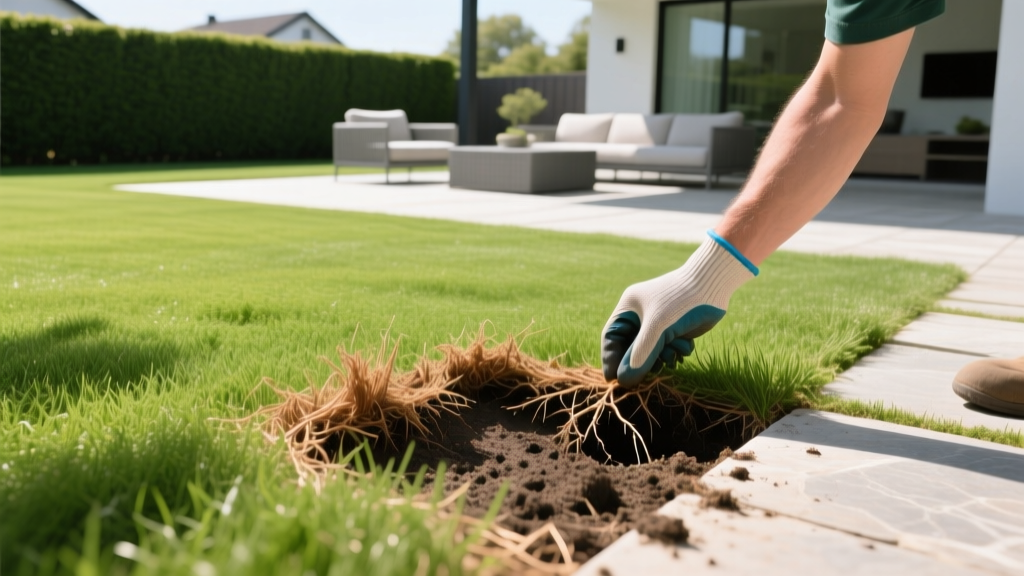
Diagnosing and Fixing Dead Grass Patches: Rescue Guide
The Tug Test: Dead vs. Dormant Grass
Before purchasing seed or chemicals, you must confirm whether your lawn is actually dead or merely dormant. Cool-season grasses like Kentucky Bluegrass and Tall Fescue naturally enter dormancy during prolonged summer droughts or winter freezes, turning brown to conserve moisture. Warm-season grasses like Bermuda and Zoysia do this in late fall.
Perform the Tug Test to differentiate the two. Grab a handful of brown grass at the base and pull firmly. If the grass resists and the blades break off, the roots are still anchored and alive—the grass is likely dormant or suffering from a foliar disease. If the grass pulls up easily like a loose carpet, exposing the soil beneath, the root system has been severed. This is a primary indicator of white grub infestation or severe root-rot fungus.
Symptom Diagnosis Matrix: What Killed Your Grass?
Dead grass patches rarely occur at random. They present specific visual clues that point directly to the underlying stressor. Use this diagnostic matrix to identify your exact problem before applying any rescue treatments.
| Visual Symptom | Primary Clue | Root Cause | Immediate Action |
|---|---|---|---|
| Irregular brown patches, turf rolls back like carpet | White, C-shaped larvae in top 2 inches of soil | White Grubs | Apply Trichlorfon (fast-kill) immediately |
| Circular brown rings, hourglass lesions on blades | Smoke-like mycelium visible in early morning dew | Brown Patch Fungus | Apply Azoxystrobin, halt evening watering |
| Dead center surrounded by a dark green outer ring | Located in high-traffic pet areas | Dog Urine Nitrogen Burn | Flush with water, apply gypsum, reseed |
| Footprints remain visible on turf for hours | Soil is hard, hydrophobic, and cracked | Severe Drought / Compaction | Core aerate, apply wetting agent, deep water |
Targeted Rescue Fixes by Root Cause
Once you have identified the culprit, generic lawn fertilizers will not fix the problem. In fact, applying high-nitrogen fertilizer to a fungal infection will accelerate the disease. You must deploy targeted interventions.
1. Grub and Insect Damage
If the tug test reveals grubs, you are dealing with the larvae of Japanese Beetles, June Bugs, or European Chafers. These pests chew through grassroots, severing the plant from its water supply.
- Curative Fix (Active Infestation): Apply a product containing Trichlorfon (e.g., Bayer Advanced 24 Hour Grub Killer Plus). This active ingredient works rapidly, killing grubs within 24 hours of contact. Expect to pay around $25 to $35 for a 10 lb bag covering 5,000 square feet. Water it in immediately with 0.5 inches of irrigation to move the chemical into the root zone.
- Preventative Fix (Future Protection): For long-term control, apply Chlorantraniliprole (e.g., Scotts GrubEx1) between April and early June. This takes 60-90 days to activate in the soil but provides residual control through the peak hatching season in late summer.
2. Fungal Diseases (Brown Patch and Dollar Spot)
Fungal pathogens thrive when nighttime temperatures stay above 65°F and grass blades remain wet for more than 12 hours. According to UC IPM guidelines on lawn management, altering your irrigation schedule is just as critical as chemical intervention.
- Chemical Rescue: Use a systemic fungicide containing Azoxystrobin (e.g., Scotts DiseaseEx) or Propiconazole (e.g., BioAdvanced Fungus Control). Azoxystrobin provides up to 28 days of residual protection and stops active lesions from expanding. Apply at the curative rate listed on the label, which is typically 2 to 4 times higher than the preventative rate.
- Cultural Fix: Shift your irrigation to run between 4:00 AM and 6:00 AM. This ensures the grass dries quickly once the sun rises. Never water in the evening.
⚠️ CRITICAL WARNING: Do not apply quick-release nitrogen fertilizers (like urea or ammonium sulfate) to patches suspected of fungal damage. The sudden flush of soft, succulent leaf tissue will provide an all-you-can-eat buffet for pathogens like Rhizoctonia solani, causing the dead patch to double in size within 48 hours.
3. Dog Urine Spots
Dog urine contains high concentrations of urea and salts. When deposited in a single spot, it creates a toxic nitrogen overload that burns the grassroots, leaving a dead center with a lush, dark green perimeter where the diluted urine acted as a fertilizer.
- Soil Flushing: Immediately flood the spot with 2 to 3 gallons of water to dilute the salts.
- Salinity Correction: Apply pelletized Gypsum (Calcium Sulfate) at a rate of 50 lbs per 1,000 square feet. As of 2026, a 40 lb bag of premium lawn gypsum averages $30 to $40. The calcium displaces the sodium salts in the soil profile, allowing them to be flushed away by subsequent watering.
Step-by-Step Patch Repair Protocol
Once the underlying pest, disease, or chemical issue is neutralized, you must physically repair the dead grass patches. Simply throwing seed over dead thatch will result in a 90% failure rate. Follow this exact protocol for optimal seed-to-soil contact.
- Excavate and Rake: Use a steel thatching rake to aggressively scratch the dead patch down to bare soil. Remove all dead organic matter. If the soil is compacted, use a manual step-aerator to punch holes 3 inches deep across the patch.
- Top-Dress: Apply a 1/4-inch layer of screened compost or a specialized lawn topdressing mix. This introduces beneficial microbes and retains moisture for the germinating seed.
- Select and Sow Seed: Choose a seed blend that matches your existing turf. For cool-season lawns, Turf-Type Tall Fescue (TTTF) is highly recommended for its deep root system and drought tolerance. Apply seed at a rate of 6 to 8 lbs per 1,000 square feet for patch repair. According to University of Minnesota Extension turfgrass experts, overseeding at slightly higher rates in patches helps crowd out emerging weeds.
- Tamp and Roll: Walk over the patch with flat-soled shoes or use a lightweight lawn roller to press the seed firmly into the compost layer. Seed must have physical contact with the soil matrix to draw moisture.
- Germination Watering Schedule: Water the patch lightly 3 times a day (morning, noon, and late afternoon) for 5 to 10 minutes each session. The goal is to keep the top 1 inch of soil constantly moist, not muddy. Once the grass reaches 1.5 inches tall, transition to deep, infrequent watering (1 inch per week).
When to Call a Professional
While most dead grass patches can be resolved with a $50 to $100 DIY investment in seed, topsoil, and targeted chemicals, certain scenarios require professional intervention. If your lawn features widespread necrotic ring spot, severe soil grading issues causing water pooling, or an active chinch bug infestation that has survived two rounds of chemical treatment, hire a licensed turf management company.
Professional lawn care services typically charge between $0.15 and $0.25 per square foot for comprehensive renovation, which includes commercial-grade aeration, slit-seeding, and starter fertilizer application. For a standard 5,000 square foot lawn, expect a complete professional rescue renovation to cost between $750 and $1,250.
'The most common mistake homeowners make when fixing dead patches is skipping the soil test. Spending $30 on a university lab soil test before reseeding can save you hundreds of dollars in wasted seed and fertilizer by revealing hidden pH imbalances or phosphorus deficiencies.' — Dr. Aaron Patton, Turfgrass Extension Specialist
Frequently Asked Questions
Can I just lay sod over dead grass patches?
No. Laying sod directly over dead grass and thatch creates an air gap that prevents the new sod roots from establishing in the native soil. You must rototill or heavily rake the dead grass away, level the bare soil, and then lay the sod so it sits flush with the surrounding healthy lawn.
How long does it take for a repaired patch to blend in?
With proper watering and a starter fertilizer (look for an N-P-K ratio like 18-24-12), Turf-Type Tall Fescue will germinate in 7 to 12 days. However, it will take 6 to 8 weeks of active growth and 2 to 3 mowing cycles for the patch's color and density to visually blend with the mature surrounding turf.

