
Lawn Care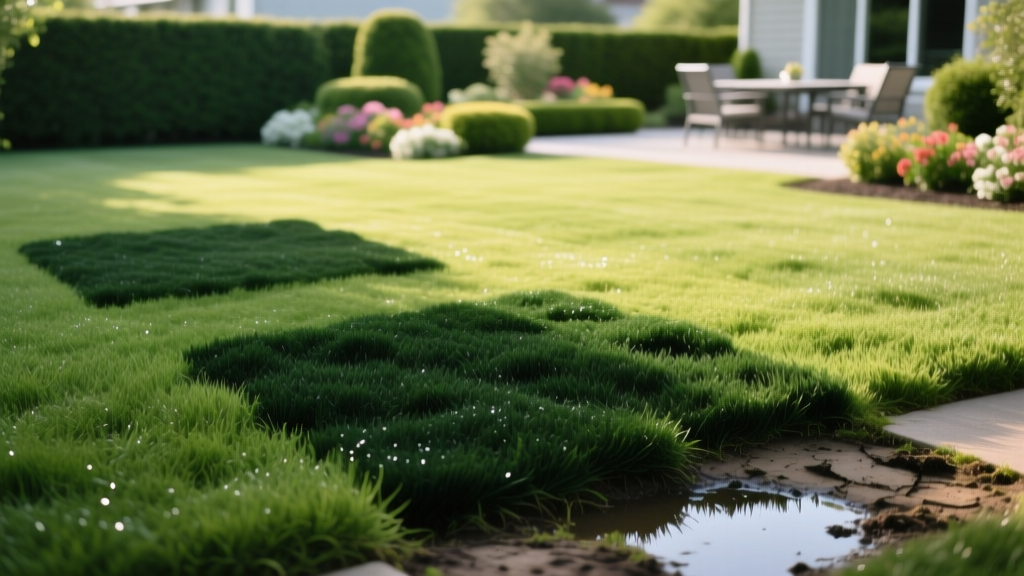
Diagnosing Grass Dark Green Patches: Causes and Fixes
The Agronomic Reality of Dark Green Patches
When homeowners spot grass dark green patches in an otherwise uniform lawn, the immediate assumption is often a localized disease. However, from a turfgrass pathology and soil science perspective, hyper-vigorous, dark green growth is almost never a pathogenic attack on the grass blades themselves. Instead, it is a visual indicator of a localized nitrogen surplus or a disruption in the soil's carbon-to-nitrogen (C:N) ratio. The grass is simply responding to an abundance of available ammonium or nitrate in a specific micro-zone.
Accurately diagnosing the source of this nitrogen surge is critical. Applying a fungicide to a nitrogen-overload problem will waste money and fail to correct the issue, while treating a fungal fairy ring with extra fertilizer will exacerbate the visual contrast. The following diagnostic framework isolates the four primary drivers of dark green turf patches and provides exact, actionable rescue protocols for each.
Rapid Diagnostic Matrix
Before purchasing any amendments, use this matrix to cross-reference the physical characteristics of your dark green patches. The shape, center health, and soil profile will immediately point to the underlying cause.
| Cause | Patch Shape & Pattern | Center Grass Health | Soil Profile & Smell | Primary Location |
|---|---|---|---|---|
| Fairy Ring Fungi | Perfect circles or arcs, expanding 2-6 inches yearly | Often dead or hydrophobic (Type I), or normal (Type II) | White, web-like mycelium; distinct mushroom smell | Open lawn areas, away from edges |
| Animal Urine | Irregular 6-12 inch spots with a 'green halo' edge | Frequently dead/burned in the exact center | Sharp ammonia odor if fresh; normal soil structure | Near fences, pathways, or preferred marking spots |
| Buried Organic Debris | Amorphous, jagged, or linear patches | Uniformly dark green and highly vigorous | Soil probes hit wood; smells like rich compost/decay | Near old tree stumps, former garden beds, or new construction zones |
| Spreader Overlap | Parallel stripes or grid-like intersecting lines | Uniformly dark green, no dead centers | Normal soil structure; possible salt crust on surface | Center of lawn where turning radius is tightest |
Cause 1: Fairy Ring Fungi (Basidiomycetes)
Fairy rings are caused by soil-inhabiting basidiomycete fungi, most notably Marasmius oreades and Chlorophyllum molybdites. These fungi do not attack the grass roots directly; rather, they decompose buried thatch and organic matter. As they break down complex carbon structures, they release immobilized nitrogen back into the soil profile, creating a hyper-fertilized dark green ring.
According to the American Phytopathological Society, fairy rings manifest in three distinct phases. Type II fairy rings present purely as dark green, fast-growing rings of grass without killing the turf. However, as the fungal mat thickens, it can become hydrophobic (repelling water), eventually transitioning into a Type I ring where the grass inside the circle dies from drought stress, leaving only the dark green outer ring alive.
Rescue Protocol for Fairy Rings
Eradicating the fungus entirely is nearly impossible without complete soil excavation, which is impractical for homeowners. The modern agronomic approach focuses on cultural masking and soil hydration.
- Break the Hydrophobic Mat: Perform deep-tine core aeration directly over the ring and 2 feet beyond its edge. Use tines that penetrate at least 4 to 6 inches to fracture the fungal mat.
- Apply a Surfactant: Treat the aerated area with a professional-grade wetting agent (such as Cascade Plus or Aquadex) at a rate of 2 to 3 ounces per 1,000 square feet. This forces water through the waxy fungal barrier.
- Mask the Contrast: To eliminate the visual contrast between the dark green ring and the surrounding lawn, apply a balanced, slow-release nitrogen fertilizer (like methylene urea) to the entire lawn at a rate of 0.5 to 0.75 lbs of actual nitrogen per 1,000 square feet. This brings the background turf up to the same color level as the fairy ring.
Cause 2: Canine Urine and Nitrogen Salts
Dog urine is highly concentrated in urea, a nitrogen-rich compound. When a dog urinates on the lawn, the urea rapidly converts to ammonium. The center of the spot receives a toxic, highly concentrated dose of nitrogen salts, which draws moisture out of the grass roots via osmosis, causing the center to burn and turn brown. However, the outer edges of the spot receive a diluted, non-toxic dose of nitrogen, acting as a potent liquid fertilizer and creating a distinct dark green halo.
The 12-Hour Urine Rescue Protocol
Once the center has turned brown, the tissue is dead and must be reseeded. However, if you catch the spot while it is entirely dark green (or to prevent future brown centers), immediate dilution is required.
- Immediate Flushing: Within 8 to 12 hours of the urination event, apply exactly 2 to 3 gallons of water directly to the spot using a watering can. This dilutes the urea concentration below the toxicity threshold (typically around 150 ppm) and pushes the nitrogen deeper into the soil profile.
- Calcium Sulfate Application: If the soil has become compacted by repeated salt deposits, apply pelletized gypsum (calcium sulfate) at a rate of 2 lbs per 100 square feet. The calcium ions displace the sodium and ammonium salts from the soil cation exchange sites, allowing them to be leached away.
- Overseeding: For spots that have already burned out, rake out the dead thatch, apply a starter fertilizer (high in phosphorus, e.g., 18-24-12), and overseed with a urine-tolerant perennial ryegrass or fescue blend.
Cause 3: Buried Construction Debris and Decaying Wood
In newly constructed homes or properties where trees were recently removed, dark green, amorphous patches often appear. This is caused by buried cellulose—stumps, roots, or construction lumber. Fungi and bacteria breaking down this wood require massive amounts of nitrogen. Initially, they rob the surrounding soil of nitrogen, causing temporary yellowing. However, once the wood is sufficiently decomposed, the microbial population dies off, releasing a massive, localized flush of mineralized nitrogen back into the soil.
Research from the University of Minnesota Turfgrass Science program highlights that organic matter decomposition fundamentally alters localized soil chemistry, creating micro-zones of extreme fertility that can persist for several growing seasons until the carbon source is fully exhausted.
Excavation and Soil Replacement
Fertilizer masking will not work here because the nitrogen release is continuous and unpredictable. The only permanent fix is physical removal.
- Probe the Soil: Use a 6-inch soil knife or a T-handled soil probe to map the perimeter of the dark green zone. You will feel resistance and pull up dark, fibrous, decaying wood matter.
- Excavate: Dig out the affected soil to a depth of 12 inches. Ensure all visible wood fragments larger than a pebble are removed.
- Backfill: Replace the excavated volume with a high-quality, screened topsoil blended with 20% compost. Tamp it down lightly to match the surrounding grade, and lay fresh sod or hydroseed immediately to prevent weed infiltration.
Cause 4: Spreader Overlap and Calibration Errors
If your dark green patches form parallel stripes, grid patterns, or sharp geometric lines, the cause is mechanical: human error during fertilizer application. Rotary spreaders throw fertilizer in a wide, uneven arc. If you do not use the 'edge guard' feature or fail to shut off the hopper before turning, the overlapping passes deposit double or triple the intended nitrogen rate.
Leaching and Future Calibration
To rescue a lawn suffering from fertilizer overlap, you must leach the excess salts before they burn the root zone.
- Deep Watering: Apply 1 to 1.5 inches of water over the affected area in a single cycle to push the excess nitrates below the 6-inch root zone. If your soil is heavy clay, split this into two applications spaced 4 hours apart to prevent surface runoff.
- The Tarp Calibration Test: To prevent future overlap, calibrate your spreader using a 10x10 foot tarp. Lay the tarp on the driveway, walk your normal speed while dispensing the product, and then weigh the granules collected on the tarp. Adjust the dial setting until the weight matches the manufacturer's recommended output for exactly 100 square feet.
Expert Troubleshooting Tip: The 'Pull' Test
If you are unsure whether a dark green patch is a fairy ring or a nitrogen spill, grab a handful of the dark green grass and pull. If the turf lifts easily with shallow, stunted roots, you are likely dealing with a Type I fairy ring where the fungal mat is restricting root growth and moisture. If the roots are deep, thick, and firmly anchored, the issue is a simple nitrogen surplus (urine, wood, or fertilizer).
Summary of Actionable Next Steps
Grass dark green patches are a symptom of localized soil chemistry imbalances, not a foliar disease. By mapping the shape of the patch, probing the soil for buried organics, and observing the health of the grass in the center of the anomaly, you can accurately isolate the cause. Stop applying blind fungicide treatments; instead, utilize targeted aeration for fairy rings, immediate dilution for animal urine, physical excavation for buried wood, and precise spreader calibration to maintain a uniform, healthy turf canopy.

