
Lawn Care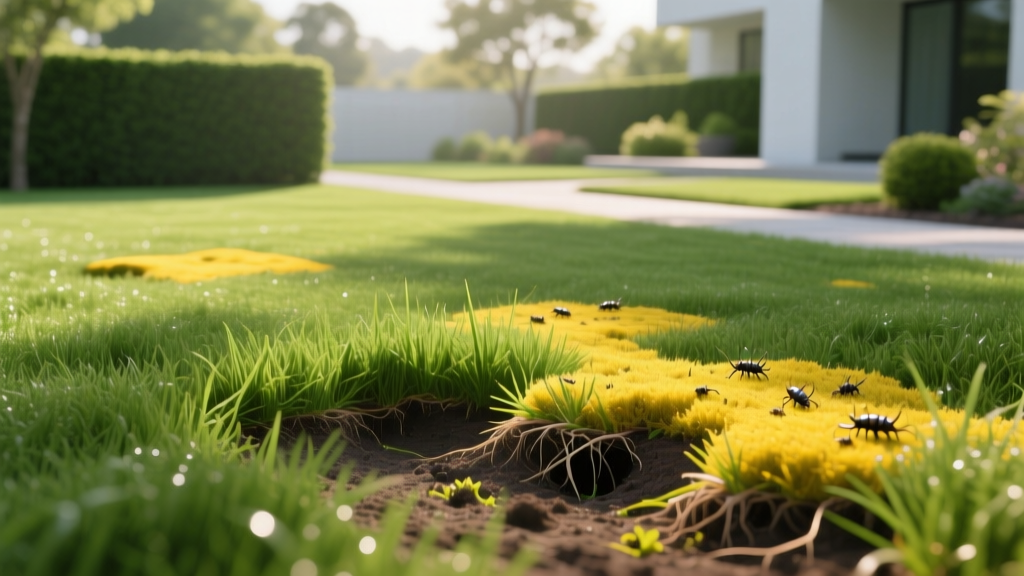
Why You Have Yellow Patches on Lawn and How to Fix Them Fast
The Diagnostic Matrix: Identifying the Root Cause
Yellow patches on lawn are not a single disease; they are a visual distress signal indicating root failure, chlorophyll degradation, or tissue necrosis. Applying the wrong treatment—such as throwing nitrogen fertilizer on a fungal infection—will accelerate turf death. Before purchasing any amendments, you must isolate the variable causing the chlorosis.
Use the following diagnostic matrix to cross-reference your lawn's visual symptoms with environmental conditions.
| Visual Pattern & Symptom | Time of Year / Conditions | The "Pull Test" Result | Primary Suspect |
|---|---|---|---|
| Irregular, sunken yellow-to-brown rings; grass pulls easily from soil. | Mid-summer; high humidity, night temps > 70°F. | Roots are rotted, dark, and shear off at the crown. | Fungal Pathogen (Brown Patch or Take-All Root Rot) |
| Yellowing starts at turf tips, turning straw-colored; irregular margins. | Hot, dry spells; often localized to sunny south-facing slopes. | Turf resists pulling; roots are intact but soil is hydrophobic. | Localized Dry Spot (Hydrophobic Soil) |
| Small, scattered yellow spots merging into larger dead zones; turf spongy. | Early summer to early fall; drought-stressed turf. | Turf pulls up like a loose carpet; roots are chewed off. | Subsurface Insects (White Grubs) |
| Perfectly circular, bright yellow patches with a dark green outer ring. | Anytime; highly localized to specific spots. | Roots are intact but burned; soil smells faintly of ammonia. | Canine Urine Burn (Urea/Salt Toxicity) |
Fungal Pathogens: The Moisture-Driven Destroyers
Fungal diseases are the most common cause of sudden yellow patches on lawn during humid months. Penn State Extension identifies Rhizoctonia solani (Brown Patch) as the primary culprit for cool-season grasses, while Gaeumannomyces graminis (Take-All Root Rot) devastates warm-season St. Augustine and Zoysia lawns.
CRITICAL MISTAKE: Do not apply high-nitrogen, fast-release fertilizers (like Urea or Ammonium Sulfate) to yellowing turf. Excess nitrogen fuels fungal mycelium growth and will turn a 3-foot yellow patch into a 10-foot dead zone within 48 hours.
Targeted Fungicide Rescue Protocol
To halt active fungal spread, you must use a systemic fungicide that penetrates the leaf blade and crown. Contact fungicides (like Chlorothalonil) only protect new growth and will not cure an active crown infection.
- Active Ingredient: Azoxystrobin (e.g., Heritage G, Scotts DiseaseEx) or Propiconazole (e.g., Banner MaxX).
- Application Rate: For Azoxystrobin granular, apply exactly 2.0 to 4.0 lbs per 1,000 sq. ft. using a rotary spreader.
- Watering In: Apply 1/8 inch of irrigation immediately after granular application to move the active ingredient into the thatch layer where the pathogen lives.
- Take-All Root Rot Specifics: If treating TARR in warm-season grasses, fungicides will fail if soil pH is above 6.5. Apply elemental sulfur at 1 lb per 1,000 sq. ft. to drop the pH to the 5.5–6.0 range, which suppresses the fungus naturally.
Insect Pests: The Subsurface Saboteurs
When yellow patches on lawn appear during drought stress, homeowners often assume the grass needs more water. However, if the damage is caused by Chinch Bugs (Blissus leucopterus) or White Grubs, watering will only accelerate the rot of the already-severed root systems.
The Coffee Can Float Test
According to University of Minnesota Extension, chinch bugs inject a salivary toxin that blocks water transport in the grass stem, causing rapid yellowing. To confirm their presence:
- Remove both ends of a metal coffee can.
- Push the can 2 inches into the soil at the margin where the yellowing turf meets the green, healthy turf (the "hot zone").
- Fill the can with water and wait 5 minutes.
- If more than 5-10 tiny, black-and-white insects float to the surface, you have a damaging infestation.
Insecticide Selection and Timing
For grubs, preventative treatments with Chlorantraniliprole (Acelepryn) must be applied in May or June. If you are seeing yellow patches in late summer, the grubs are already mature and feeding aggressively. You must use a curative trichlorfon product (e.g., Dylox), applied at 1.5 to 2.0 lbs of active ingredient per acre, watered in heavily to reach the 2-inch soil depth where the grubs are feeding.
Environmental & Chemical Stress: Salts and Compaction
Not all yellow patches on lawn are biological. Chemical burns and soil physics play a massive role in localized turf failure.
Dog Urine Burn (Urea Toxicity)
Dog urine contains high concentrations of urea and soluble salts. The nitrogen content is essentially a massive, localized overdose of fertilizer, while the salts dehydrate the root zone.
Myth Busting: Do not feed your dog tomato juice, baking soda, or commercial "lawn-saving" dietary supplements. Changing the dog's urine pH does not reduce the nitrogen load, which is the actual cause of the burn. The only effective rescue is physical dilution. If you catch the dog in the act, immediately pour 2 gallons of water over the 1-square-foot area to leach the salts below the 6-inch root zone.
Localized Dry Spot (Hydrophobic Soil)
If your soil contains high organic matter or heavy thatch, fungal mycelium can coat soil particles with a waxy substance, making them completely hydrophobic (water-repellent). Water will bead up and run off, leaving isolated yellow patches even when the rest of the lawn is lush.
The Rescue Fix: Core aerate the specific yellow patches using a manual stand-on aerator to break the thatch seal. Follow immediately with a liquid soil surfactant (wetting agent) containing saponins or polysorbate 80. Products like HydraGrove or Revive will break the surface tension of the water, allowing it to penetrate the waxy soil profile. Apply at 3 oz per 1,000 sq. ft. every 21 days until the patch recovers.
The 4-Step Recovery Protocol for Dead Patches
Once the underlying cause (fungus, pest, or salt) is neutralized, the yellowed grass blades will not turn green again; the chloroplasts are permanently destroyed. You must stimulate new growth from the crown or introduce new seed.
- Mow Low and Bag: Drop your mower deck to 1.5 inches and bag the clippings over the affected area. This removes the dead, yellow tissue, allowing sunlight to reach the soil surface and crown of the plant.
- Apply a Starter Fertilizer: Use a fertilizer high in phosphorus to stimulate root regeneration (e.g., an 18-24-12 NPK ratio). Apply at a rate of 1 lb of nitrogen per 1,000 sq. ft.
- Overseed or Sod: If the crown is dead (the "pull test" yields no resistance and the base is brown), you must reseed. Rake the soil to expose bare dirt, apply a 1/4 inch layer of peat moss or compost, and sow grass seed matching your existing turf. For warm-season lawns like Zoysia or Bermuda, cut out the dead patch and drop in a fresh plug or piece of sod, ensuring the edges are tightly butted against the existing healthy turf.
- Maintain Constant Moisture: New seed or recovering crowns require the top 1 inch of soil to remain constantly moist. Water lightly 2 to 3 times a day for 5 minutes per zone for the first 14 days, rather than applying one deep, heavy soaking.
For comprehensive regional data on turfgrass diseases and pest life cycles, consult the NC State University TurfFiles database, which provides updated, climate-specific diagnostic imagery and chemical control recommendations for both cool- and warm-season grasses.

