
Lawn Care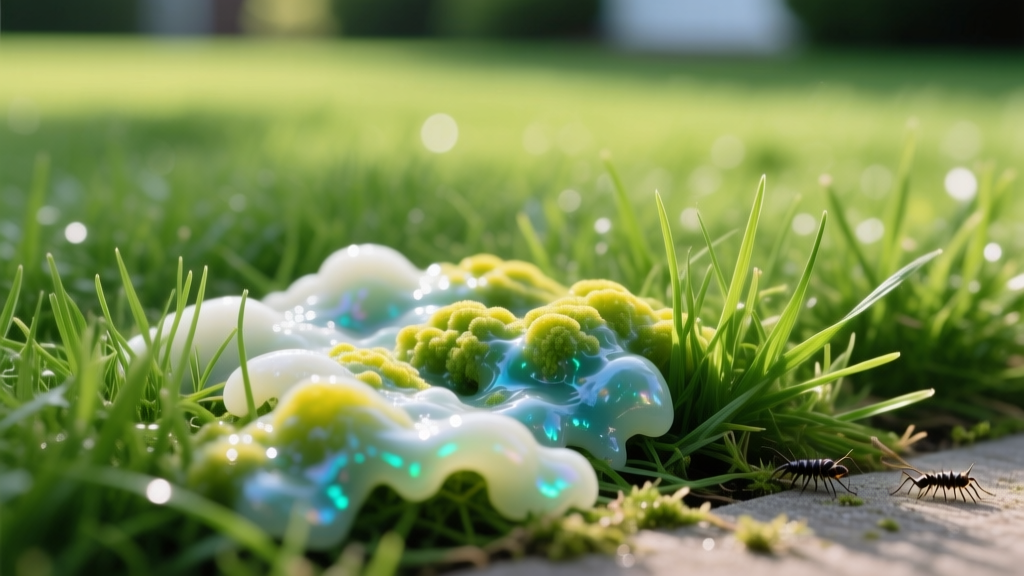
Slime Mold on Grass: Symptom Diagnosis and Rescue Fixes
The Protist Imposter: What Exactly is Slime Mold?
Waking up to find grey, black, or crusty white masses coating your turfgrass is alarming. Most homeowners immediately assume their lawn has contracted a severe fungal disease. However, slime mold on grass is not a fungus at all. It belongs to a fascinating group of organisms called Myxomycetes, which are amoeba-like protists. Unlike true turf pathogens that invade plant tissue and extract nutrients from living grass cells, slime molds are saprophytic. They feed exclusively on decaying organic matter, bacteria, and fungal spores residing in your soil and thatch layer.
The most common species found on turfgrass include Physarum cinereum (grey slime mold) and various Didymium species. While the notorious 'dog vomit' slime mold (Fuligo septica) typically colonizes wood mulch, it can occasionally creep onto the edges of adjacent lawns. The organism spends most of its life as a microscopic, single-celled plasmodium hiding in the soil. When environmental conditions align—specifically high humidity and abundant moisture—the plasmodium migrates to the surface of grass blades to reproduce, forming the visible, crusty fruiting bodies (sporangia) that trigger homeowner panic. The grass beneath the mold is not being eaten; it is merely being smothered, which temporarily blocks sunlight and can cause mild, reversible yellowing.
Symptom Diagnosis: Slime Mold vs. True Turf Diseases
Accurate diagnosis is critical before spending time or money on treatments. Misidentifying slime mold as a fungal disease like Dollar Spot or Pythium Blight leads to unnecessary chemical applications. Use the diagnostic matrix below to confirm the presence of slime mold.
| Diagnostic Feature | Slime Mold (Myxomycetes) | Dollar Spot (Fungal) | Pythium Blight (Fungal) |
|---|---|---|---|
| Pathogen Type | Protist (Amoeba-like) | Fungus (Clarireedia) | Oomycete (Water mold) |
| Visual Appearance | Powdery, crusty, or slimy grey/black/white masses coating the outside of blades | Small, silver-dollar-sized bleached spots with distinct tan margins | Dark, greasy, water-soaked patches that mat down and form a 'frog-eye' pattern |
| Leaf Tissue Damage | None. Blade tissue remains intact underneath the crust. | Distinct lesions wrapping around the leaf blade. | Rapid necrosis; leaves rot and easily pull away from the stolon. |
| Mycelium Presence | Absent. No web-like fungal threads in morning dew. | Fine, white, cobweb-like mycelium visible in early morning dew. | Fluffy, white to purplish mycelium visible in high humidity. |
| Physical Removal | Easily wipes off the blade with a thumb and forefinger, leaving a powdery spore residue. | Cannot be wiped off; the damage is embedded in the leaf tissue. | Cannot be wiped off; tissue is actively decaying. |
For a definitive visual confirmation, the NC State University TurfFiles database provides excellent macro-photography of Physarum sporangia compared to true fungal lesions. If the substance wipes off cleanly and leaves the grass blade structurally sound underneath, you are dealing with slime mold.
Environmental Triggers: Why is it Suddenly Appearing?
Slime mold outbreaks are strictly opportunistic. The plasmodium requires specific microclimates to transition from its hidden soil stage to its visible fruiting stage. Three primary triggers must converge for an outbreak to occur:
- Excessive Thatch Accumulation: A thatch layer thicker than 0.5 inches provides an ideal, moisture-retentive habitat packed with the bacteria and decaying organic matter that slime molds consume. Lawns with heavy thatch act as a sponge, keeping the lower turf canopy perpetually damp.
- Prolonged Leaf Wetness: The organism requires a continuous film of water to move and feed. Frequent, shallow irrigation (e.g., watering for 10 minutes every day) or extended periods of heavy rain and morning dew keep the leaf wetness duration above the critical 12-hour threshold.
- Warm, Humid Conditions: Outbreaks peak when nighttime temperatures remain between 70°F and 85°F coupled with high relative humidity. This is why slime mold on grass is most frequently diagnosed during late spring and early autumn transitions.
Step-by-Step Rescue Fixes
Because slime mold does not attack living plant tissue, aggressive chemical interventions are unnecessary. The goal of rescue fixes is mechanical disruption and environmental modification. Follow this protocol to clear your lawn and prevent recurrence.
Step 1: Mechanical Disruption (Mowing and Raking)
The fastest way to remove the unsightly fruiting bodies is to physically sever them from the turf. Set your mower to its standard cutting height and mow the affected areas. Crucial detail: You must use a bagger attachment to collect the clippings. If you mulch or side-discharge, you will simply redistribute the spore masses across the lawn. For localized, heavy patches that the mower misses, use a flexible lawn rake or a push broom to gently break up the crusts. Avoid using aggressive steel thatch rakes, which can tear healthy grass blades.
Step 2: Hydraulic Washing
If mowing does not fully clear the powdery residue, use water to wash the remaining spores off the blades and back into the soil profile where they belong. Attach a fan-spray nozzle to your garden hose and set the pressure to approximately 40 to 50 PSI. Spray the affected grass vigorously enough to bend the blades and wash the crust away, but not so hard that you scour the topsoil or create runoff puddles. According to University of Wisconsin-Madison Extension, this hydraulic disruption is often enough to halt the current fruiting cycle entirely.
Step 3: Long-Term Thatch and Moisture Management
To prevent the plasmodium from returning, you must alter the microclimate. First, schedule core aeration for the upcoming fall or spring season to physically extract soil cores and break up the thatch layer. Second, overhaul your irrigation schedule. Transition from daily light watering to deep, infrequent soaking. Apply roughly 1 inch of water per week, divided into just one or two morning sessions. This ensures the grass roots receive adequate hydration while allowing the thatch layer and upper soil surface to dry out completely by mid-afternoon, starving the slime mold of the continuous moisture it requires to fruit.
⚠️ The Fungicide Trap: Do Not Waste Your Money
Many homeowners rush to the garden center to purchase expensive broad-spectrum fungicides like Scotts DiseaseEx (active ingredient: azoxystrobin) or products containing propiconazole. These chemicals are entirely ineffective against slime mold. True fungi possess ergosterol in their cell walls, which these fungicides target and disrupt. Because slime molds are protists, they lack ergosterol. Applying a $50 to $80 fungicide treatment will yield zero results, waste your money, and unnecessarily introduce biocides into your local watershed. Save your chemical budget for actual turf threats like Brown Patch or Snow Mold.
Frequently Asked Questions
Is slime mold on grass toxic to pets or children?
No. While the appearance is unappetizing, the common turfgrass slime molds (Physarum and Didymium) are non-toxic to dogs, cats, and humans. They do not produce dangerous mycotoxins, nor do they cause contact dermatitis. However, it is still advisable to keep pets from ingesting large quantities of the spore masses, as the physical bulk of the decaying organic matter can cause mild gastrointestinal upset, similar to eating dirt or mulch.
Will the grass underneath the slime mold die?
The grass will not die from tissue infection, but it can suffer from temporary light deprivation. If a thick, black crust of slime mold completely coats the turf canopy for more than a week, the blocked photosynthesis will cause the grass blades to turn pale yellow or chlorotic. Once you mechanically remove the mold via mowing or washing, the grass will rapidly regain its green color and resume normal growth within 7 to 10 days.
Does applying lime or altering soil pH kill slime mold?
Altering soil pH has no direct lethal effect on slime molds. These protists are highly adaptable to a wide range of pH levels (from 4.5 to 7.5). Applying agricultural lime to a lawn that already has an optimal pH of 6.5 to 7.0 will only lead to nutrient lockout (specifically iron and manganese deficiencies), causing your grass to yellow while the slime mold remains entirely unaffected. Focus strictly on moisture and thatch management for control.

