
Lawn Care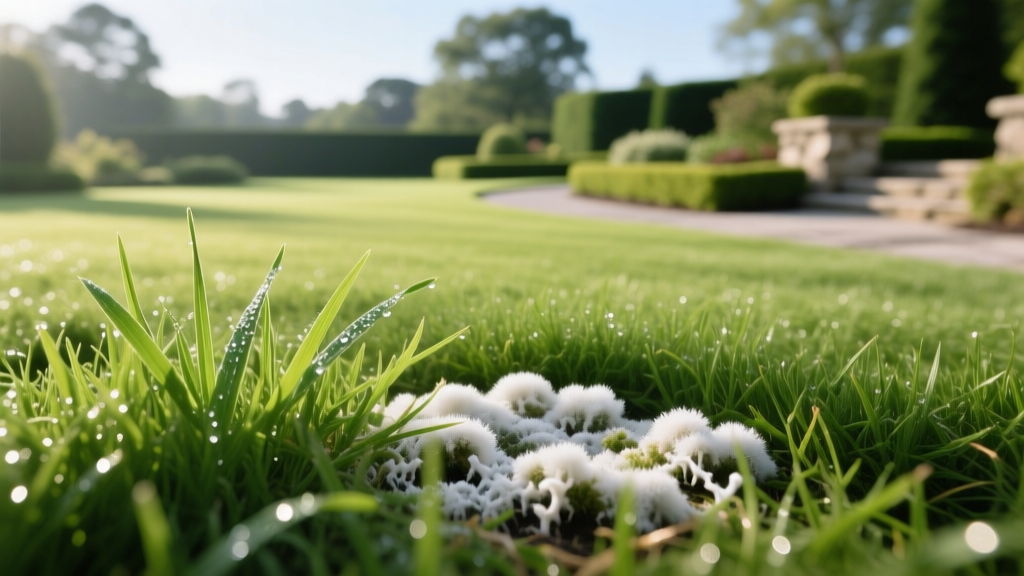
How to Identify and Treat White Mold on Grass: A Rescue Guide
The "White Mold" Misconception: Why Accurate Diagnosis Matters
When homeowners spot white mold on grass, the immediate instinct is to rush to the garden center for a general-purpose fungicide. This is a costly mistake. In turfgrass pathology, "white mold" is not a single disease; it is a visual symptom shared by four entirely different organisms, ranging from harmless slime molds to aggressive water molds that can destroy a lawn in 48 hours.
Applying the wrong chemical treatment will not only fail to cure the issue but can also trigger fungicide resistance or waste $50 to $150 on ineffective products. To execute a proper rescue fix, you must first identify the specific pathogen based on temperature, moisture conditions, and the visual structure of the mold.
Turf Pathogen Diagnostic Matrix
Use this diagnostic table to narrow down the culprit before purchasing any treatments. Pay close attention to the temperature and visual texture clues.
| Pathogen / Organism | Active Temp Range | Visual Texture & Clues | Primary Grass Targets |
|---|---|---|---|
| Snow Mold (Typhula / Microdochium) | 32°F to 50°F (Early Spring / Late Fall) | Matted, crusty white or pinkish-gray circles. Sclerotia (tiny hard seeds) may be visible. | Kentucky Bluegrass, Fescues, Ryegrass |
| Powdery Mildew (Erysiphe graminis) | 60°F to 75°F (Shade / High Humidity) | Fine white dust or talcum powder coating individual leaf blades. | Kentucky Bluegrass (highly susceptible), Fescues |
| Pythium Blight (Pythium aphanidermatum) | 85°F+ (Hot, humid summer nights) | Cottony, greasy white mycelium. Grass feels slimy and pulls up easily. | Perennial Ryegrass, Bentgrass, Tall Fescue |
| Slime Mold (Fuligo / Physarum) | 70°F to 85°F (Post-heavy rain) | Thick, white, yellow, or gray crusty patches resembling scrambled eggs or dog vomit. | All grass types (surface dweller) |
Rescue Protocol 1: Snow Mold (Typhula and Microdochium)
Snow mold appears as the snow melts in early spring, revealing matted, white or pinkish-gray circular patches ranging from 3 to 12 inches in diameter. Gray snow mold (Typhula incarnata) produces tiny, hard, reddish-black structures called sclerotia, while pink snow mold (Microdochium nivale) does not.
The Spring Rescue Fix
The most critical piece of information regarding snow mold is that spring fungicide applications are entirely useless. By the time you see the white mold on grass in March or April, the fungus is already sporulating and going dormant as soil temperatures rise above 50°F. Spraying chemicals now will only harm the soil microbiome.
- Mechanical Rescue: Use a flexible leaf rake to gently break up the matted crust. This restores oxygen to the crown of the grass and allows sunlight to penetrate, accelerating recovery.
- Nutritional Rescue: Apply a light, quick-release nitrogen fertilizer (like urea, 46-0-0) at a rate of 0.25 lbs of nitrogen per 1,000 square feet. This pushes new growth to outcompete the damaged tissue.
- Overseeding: If the crown tissue is dead (pulls out with zero resistance), overseed the bare patches with a resistant cultivar like 'NuGlade' Kentucky Bluegrass or 'Rhambler' Fine Fescue.
Preventative Protocol for Next Fall
According to the University of Minnesota Extension, the only effective chemical control for snow mold is a late-fall preventative application. In November, when daytime temperatures drop below 50°F and right before the first permanent snow cover, apply a fungicide containing Iprodione or a mix of Thiophanate-methyl and Chlorothalonil. Furthermore, drop your final mowing height to 2.0 inches; tall grass bends under snow, creating the exact humid microclimate snow mold requires to thrive.
Rescue Protocol 2: Powdery Mildew
If the white mold on grass looks like someone dusted your lawn with flour or baby powder, you are dealing with powdery mildew. This disease almost exclusively attacks Kentucky Bluegrass and certain Fescues growing in heavy, dense shade with poor air circulation.
Chemical and Cultural Interventions
Powdery mildew weakens the grass, making it highly susceptible to environmental stress and secondary insect damage.
- Chemical Rescue: Apply a systemic DMI (Demethylation Inhibitor) fungicide. Propiconazole 14.3 is the industry standard. As of 2026, professional-grade generic Propiconazole costs approximately $45 per pint and treats up to 20,000 square feet when mixed at 1 ounce per gallon of water. Apply using a pump sprayer, ensuring thorough coverage of the leaf blades.
- Canopy Management: Fungicides are a temporary bandage if the environment remains unchanged. Prune lower tree branches to a height of at least 6 feet to increase cross-breeze airflow.
- Irrigation Adjustment: Switch from evening watering to early morning watering (between 4:00 AM and 6:00 AM). Powdery mildew spores require high humidity but actually hate free-standing water on the leaf surface; morning watering allows leaves to dry rapidly while maintaining the humidity spike that inhibits spore germination.
Rescue Protocol 3: Pythium Blight (The Lawn Killer)
If you spot white, cottony mycelium on your lawn during a humid summer heatwave (nighttime temperatures above 70°F and daytime above 85°F), you are likely facing Pythium Blight. This is an emergency. Pythium can liquefy and kill large swaths of turf in less than 48 hours.
⚠️ CRITICAL PATHOLOGY WARNING: Pythium is an oomycete (water mold), not a true fungus. Standard broad-spectrum fungicides like Chlorothalonil or Mancozeb will not stop it. You must use chemicals specifically labeled for oomycetes.
The Pythium Eradication Strategy
According to NC State University's TurfFiles, Pythium thrives in saturated soils and excess nitrogen. To rescue the lawn:
- Halt Nitrogen: Stop all nitrogen fertilization immediately. High nitrogen levels create lush, thin cell walls that Pythium enzymes easily penetrate.
- Apply Specific Oomycete Fungicides: You need an active ingredient like Metalaxyl (e.g., Syngenta Subdue MAXX) or Phosphites (e.g., Signature Xtra). For homeowners, granular Azoxystrobin (sold as Scotts DiseaseEx, roughly $28 per 5,000 sq ft bag) offers moderate curative action, though professional liquid Metalaxyl is vastly superior for active outbreaks.
- Improve Drainage: Core aerate the lawn once the acute outbreak is controlled to relieve soil compaction and allow the top 2 inches of soil to dry out between waterings.
Rescue Protocol 4: Slime Mold (The Harmless Imposter)
Slime mold (Physarum or Fuligo septica) often panics homeowners because it appears suddenly as thick, white, yellow, or grayish crusty blobs that look like scrambled eggs or vomit resting on the grass blades.
The Diagnosis: Slime mold is not a pathogen. It does not attack living grass tissue. It is a primitive organism feeding on decaying organic matter, bacteria, and thatch in your soil. It only uses the grass blades as a scaffolding to climb upward and release spores.
The Fix: Do absolutely nothing chemically. Simply take your garden hose with a high-pressure nozzle and blast the slime mold off the grass blades. Alternatively, mow the lawn and bag the clippings to physically remove the fruiting bodies. It will naturally disappear when the weather dries out.
Fungicide Resistance Management (FRAC Codes)
When treating powdery mildew or recurring fungal issues, you must rotate your chemical classes to prevent the pathogen from mutating and surviving your treatments. The Fungicide Resistance Action Committee (FRAC) assigns numbers to chemical classes.
- FRAC 3 (DMI Fungicides): Propiconazole, Myclobutanil. Excellent for Powdery Mildew.
- FRAC 11 (QoI Fungicides): Azoxystrobin, Pyraclostrobin. Excellent for broad-spectrum control.
- FRAC 4 (Phenylamides): Metalaxyl. Exclusive for Pythium.
Frequently Asked Questions
Can white mold on grass spread to my house or pets?
No. Turfgrass pathogens are highly host-specific. The fungi and oomycetes that cause snow mold, powdery mildew, or Pythium blight cannot infect mammalian tissue, nor can they survive on the building materials of your home. They are strictly plant pathogens.
Does lime kill white mold on grass?
Applying agricultural lime will not kill active white mold. Lime is used to raise soil pH. While most turfgrasses prefer a pH between 6.2 and 6.8, altering the pH does not have a direct curative effect on active fungal mycelium. Rely on targeted fungicides and cultural practices instead.
Should I bag my clippings if my lawn has white mold?
Yes, temporarily. If you are actively dealing with Pythium blight or severe snow mold, bag your clippings for the next two mows to physically remove millions of spores from the turf canopy. Once the disease is controlled via fungicides or environmental changes, return to mulching your clippings to recycle nitrogen back into the soil.

